

A Mom and Montessori Teacher on How to Use a Montessori Weaning Table
When starting solids, most people sit their babies in a high chair. However, those following the Montessori method sometimes opt for a weaning table instead. As a former Montessori teacher, my three children loved sitting at a small table and chair and preferred this arrangement to an infant seat with a tray.
How should you introduce and use an infant eating table or weaning table? This complete guide will explain the essentials through the Montessori lens.
Key Insights:
- A Montessori weaning table and chair is a small, child-sized table and chair set for young children to use when eating solid food.
- Child-sized furniture aligns with the Montessori method, offering children independence and a sense of responsibility.
- When shopping for a weaning table, choose an infant eating table that's made of natural materials, grows with your child, and can serve beyond the weaning table stage.
- Both weaning tables and high chairs offer advantages, and the best choice depends on your child, family needs, and space.
What is the Montessori Method of Weaning?
In Montessori, "weaning" refers to introducing solids. Families that follow the Montessori method bring Montessori principles into the process of starting solids. Here are a few key points:
Prioritize Independence
Dr. Montessori believed that young children crave the chance to do things "all by myself." Independence is a major motivator and goal in early childhood. For babies starting solids, this may mean trying baby-led weaning. With this method, you offer your baby safe foods, and they self-feed.
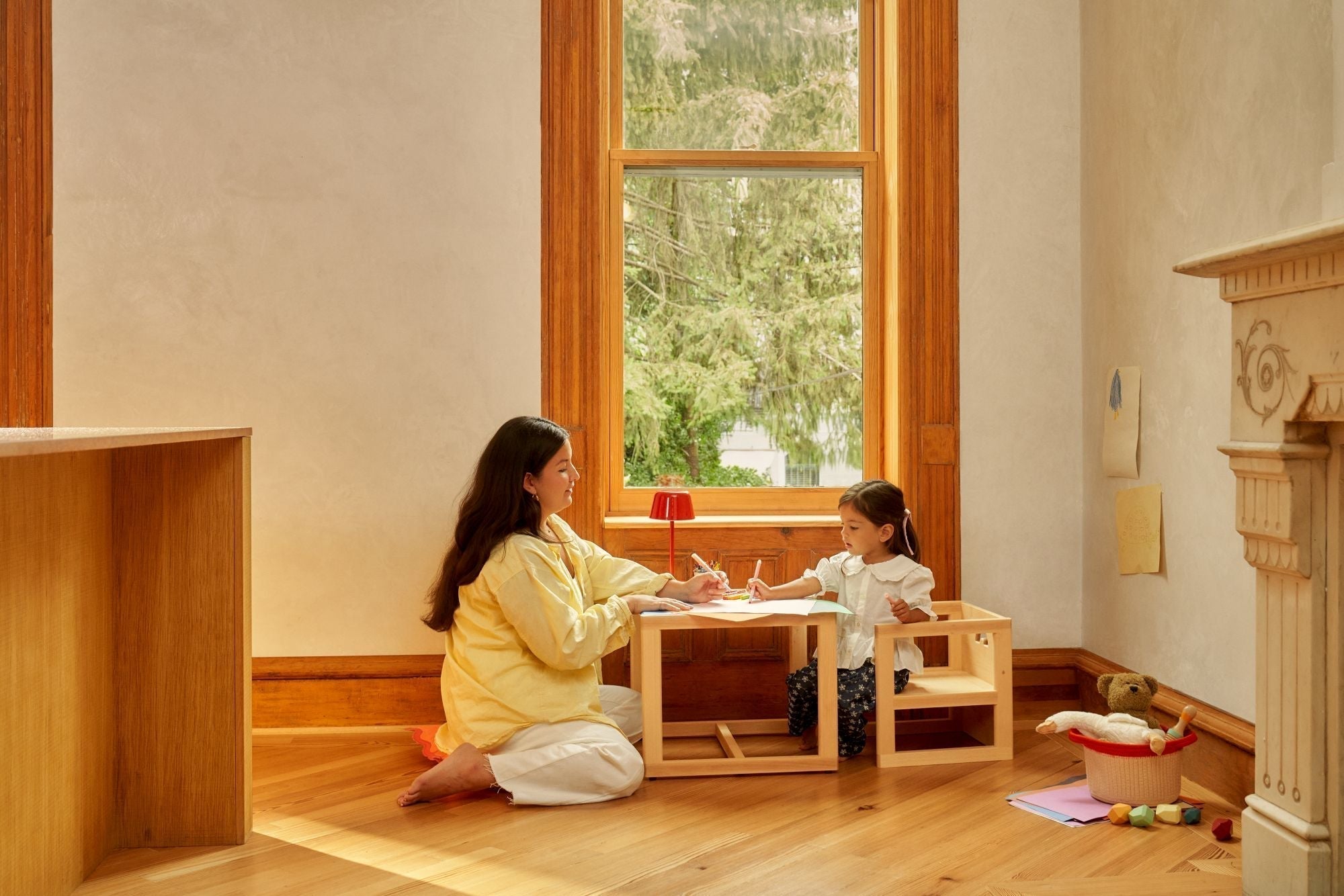
Another aspect is using a Montessori weaning table. Instead of using a high chair, your child sits at a small table and chair where they can feed themselves.
Use Real Items
In the Montessori method, young children use real dishes and objects. Using real objects is not only exciting and motivating for children, but it also teaches responsibility and care.
Instead of using plastic or toy dishes, children can practice with dishes made of glass, ceramic, wood, or metal. For toddlers, followers of the Montessori method often use a weaning cup. The cup is often made of thick, resistant glass and is quite small, holding about 2 ounces of liquid.
Involve Your Child
As part of independence, Dr. Montessori believed in letting children help with caring for the classroom or home. Some activities surrounding mealtime that your child can help with include:
- Setting the table
- Cleaning the table after eating
-
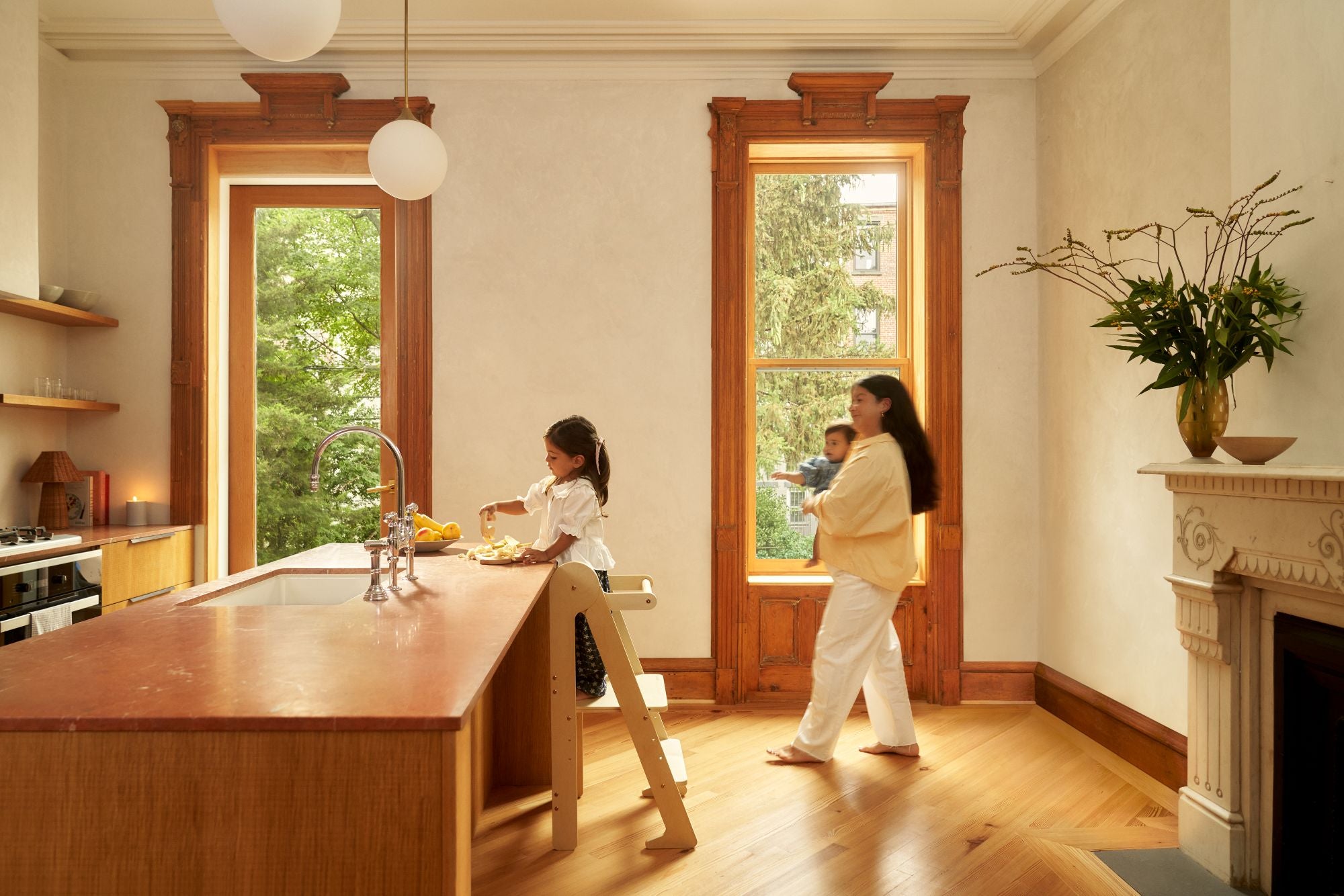
Cooking and baking meals (try using a Foldable Helper Tower so your child can reach the counters)
Looking for more age-appropriate chores? Try this list of Montessori chores.

What You Need for Montessori Weaning
What will you need to start Montessori weaning with your child? Here are the essentials:
- A Montessori table and chair set, perfectly sized for your little one
- A set of child-friendly dishes
- A weaning cup (a small, 2-4 ounce, open glass or cup made of natural materials)
- Child-sized cleaning items like a cloth, broom, dustpan, and brush
When to Begin Montessori Weaning
Many people start Montessori weaning at about 6 months of age, when their child starts solids. When deciding to start solids, it's important to follow your pediatrician's advice and your child's readiness signs. Your child should show interest in food, sit confidently, and be able to bring their hands to their mouth.
See a complete guide to starting solids with baby-led weaning here.
To use a Montessori weaning table, your child should be able to sit independently and confidently. Your child may need help getting into and out of their chair at first. As they build their skills, they'll be able to go to their weaning table at meal times without help.
Other families use a Montessori approach to weaning, but don't use a weaning table until their child can walk, usually between 12 and 18 months of age. This is how we started solids with my children. I either held them or used an infant chair until they were confident walkers. Then, they transferred to a small table and chair.
Tips on Choosing an Infant Feeding Table
When shopping for any Montessori furniture, look for beautiful materials like natural wood. Our Table and Chair Set is a beautiful option, made of European solid beech wood. Solid woods are an ideal choice because their heavier weight limits tipping and provides stability.
Additionally, consider choosing a table and chair set that will grow with your child. At the toddler stage, children grow fast, meaning your little one will quickly need a higher seat height. Our Reversible Chairs offer three different seat heights, just by flipping them over. The heights are ideal for 1 through 5 years old and beyond, 6.3 inches, 7.6 inches, and 16 inches as a bench.
Other considerations include:
- Safety of the materials. Many furniture pieces contain harmful VOCs. Our wooden products are Greenguard Gold Certified, proving they're free of harmful chemicals and substances.
- Warranty. Longevity is important for your table and chair, especially if you plan on having several children or expect to use the set for a few years. Our products are covered by a 3 year warranty.
- Ease of cleaning. Spills will happen, so choose a table and chair set that your child can easily wipe down with a damp cloth. Our table features a non-toxic finish that wipes clean.
Weaning Table Montessori Style Vs. High Chair
Wondering if you should opt for a high chair or a weaning table? Or both? The best choice for your child depends on your family, your child's development, and preferences.
One option is to use a high chair for a few months before transferring your child to a weaning table. This is what we did, using an infant seat with a tray until my children learned to walk.
Here's a quick overview of the pros and cons of each.
| High Chair: Pros | High Chair: Cons |
| Child can't get up | Doesn't foster independence |
| Child is at/above table height for family meals | Constrains child |
| Weaning Table: Pros |
Weaning Table: Cons |
| Fosters independence | Child may get up |
| Teaches child self-management at meals | Child doesn't sit with the whole family |

Other Uses for a Montessori Toddler Table and Chair Set
In addition to meals, a toddler table and chair set is the perfect space for:
- Snack times
- Drawing and coloring
- Crafts
- Reading
- Building with blocks
An ergonomic fit can help your child comfortably build their fine motor skills. Good posture is important for your child's stability and supporting fine motor work.
A Montessori Weaning Table Fosters Independence and Builds Skills
Are you ready to try using a weaning table? Although a simple piece of furniture, it's the key to unlocking independence, responsibility, confidence, and so many other skills. Tell us your thoughts about weaning tables in the comments below.





Leave a comment