

Durable Kids' Furniture that Lasts Beyond Passing Trends
When you’re choosing furniture for your child, you’re not just choosing a place to sit or eat. You’re choosing pieces that will be part of your home and daily life for years to come. Furniture is the backdrop to moments of “I did it!”, first homework assignments, family photos, and beloved bedtime books. That’s why it helps to think beyond age labels and trends, and look for furniture that can grow with your child’s needs, interests, and abilities.
Growing with your child doesn’t mean “one size fits all.” It means selecting furniture that supports independence, encourages participation, and feels comfortable and natural in your home from toddlerhood through childhood, and beyond.
Here’s how to think about that, and what to keep in mind as a family that values thoughtful design and everyday use.
Think About How Furniture Will Be Used
Instead of asking what age a piece is for, it’s more useful to think about how and where it will be used.
Children’s needs change quickly. A familiar, stable place to finger paint today might be the same place where they draw pictures next year, or do their first homework assignment the year after.
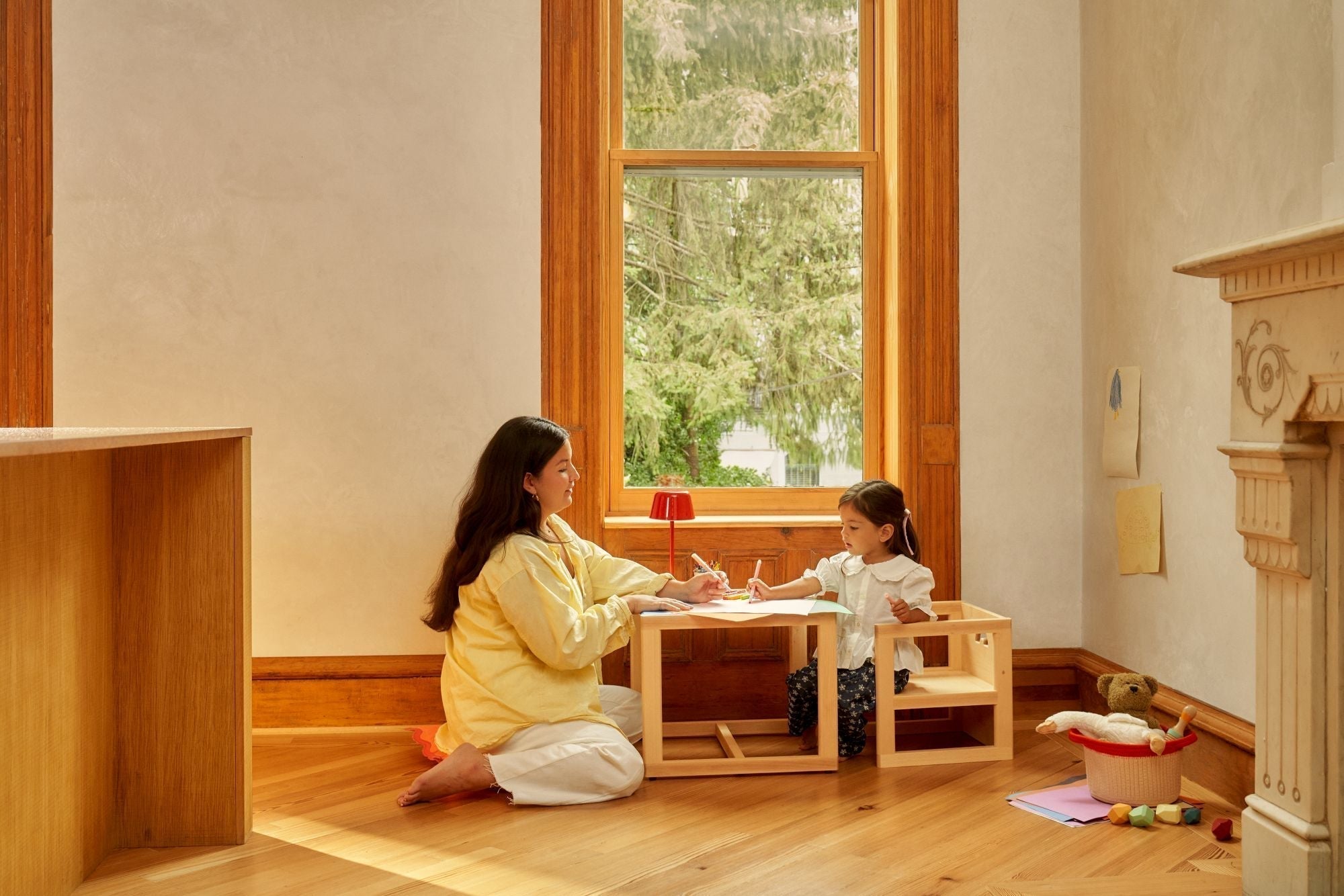
A good example is our Kids Table and Chairs Set. Early on, it serves as a spot where little hands can reach for crayons or share a snack. As your child grows, that same set becomes a place for puzzles, projects, and early writing. The chairs are even adult-friendly, so you can join in with them. It’s not about a single stage, it’s about a range of moments that matter.
When furniture supports multiple activities, it becomes more than just a functional piece. It becomes part of your child’s day—and part of family life.
Choose Furniture That Encourages Independence
One of the most meaningful ways furniture can “grow” with a child is by supporting independence. When pieces are designed for a child’s scale, it invites them to participate rather than wait for help from an adult.
Child-sized furniture gives children a sense of agency—a way to interact with their world and take part in routines that matter. When a child can sit down at their own table or pull out their own chair without help, it becomes one more way they learn they are capable.
This is why thoughtful designs, like those in our furniture collections, focus not just on aesthetics, but on proportions that feel right for small bodies and support confident movement.
Durability Matters More Than You Think
Growing with your child isn’t just about adaptability. It’s also about durability. Children’s furniture gets used daily—it gets bumped, pushed, leaned on, moved around, and probably colored on. Choosing materials and construction that hold up over time means you’re investing in something that will continue to support your family year after year.
Solid construction helps furniture stay stable and reliable as your little one grows more confident in how they use it. Plus, it’s also a sustainable choice. Choosing thoughtfully designed, durable furniture means you don’t have to replace it frequently.
This long-lasting quality reflects a mindset of care. It encourages you to choose pieces you’ll feel comfortable keeping in your home, not just something that finishes out toddlerhood.
Timeless Design Keeps Furniture Relevant
If you’re a parent, you know their tastes, interests, and needs change quickly. Furniture that feels timeless in design tends to remain comfortable and usable, even as your child grows older. Clean lines and natural materials don’t compete with toys, books, or playmats. Instead, they become part of the background of daily life.
A thoughtfully designed piece doesn’t feel out of place in different rooms or stages. It blends into your home and becomes part of the rhythm of your family.
We included these design goals and principles in our Bestsellers Collection. These pieces feel at home in living spaces and playrooms alike—and they allow your child’s environment to grow alongside them rather than feel like something to swap out after a year.
Versatility Helps Furniture Grow With Your Child
Some furniture earns its keep because it is versatile. Furniture that supports more than one activity or scenario stretches what it can do for your family.
A table and chair set isn’t limited to meals and crafts. It can become a homework nook. It can turn into a nightstand or side table. It can become a quiet corner for books. Versatility is a sign of furniture that doesn’t belong to a single moment, but to many.
This flexibility is part of what makes furniture feel lasting and meaningful—not just another purchase, but part of everyday life.
Safety Is Never Optional
Furniture that grows with a child must always come with a sense of safety built in. Stability, smooth finishes, and non-toxic materials matter for everyday peace of mind.
When furniture is rooted in thoughtful construction, it ensures your child can move with confidence. Knowing that the pieces around them are safely designed helps both you and your child feel at ease, supporting exploration and growth.
A chair that doesn’t wobble. A table that stands steady. Materials that are gentle to the touch. These aren’t small details—they’re the foundation of trust between a child and their environment.
Avoid the Disposable Mindset
Children’s needs evolve, but that doesn’t mean furniture should be disposable. Many pieces sold as “kids’ furniture” today are designed with short life spans in mind.
Others feature designs that your child quickly outgrows. The reality is your toddler’s love of a character-stamped table is short-lived. These items end up in storage or are replaced entirely.
When you choose furniture that grows with your child, you’re making a different choice. You’re choosing something that feels present in your home, supports skill development, and remains useful. You’re breaking the cycle of “outgrow and discard.”
This mindset reflects a deeper approach to family life—one that values fewer, better things, and recognizes that children benefit when their environment feels consistent and respectful of their abilities.
Opt for Furniture that Supports Learning
Furniture can teach! A table is more than a surface. A chair is more than a seat. When your child uses furniture that fits their bodies and invites participation, learning happens naturally.
Every time your child sits at their table to draw, it’s a small moment of agency. Every time they push a chair in on their own, it’s practice with real-life coordination. These everyday interactions teach your child something about themselves and how they belong in their space.
This perspective—that furniture participates in learning—is gentle, practical, and deeply connected to how children thrive.
Bringing It All Together
Kids' furniture that grows with your child isn’t defined by a single checklist item. It’s defined by how it feels in daily life—supportive, stable, familiar, and adaptable.
When furniture serves multiple purposes, supports independence, and fits naturally into your home, it becomes more than something your child uses for a season. It becomes part of their memories, everyday life, and the foundation for a lifelong love of learning.
Explore Furniture Designed to Grow With Your Child
The right pieces can support your child through many stages—from early play and practice to new skills and routines. Thoughtful design, intentional materials, and pieces that feel comforting and functional help create environments where children feel capable and at ease.
Explore Piccalio’s Bestsellers Collection to find furniture that feels right for today and for years to come →








Leave a comment