


Materials
Nature is our greatest inspiration, and we want to inspire people to live a more mindful and sustainable lifestyle. To us, this means buying less, buying better, and keeping things in use for longer. Designing durable, long-lasting products and using ethically sourced and certified materials are two ways we minimize our environmental impact as much as possible.
Our Materials
Beauty belongs in your home
We select materials intentionally. Nature is beautiful, and we strive to reflect this beauty in every design and with each material. We prioritize natural materials for every element used in our products, from the main structure to finishing touches.
Choosing quality materials translates to better stewardship of our planet’s resources. We don’t participate in planned obsolescence, a common practice designed to make products fall apart quickly so that you’ll have to buy them again.

Our Woods
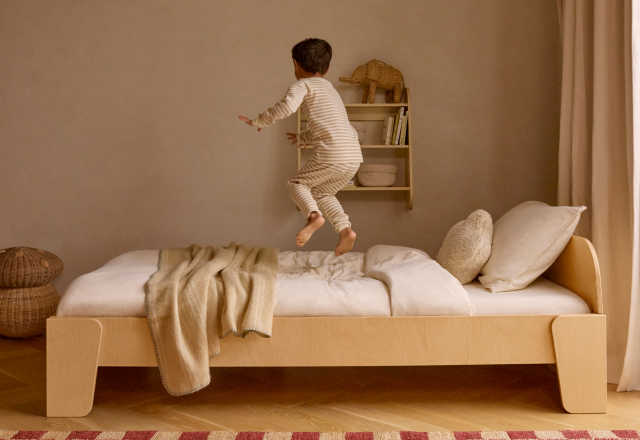
Our wooden products feature high-quality varieties of natural wood, such as beech, birch, oak, and pine. We craft each piece with solid wood and/or plywood to ensure durability, longevity, and beauty—qualities not found in fast furniture pieces made with MDF or particle board.
All of our products are made using FSC®
-certified wood. This environmental and social certification comes from the Forest Stewardship Council (FSC®), a global organization that certifies forests and lumber based on rigorous standards of responsible forest management.

Non-toxic Paints and Stains
Our wooden products are treated with innovative, water-based, non-toxic topcoats for both protection and easy cleanup. These finishes are low in volatile organic compounds (VOCs) to ensure they are safe for children, your indoor air, and the environment. They are free of harmful substances like lead, BPA, and phthalates. Our Mini Cutter and Cutting Boards are oiled using edible Linseed oil, which is FDA-approved for use with food.

Textiles
For products that use fabric, we prioritize organic textiles certified by the Global Organic Textile Standard (GOTS). Organic cotton has a lower environmental impact than conventionally produced cotton due to reduced water usage, lower greenhouse gas emissions, and restricted use of chemicals. Many families also find that organic cotton is gentler on the sensitive skin of babies and young children.