


Tips on Building Executive Function with Practical Life Activities
The kitchen is full of opportunities for developing executive function in toddlers. Executive function, or EF, includes a group of skills related to planning, decision-making, memory, and task management. Kitchen activities like measuring ingredients, following steps, and waiting for food to cook or bake all help build these skills in a fun, age-appropriate way.
As a Montessori teacher and mom of three, I’ve seen my own children develop executive function skills through cooking and baking over the years. In their toddler years, they’d help stir batter, chop soft foods, or simply watch. Now, at 13, 10, and 7, they can make snacks and simple meals independently.
How can you support your child’s executive function skills with kitchen activities? Discover what you need to know about executive function and which kitchen activities are best to try.
What Executive Function Means for Toddlers
Executive function refers to a group of mental skills that help your child manage attention, remember steps, and control impulses. These skills are still developing in toddlerhood, but everyday experiences help strengthen them.
Executive function includes:
- Working memory
- Inhibitory control
- Flexible thinking
- Managing attention
- Emotional regulation
In practical terms, that means your child is learning how to:
- Focus on a task
- Remember what comes next in a multi-step process
- Pause before grabbing or rushing
- Adjust their approach when something changes
- Manage disappointment or frustration
- Stay motivated throughout a short task
- Keep their workspace organized
Research shows that these skills play an important role in helping children succeed at school. When given the chance to practice, children make great strides in their skills by the time they turn 5.
Fortunately, the kitchen offers many natural opportunities to practice these skills from a young age. As a mom, I’ve seen how chores, kitchen activities, and hands-on fun help prepare toddlers with essential skills—more than worksheets and flashcards ever could.
Learn from mom and psychologist, Dr. Nina Kaiser, about when children develop impulse control and helpful parenting strategies to use.
Why the Kitchen Is Such a Strong Learning Environment
The kitchen is full of sequences, routines, and sensory experiences. When they get the chance to be in the kitchen, children do more than lick the bowl or sneak a taste of dinner.
Even while helping prepare simple snacks or performing simple tasks, children practice skills related to executive function, such as:
- Waiting for a turn
- Carrying out a simple step
- Remembering a direction
- Staying focused on what they’re doing
- Resisting the urge to lick their fingers
- Concentrating on a task
Research shows that children build executive function skills through meaningful activities and interactions that require attention, memory, and self-control.
That’s one reason everyday participation matters so much. Your child is not just staying busy. They are practicing the building blocks of learning, executive function, and self-regulation.
Toddlers Want to Help in the Kitchen
Toddlers want to be where the action is. If you’ve ever tried to cook while your child grabs your leg or asks to be picked up so they can see what you’re cooking, you’ve already seen this firsthand.
The kitchen naturally draws your child in. There are ingredients to taste, aromas to smell, tools to explore, and routines to discover. More importantly, there are real tasks happening.
Toddlers are wired to imitate and seek independence. They watch what you do and want to try it for themselves.
At first, participation is simple:
- Handing you a spoon
- Rinsing fruit
- Stirring batter
- Placing napkins on the table
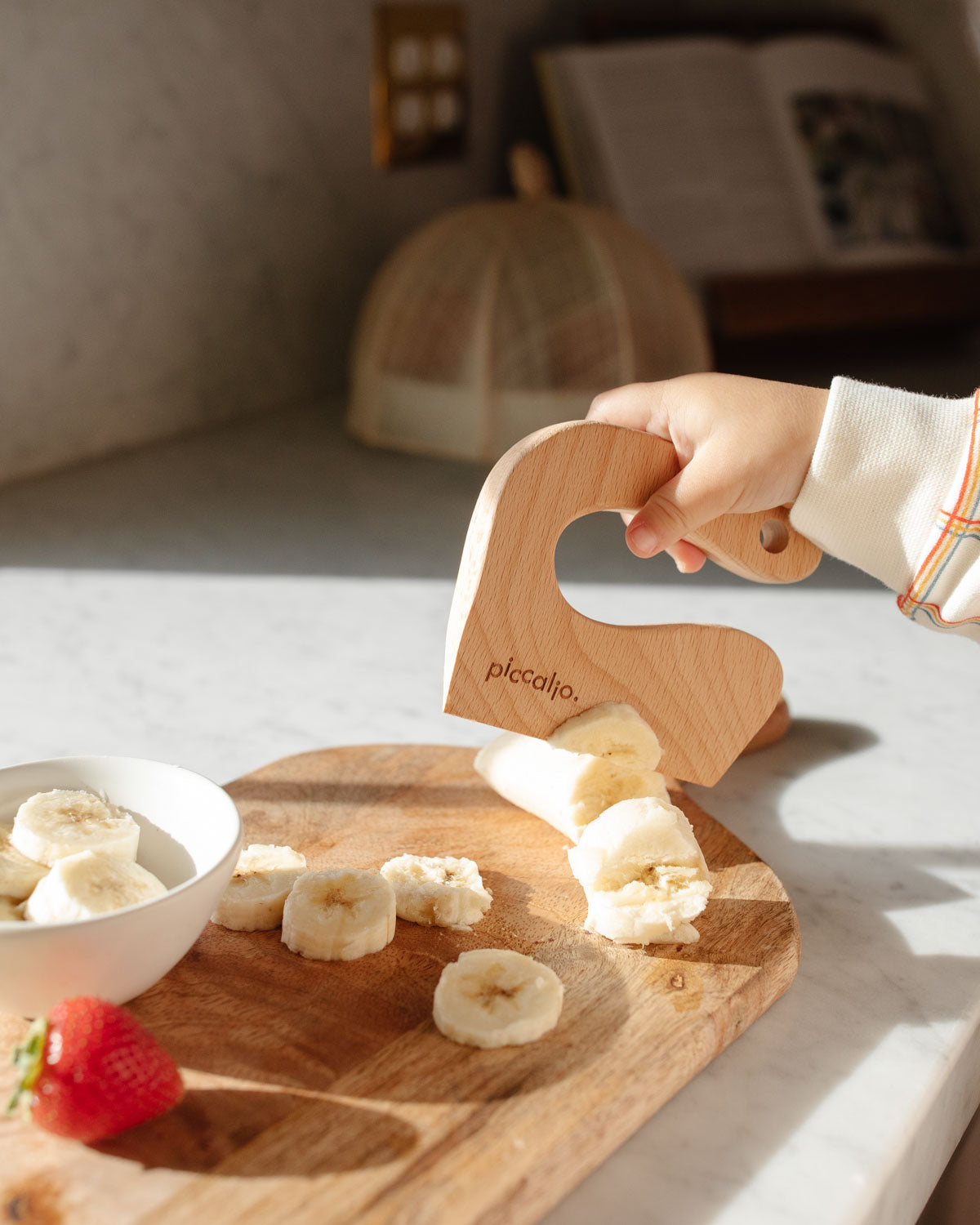
- Chopping soft foods
These moments may seem small, but to your child, they feel important. Being included in everyday routines gives your child a sense of purpose and belonging, which builds their confidence. Over time, your little one can manage more complex tasks and even chores.

How Kitchen Participation Builds Confidence and Motivation
Confidence and a sense of competence grow through practice. When your child is invited to take part in simple, age-appropriate tasks, they begin to see that they are capable. Then, it’s like a snowball effect. The more your child succeeds, the more motivation they have to take on challenges.
In the kitchen, your child can:
- Complete a real task
- Contribute to the household
- See the results of their effort
That process matters.
Pouring water into a bowl, transferring chopped fruit, or helping wipe the counter may not seem like much to an adult. But for your child, these are real experiences of contribution that motivate them on their journey to independence.
How a Toddler Tower Supports Participation
Of course, for kitchen participation to feel positive, your child needs a safe and steady way to join in.
That’s where a toddler tower can help.
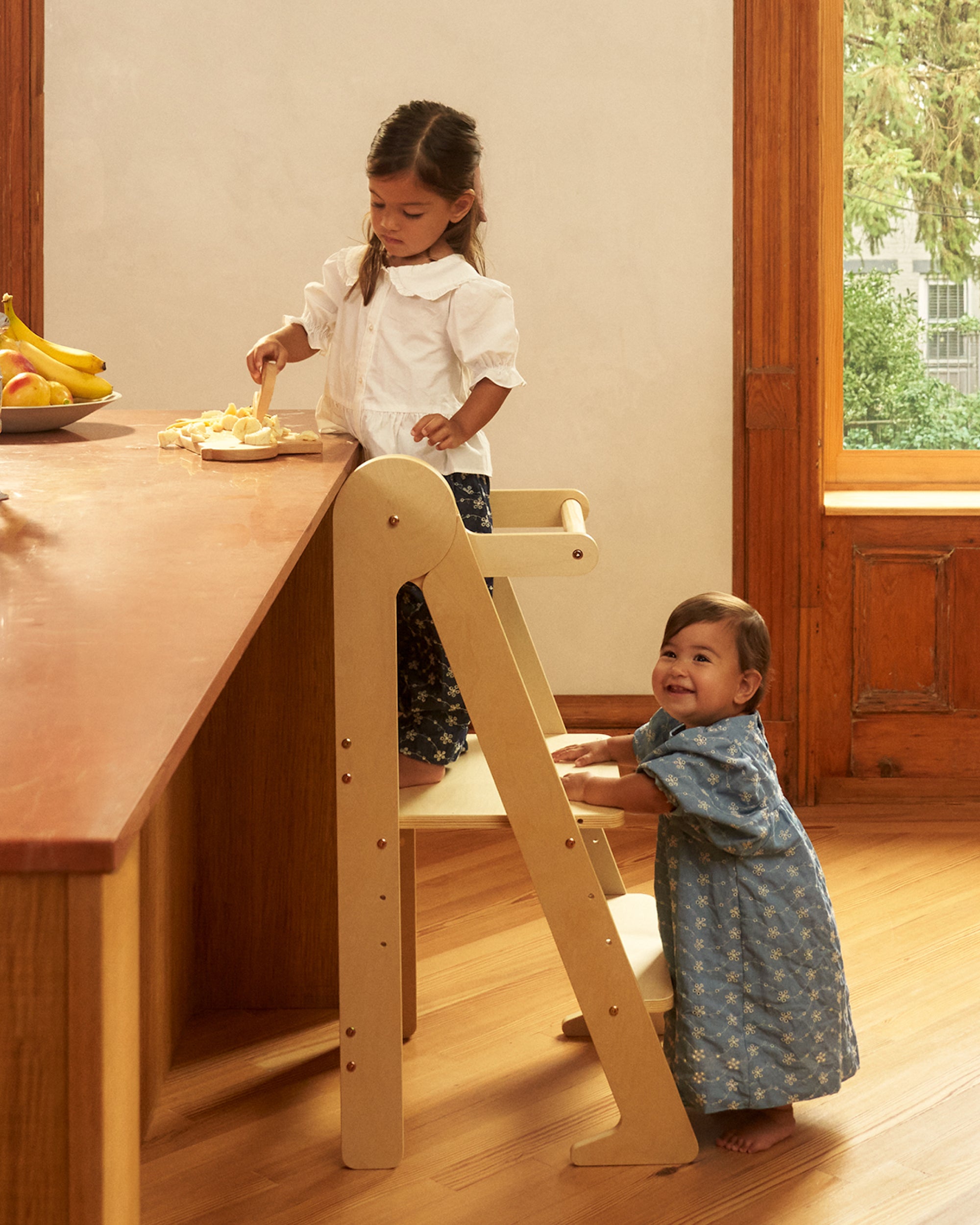
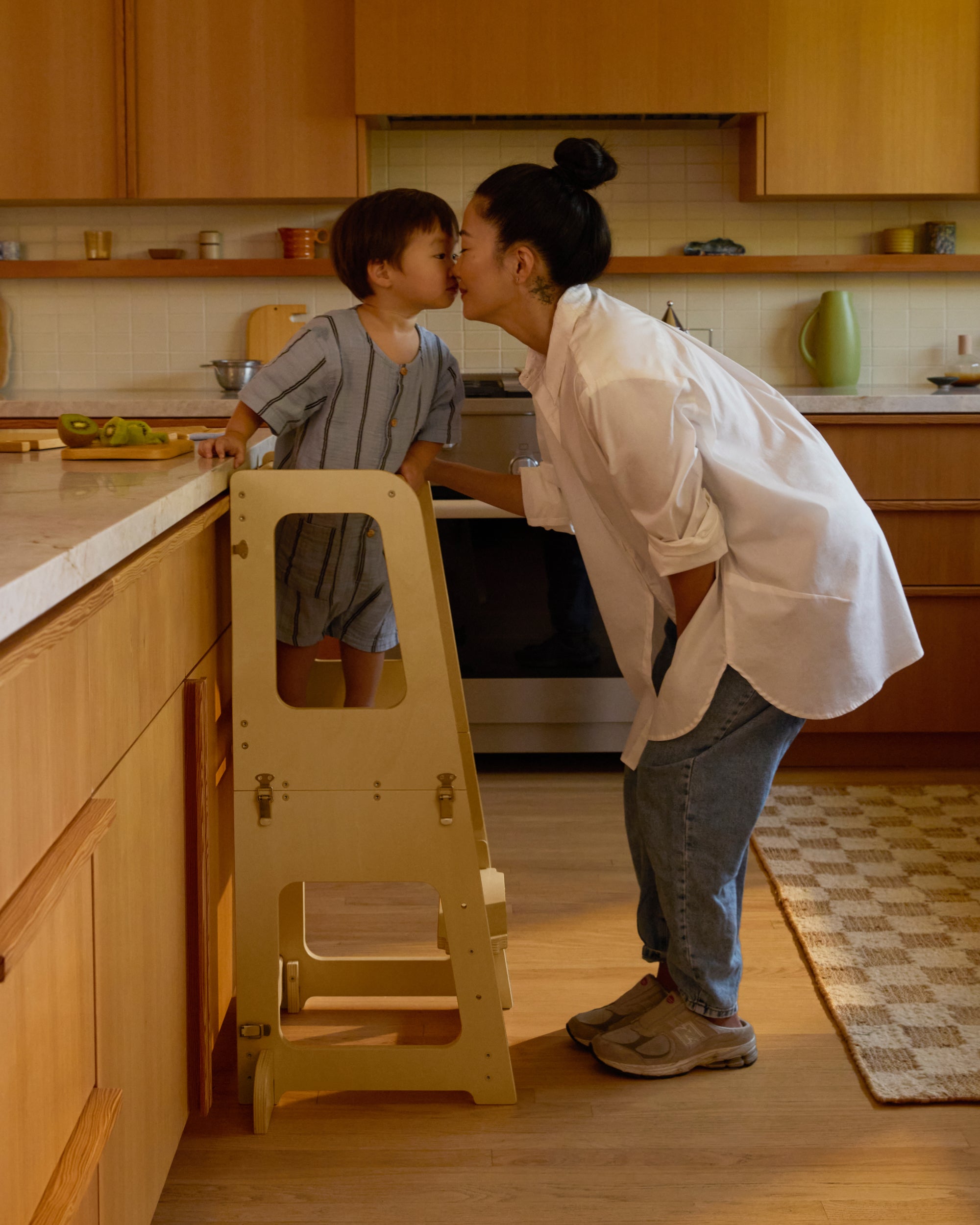
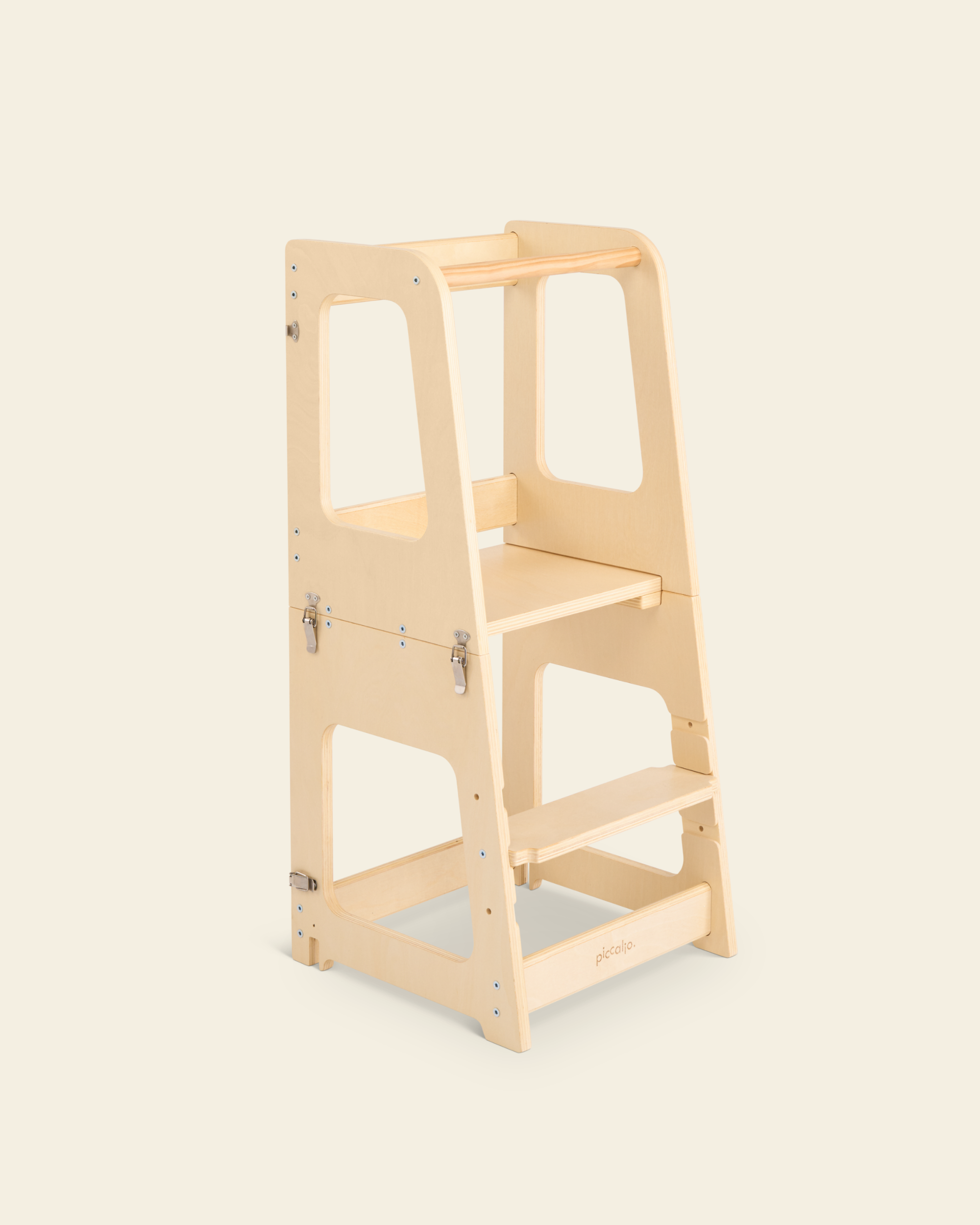
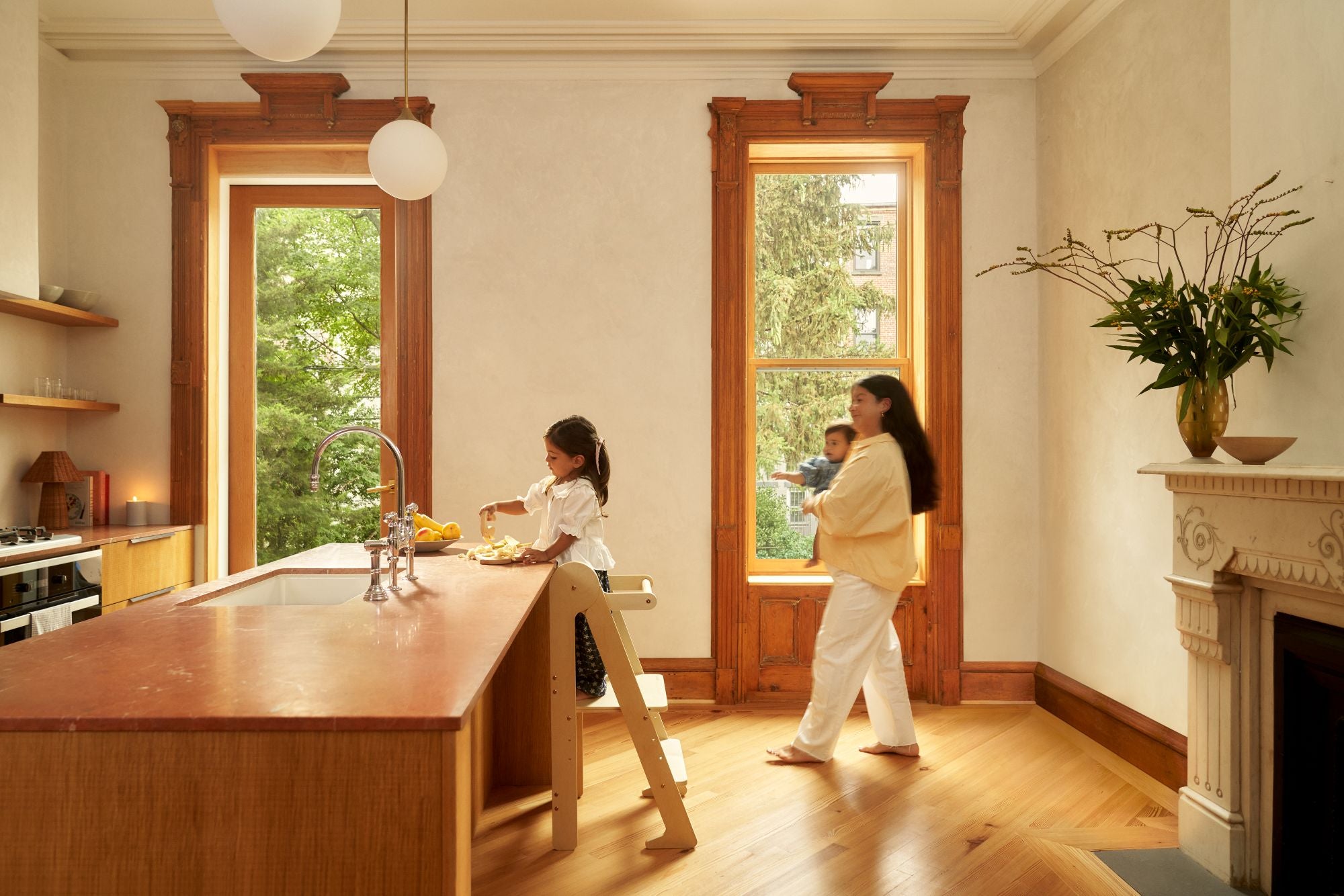
Our Foldable Toddler Tower is a practical option for families who want flexibility in the kitchen. It gives your child a secure place to stand at counter height, and it folds away easily when not in use.
Our Convertible Toddler Tower offers another option for families who want something that can adapt over time. It supports everyday kitchen participation while giving you more flexibility as your child grows.
Both designs help bring your child into the rhythm of the kitchen in a way that feels more comfortable and manageable for both of you.
What Kitchen Tasks Are Good for Toddlers?
Your child does not need to do complicated tasks to benefit from kitchen participation.
Simple jobs are often best.
You might invite your child to:
- Rinse produce
- Stir ingredients in a bowl
- Transfer food from a container or cutting board to a serving tray
- Help wipe spills
- Place utensils or napkins on the table
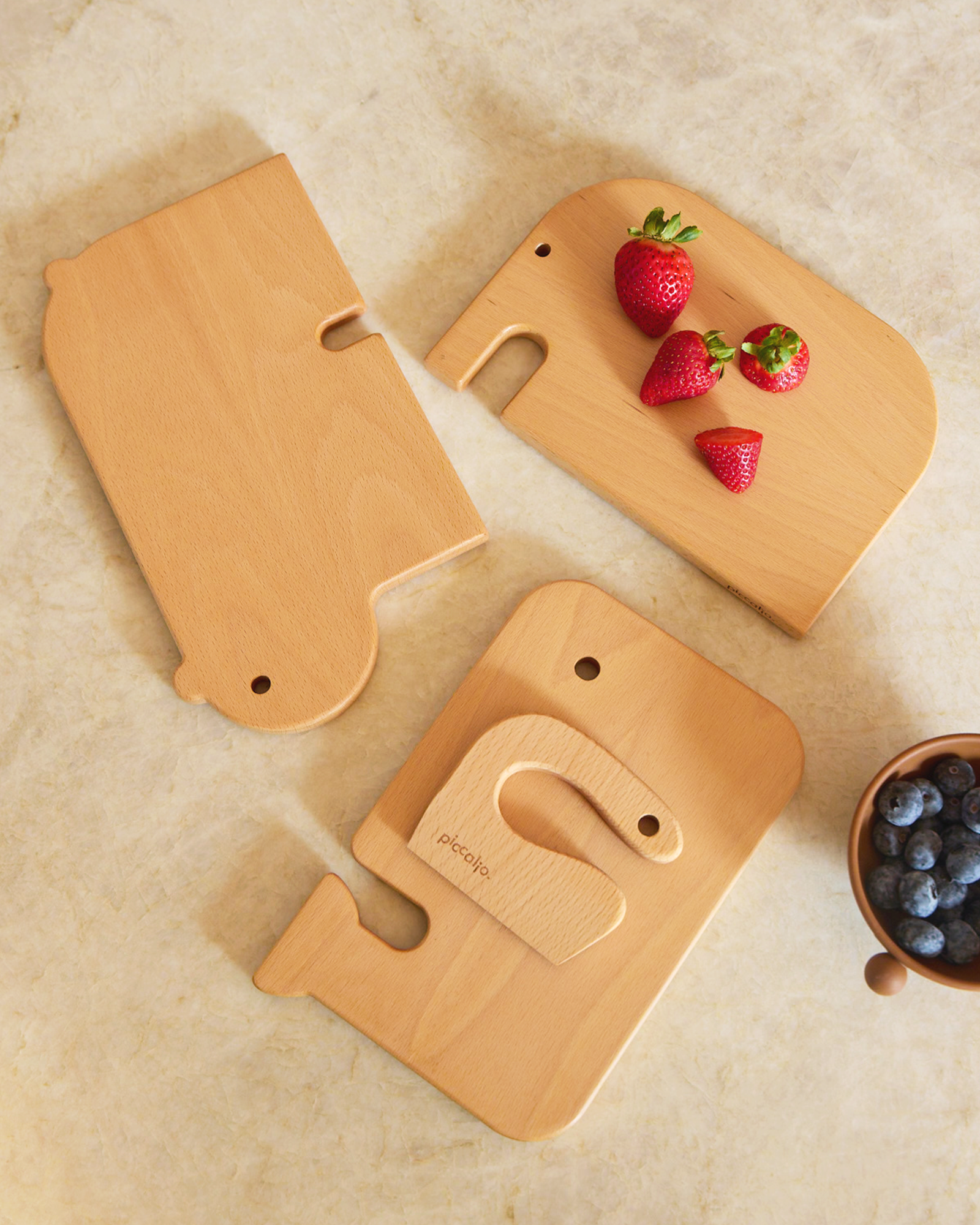
- Chop soft foods with a child-safe knife
These kinds of tasks give your child a chance to participate in age-appropriate tasks. They also create repetition, which is how confidence and skill develop.
Start Small and Stay Close
Kitchen participation works best when it feels calm and doable.
Start with one small task and stay nearby without hovering. Once your child gets started on a task, you can continue working alongside them. Try to avoid making comments or directing your child, as this can interrupt their concentration and motivation. Only step in if your child is in danger or asks for help.
Also, remember that your child does not need to “help” for long stretches to benefit. Even a few minutes of focused participation can be meaningful for toddlers.
As your child participates more and more, you may notice that your child:
- Stays engaged longer than expected
- Asks to repeat the same task
- Becomes more confident
That repetition is valuable. Toddlers learn by doing things again and again.
Participation Matters More Than Perfection
Things may spill. The spoon may end up on the floor. Your child may mix too fast or forget the next step.
That’s okay. The goal is not perfect performance. The goal is participation. This gives your child the practice they need to build real executive function skills, as well as fine motor skills, and a host of other benefits.
The Harvard Center on the Developing Child notes that children need repeated opportunities to practice reflection, monitor their actions, and gradually manage tasks more independently as adults scaffold and then step back.
Bringing It All Together
Kitchen participation gives your child more than a better view of the counter. It creates opportunities to build confidence, strengthen attention, and practice important early learning skills through everyday life.
When your child is included in meaningful routines, they begin to see themselves differently. Hearing your little one say, “I helped make supper,” with pride is something you’ll never forget. It cements their position as a helper, a contributing family member, instead of a little one who always needs someone to help them.
Small, everyday moments are all it takes to start building your child's confidence and skills. With my children, all it took was invitations to help with breakfast, lunch, dinner, or snacks. Before I knew it, they were taking the initiative to make their own snacks and help prepare meals.
Explore Furniture Designed for Kitchen Participation
Thoughtful kitchen tools can make it easier for your child to join in safely and confidently.
Explore our Kitchen Collection to find pieces that support everyday participation, growing independence, and real-life learning at home.
We wish you the best as you start to involve your little one in kitchen tasks. Do you have a favorite mini chef activity your child enjoys? Share it with us in the comments below.








Leave a comment