

Behind the Scenes of our Montessori Floor Bed in Twin and Toddler Size
bedBED™ wasn’t created overnight. Our toddler floor bed is the result of years of perfecting designs and careful planning. Our dream was always to create a floor bed that supports independence, grows with the child, and meets the strictest safety standards. An essential part of bringing our toddler bed to life is our manufacturing partner.
The Making of Our Montessori Floor Bed
"Finding the right manufacturing partner was key because making high-quality kids' beds is difficult and has to be done by the best in the industry. When we finally found our current manufacturer in Europe, it felt like the stars had aligned," Piccalio co-founders Ali and Aneta shared.
After our founders visited the factory in 2022, prototyping began in 2024. bedBED™ became available for order in the fall of 2025. We recently spoke with the factory’s export manager to share more about the craftsmanship that goes into creating each and every Montessori bed. Below is the interview, lightly edited for readability.

How long have your staff been working with you?
Export Manager: Many of our staff have been with the factory since it was established in 1994. Our team includes about 100 people, from those in the office to hands-on workers, supervisors, and more.
What does a typical day look like?
Export Manager: A typical day starts with production planning for the current day and weekly processes. We consider the time needed for each stage of production. Each production process has a supervisor who monitors progress and ensures quality control.
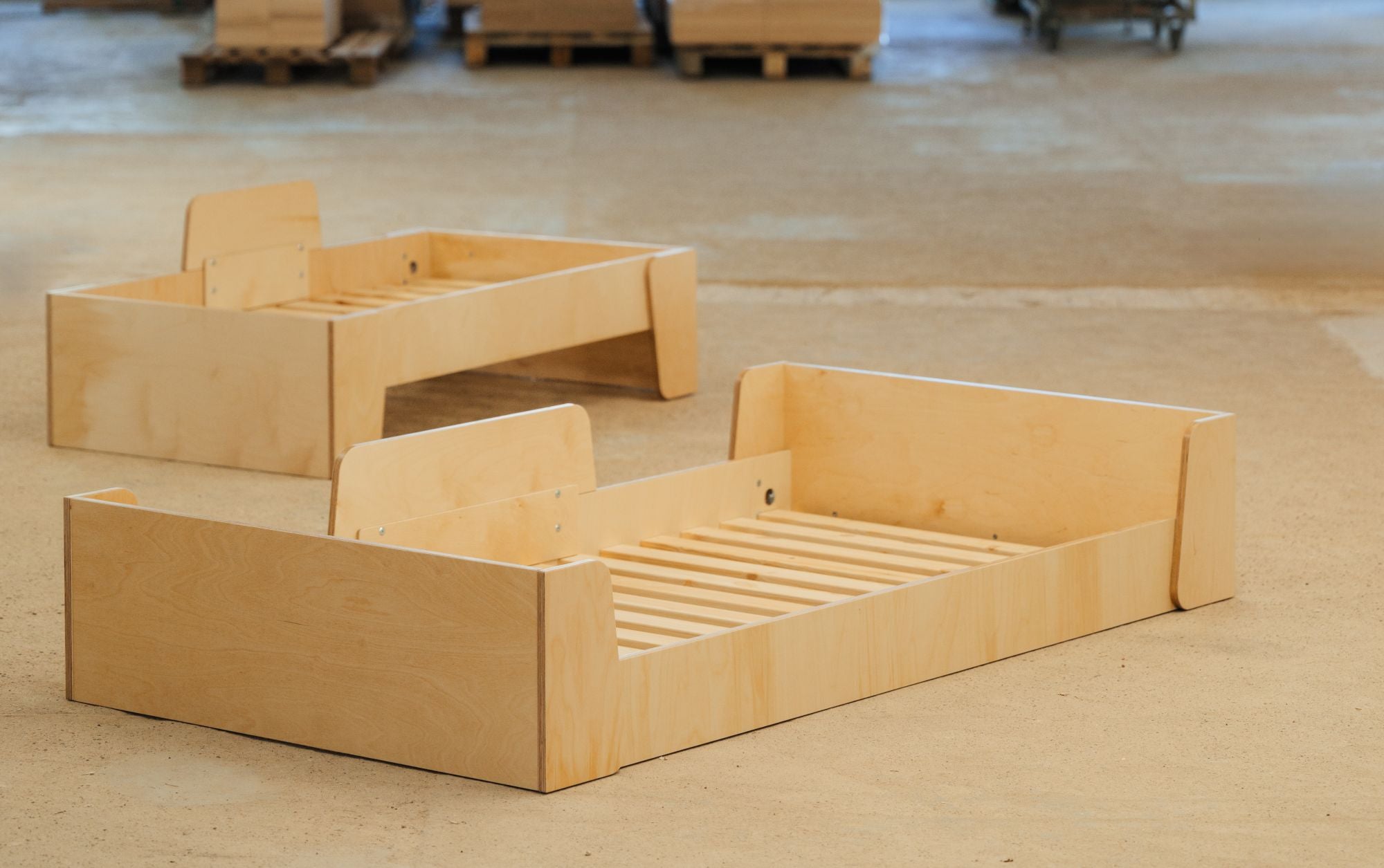
Each day may look different, but the production process of beds for children includes several key steps. The first step is cutting and material processing. Then, materials move to shaping, drilling, and edge processing.
Next, pieces are finished on our lacquering UV line. For bedBED™, we use a 0-VOC, non-toxic finish that also highlights the beauty of the natural birch plywood. Finally, we assemble sets and package each bed for shipping.
How many people touch a piece before it’s ready to ship?
Export Manager: It takes many weeks and many hands to make the final products. In total, our factory employs about 100 people who work hard to complete every bed frame.
Our teams are experts in different areas of production. Some specialize in using the CNC machinery for cutting parts, while others sand edges by hand. Each production stage has a dedicated team.

What steps do you take to make the edges kid-friendly? Any special finishing techniques to reduce the risk of splinters?
Export Manager: To ensure a smooth, splinter-free finish, we utilize a combination of machine and manual sanding. Our factory has an automated production line for machinery sanding, and our team also completes touch-ups and final sanding by hand. Our quality control then checks to ensure all edges are well-sanded.
Additionally, we use a non-toxic, 0-VOC lacquer that helps ensure indoor air quality and a safe sleeping environment.
What is the most interesting technique you use to make bedBED?
Export Manager: Our factory has been operating since 1994, which means we have experience with many different production techniques. One of the most interesting techniques we use is UV lacquering. This process completes sanding, lacquering, and drying. UV finishing hardens the lacquer for a durable finish, all using non-toxic, formaldehyde-free materials.

What does your quality control process look like at each stage of production?
Export Manager: Each product, including bedBED™'s twin-size and toddler-sized versions, has a unique identification number. This ID helps us track a detailed checklist of aspects we review, including the quality of materials, sizing, surface finish, packaging, and more.
We complete random checks of each batch of beds during each stage of production. Additionally, specialized staff complete final checks before packaging. To ensure the highest quality, we also send 2 to 3 packaged beds from each batch for independent testing.

From Intentional Design to Your Child's Bedroom
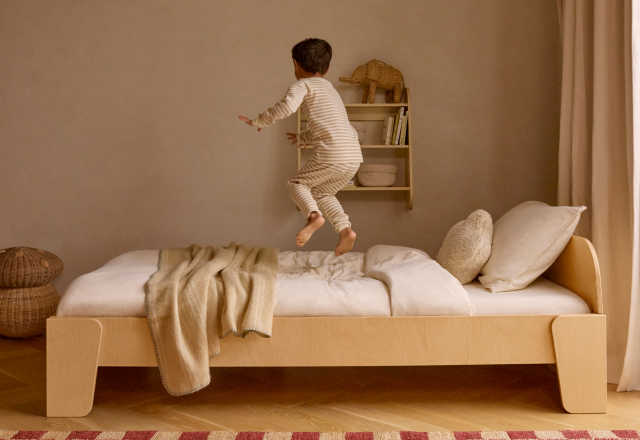
The design elements of bedBED™ require expertise and experience in a manufacturing partner. The process of designing bedBED™ carefully considered the needs of the children and families. Our toddler floor bed ensures freedom of movement and promotes independence.
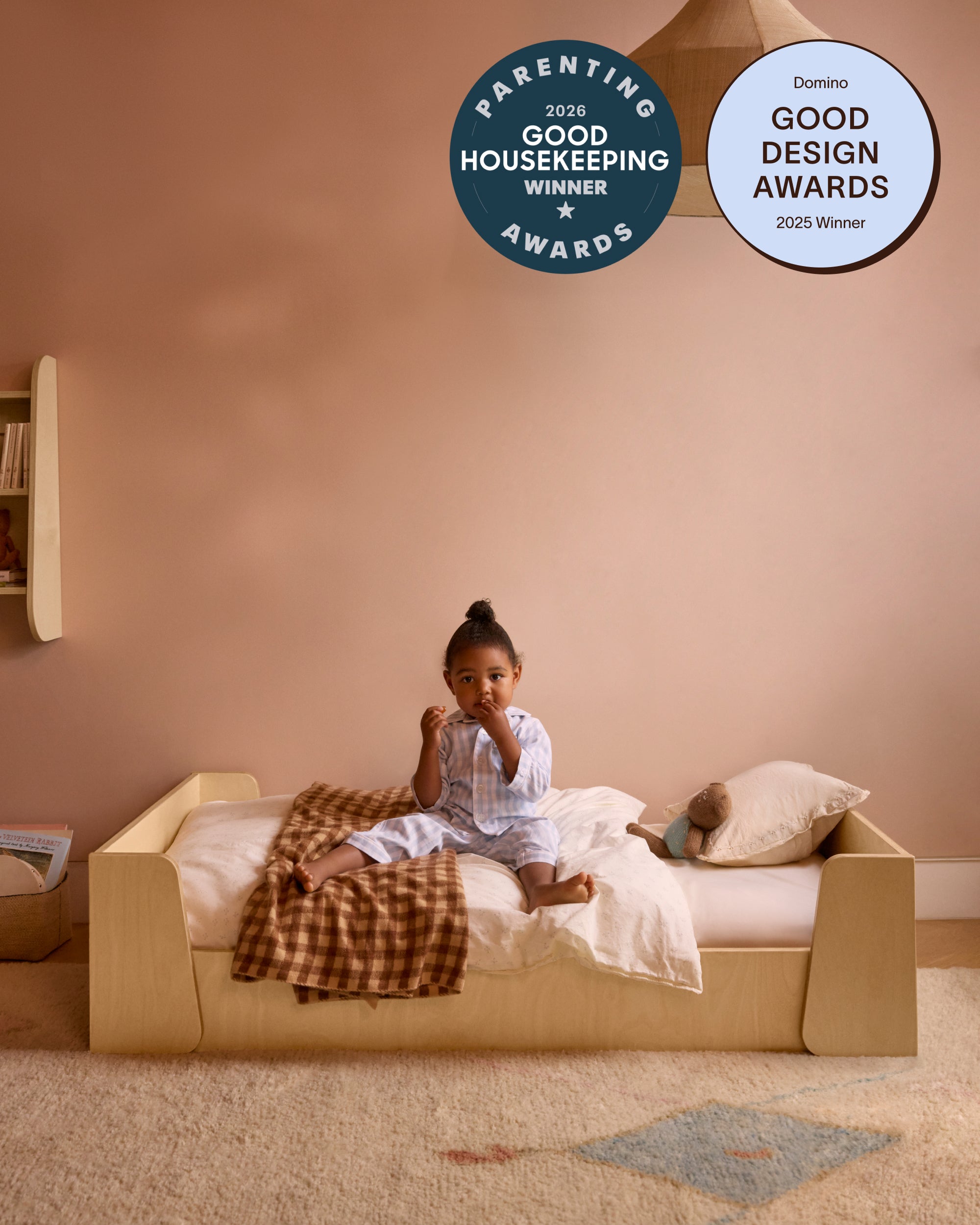
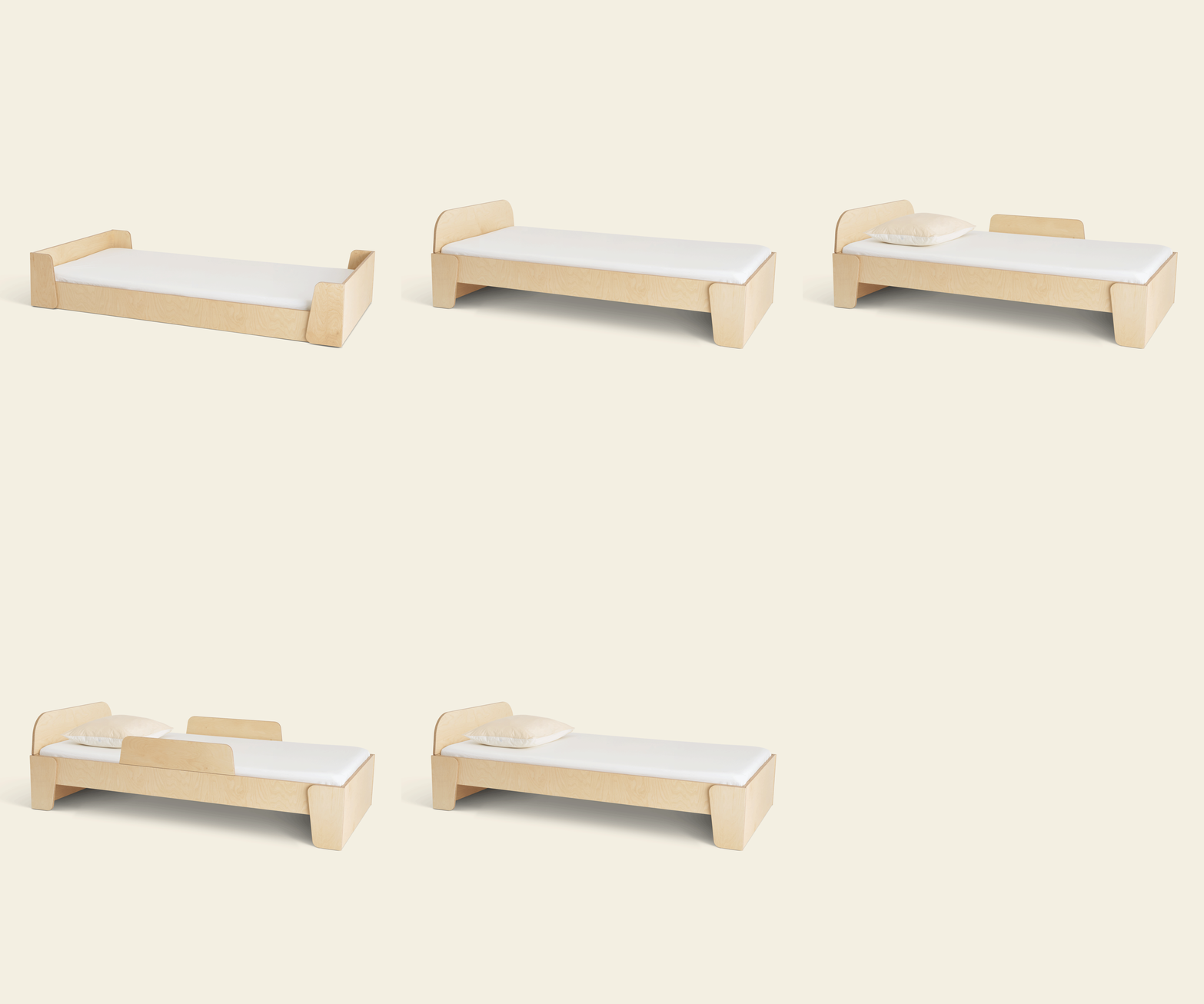
The low-profile of the Montessori floor bed means children can easily access the bed, which can reduce bedtime battles. Then, when your child is ready, the bed flips, turning into a big kid bed. This flip feature adds function for families, but also adds complexity to the design.
The bedBED™ factory excels at using CNC machinery to produce precise cuts that make these complex elements possible. In addition to these qualities, our partner factory also specializes in sustainable materials and technically complex furniture production.

Piccalio's Commitment to Crafting Sustainable, High-Quality Montessori Toddler Floor Beds
As part of our considerations, we chose the bedBED™ factory because they also specialize in sustainable practices. bedBED™ is crafted using FSC©-certified wood, which is sustainably sourced from EU producers.
Our bed offers peace of mind for parents with its safe, thoughtfully crafted design and non-toxic materials. Young children and toddlers spend up to 14 hours sleeping every day—meaning a safe and comfortable sleep space is crucial. bedBED™ is Greenguard Gold Certified, which tests for over 15,000 substances and chemicals, protecting indoor air quality.
We maintain a close working relationship with the factory and closely monitor production of each batch. "Our main value is the people working and the personal touch that can not be achieved only with machinery," the export manager explained. This sums up what we value so much in our manufacturing partners—the human touch that transforms simple pieces of wood into beautiful furniture pieces that become part of your home.










Leave a comment