

A Montessori Teacher Explains Why Toddlers Dump and Throw Toys and What to Do About It
When the house is quiet, toddler parents know it's too good to be true. Chances are, your little one has either gotten hold of a Sharpie or they're happily dumping out bins of toys, laundry, or worse, your purse.
Toddlers are notorious for frustrating behaviors like throwing and dumping out toys. As a Montessori teacher, I learned to see these behaviors through the lens of childhood development. Here's what you need to know about why toddlers dump and throw toys, plus how to handle it.
Why Toddlers Love Throwing and Dumping Out Toys
Dr. Maria Montessori put it best when she said, "Respect all the reasonable forms of activity in which the child engages and try to understand them.” This applies to many toddler behaviors, including throwing and dumping out toys. If we look at the child's behavior with curiosity, some common reasons toddlers love throwing and dumping include:
Cause and Effect
Toddlers are like little scientists, testing how the world works. Part of that exploration includes seeing what happens when they dump a bin of toys or throw something.
Practicing Motor Skills
Toddlers work hard to develop both gross and fine motor skills. Believe it or not, throwing and dumping are skills babies need to learn. Children typically develop the ability to throw around 18 months. Dumping bins or baskets and pouring are similar skills your toddler is also working on perfecting. Children naturally want to practice these skills to increase their independence.
Hand-Eye Coordination
Throwing and dumping require hand-eye coordination, a skill toddlers also enjoy practicing. Children look for opportunities to build their skills with whatever is around them. So, they'll throw and dump whatever's available, which is often toys.
Attention
Some toddlers may use these behaviors to get attention from adults. Sometimes, children crave even negative attention to get a reaction out of you. If you notice your toddler using behaviors to get attention, it may be a sign that they need more connection with you.
Lack of an Acceptable Outlet
Your toddler may need more acceptable outlets to practice skills related to throwing and dumping. For example, throwing balls outside, playing in a sandbox, or playing with water at the kitchen sink. When you offer appropriate outlets, your child won't be as likely to throw or dump toys.
Maximum Effort
Sometimes, toddlers try throwing heavy objects or picking up heavy bins of toys before dumping them. Dr. Montessori noticed that young children need to make a maximum effort. In other words, they crave the sensory input from heavy items. You can offer your child other outlets, such as carrying in a jug of milk from the car.
Still Developing Impulse Control
Toddlers and preschoolers are still working on impulse control. This skill doesn't kick in until children are about 3.5 to 4 years old, and even then, children must refine their ability. In other words, children can't always resist the urge to throw or dump toys.
Toddlers and Repeated Behaviors: A Pillar of Early Learning
What's frustrating for parents about behaviors like dumping and throwing is that they're so repetitive. As a mom, I know it's hard to say "the toys stay in the bin" till you're blue in the face. Yet, I also know that repetition plays an essential role in learning. As Dr. Montessori explained, "Repetition is the secret to perfection, and this is why the exercises are connected with the common activities of daily life."
As early childhood expert Rebecca Parlakian shared on NPR, "...you do not have to motivate children to learn. They are driven to master the world around them, and...they do that through repetition." Each repetition helps build neural connections that help children build an understanding of the world.
How to Respond When Your Child Throws and Dumps Toys
Parents can set boundaries around dumping and throwing toys. If your child dumps out a bin of toys, try having them clean up the toys again. Also, remind your child of rules and why behavior like throwing toys is dangerous. You can say something like, "Toys stay on the carpet. Throwing toys can hurt someone."
Additionally, you can use Montessori discipline techniques, such as logical consequences. A logical consequence for throwing or dumping toys might be, "We'll put the toys away until after lunch." You can set the limit however works best for your family.
Offer Independent Toy Storage: Ownership Leads to Responsibility
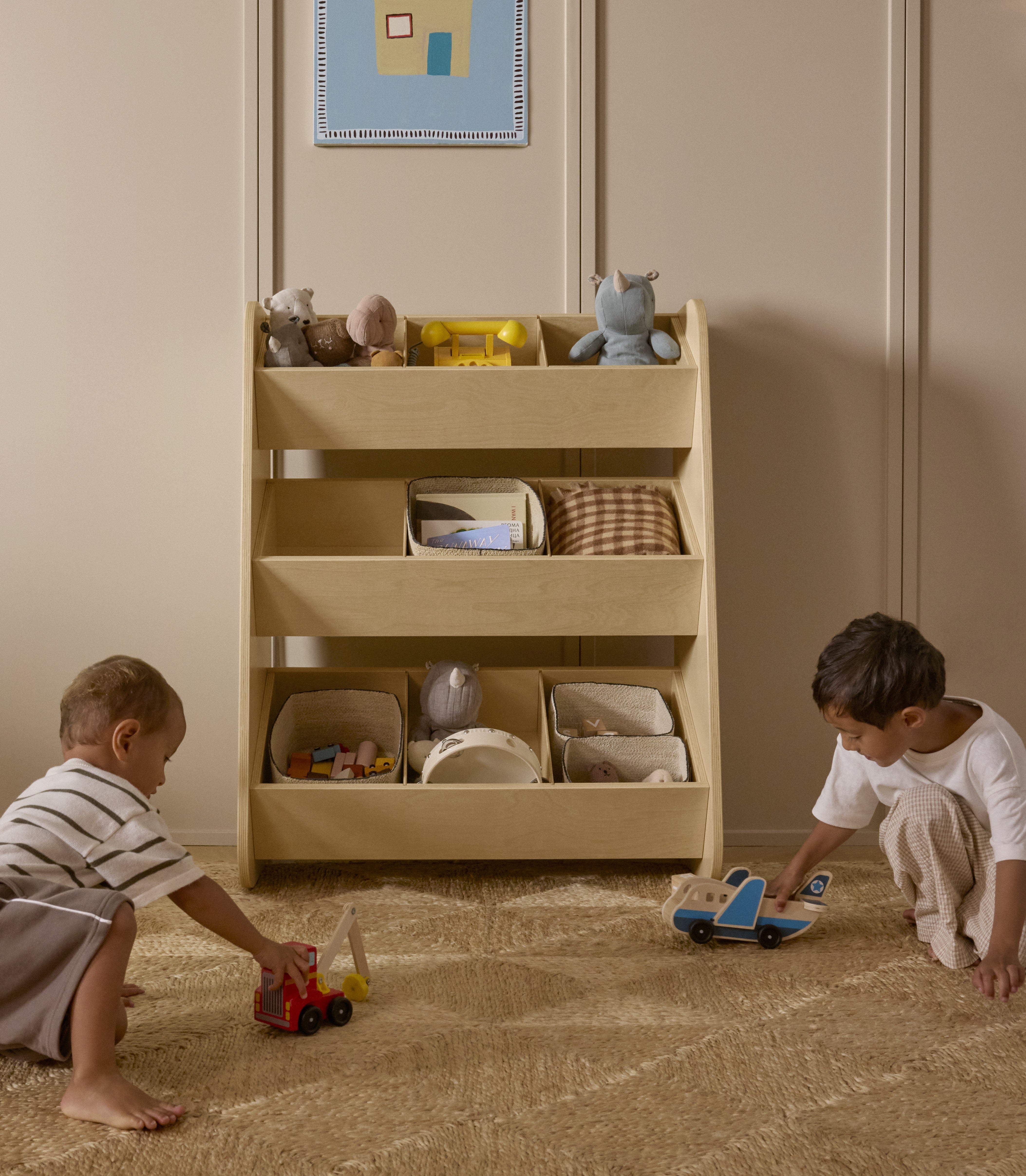
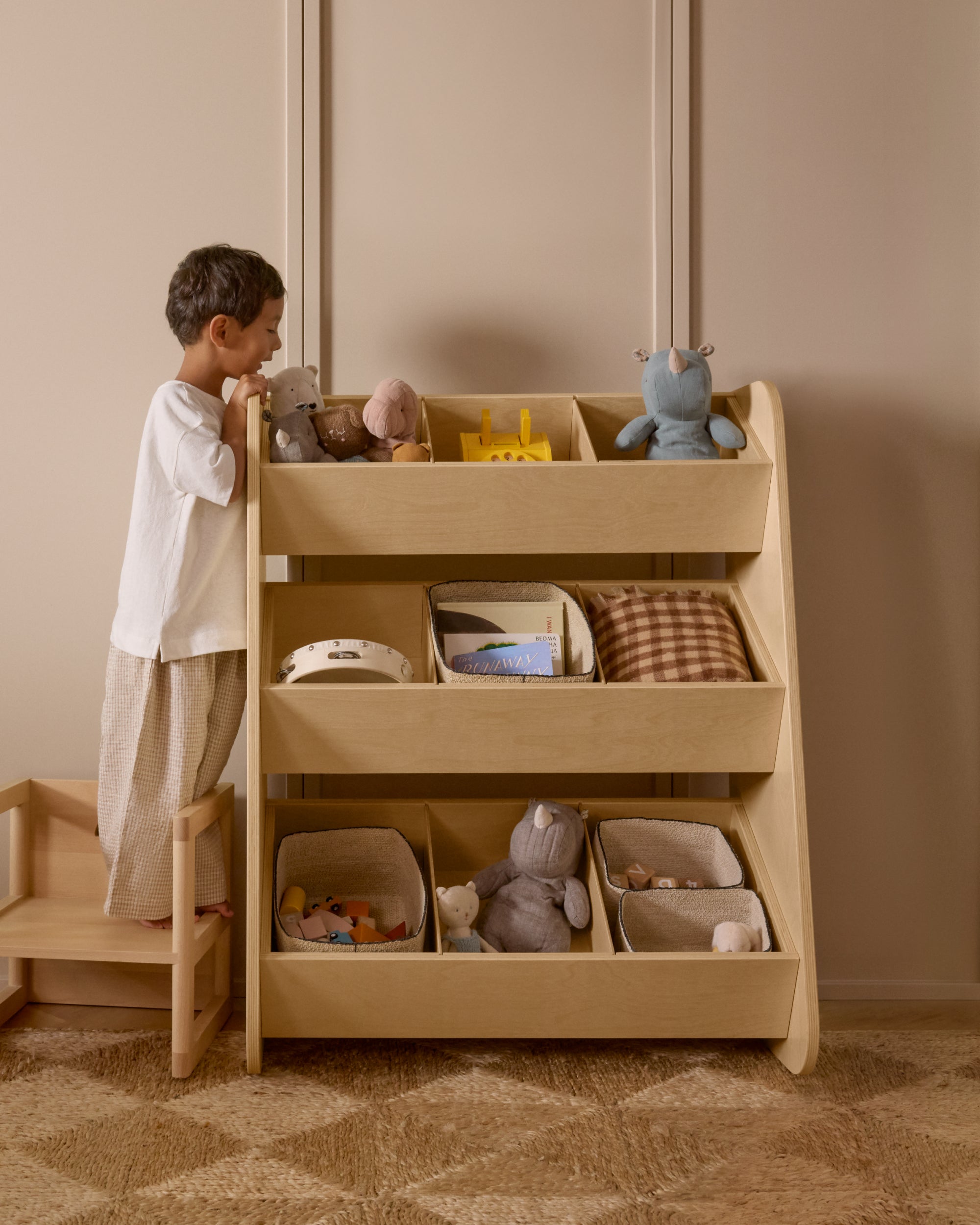
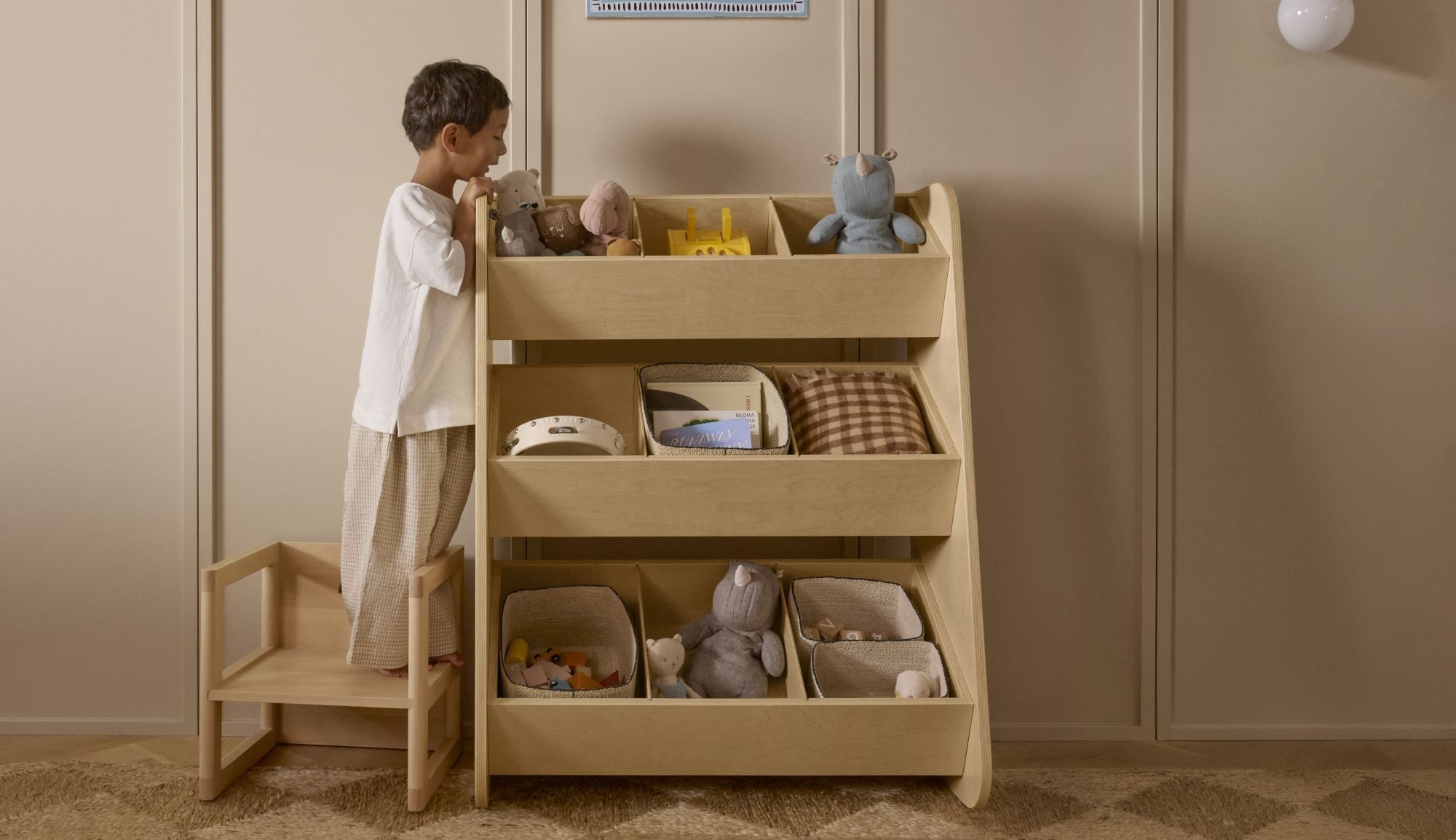
In Montessori classrooms, even young children help care for the space. Instead of adult-centered storage, children can access low shelves and organized trays or baskets. Young children get out their activities and materials independently and also return them when they're done.
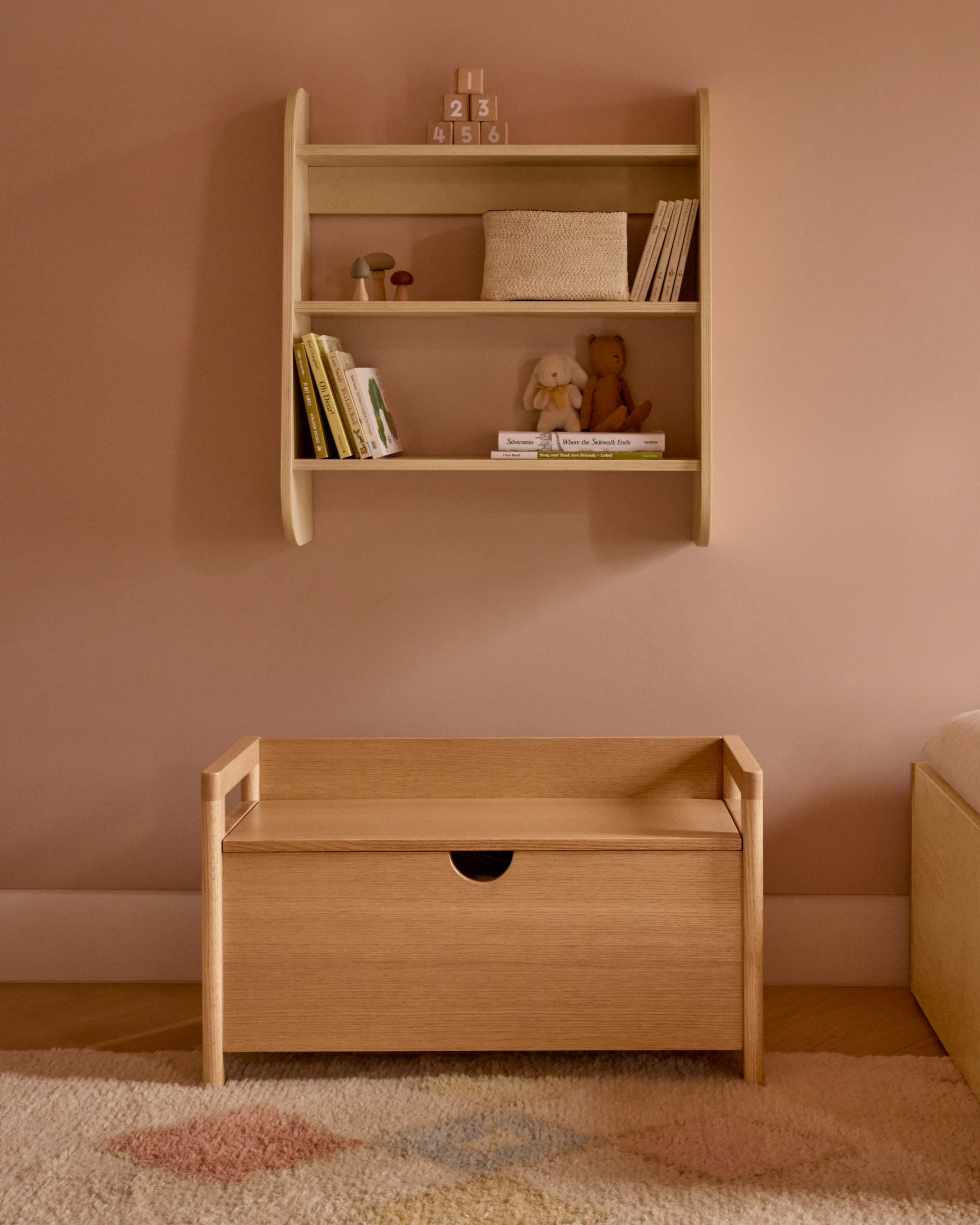
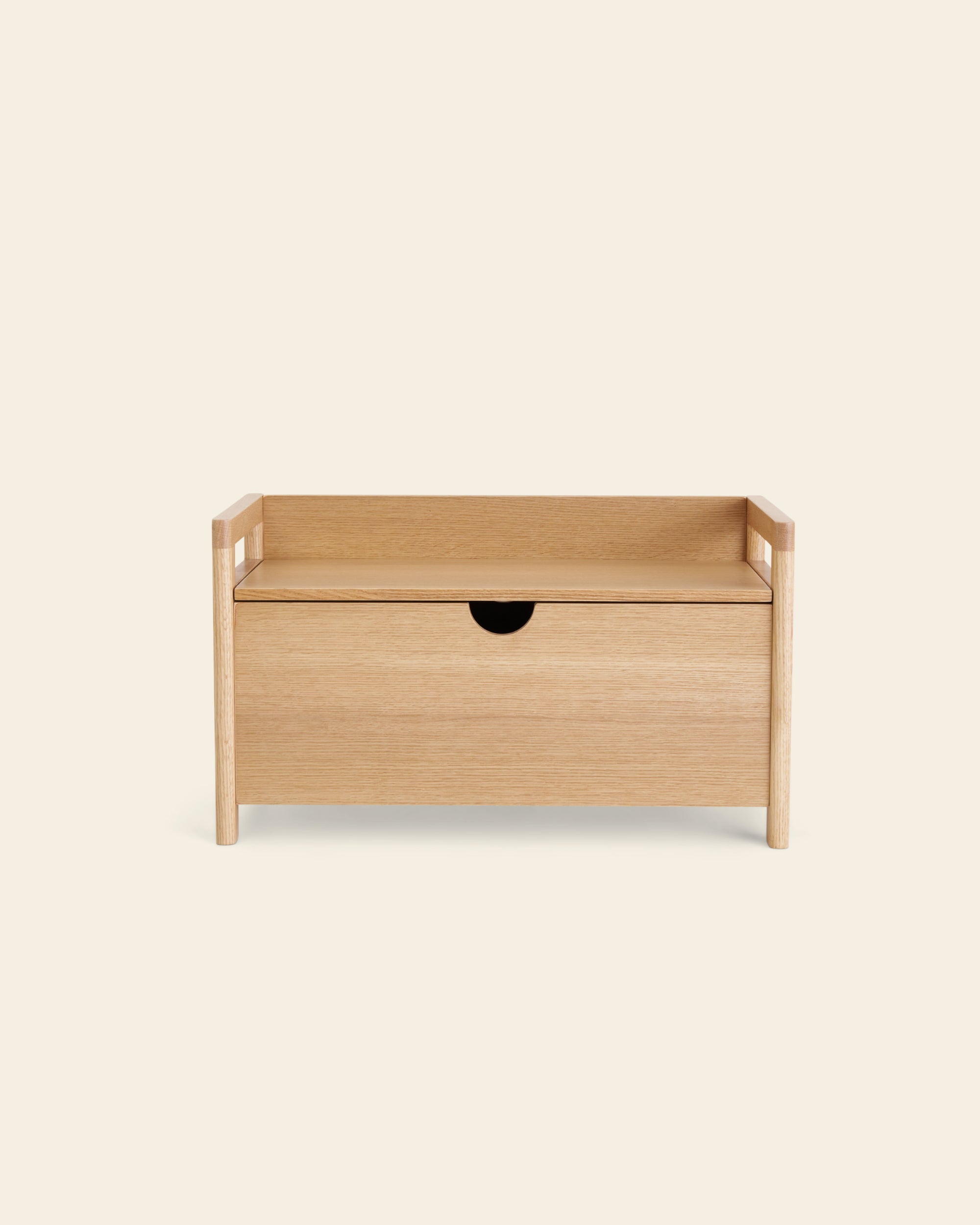
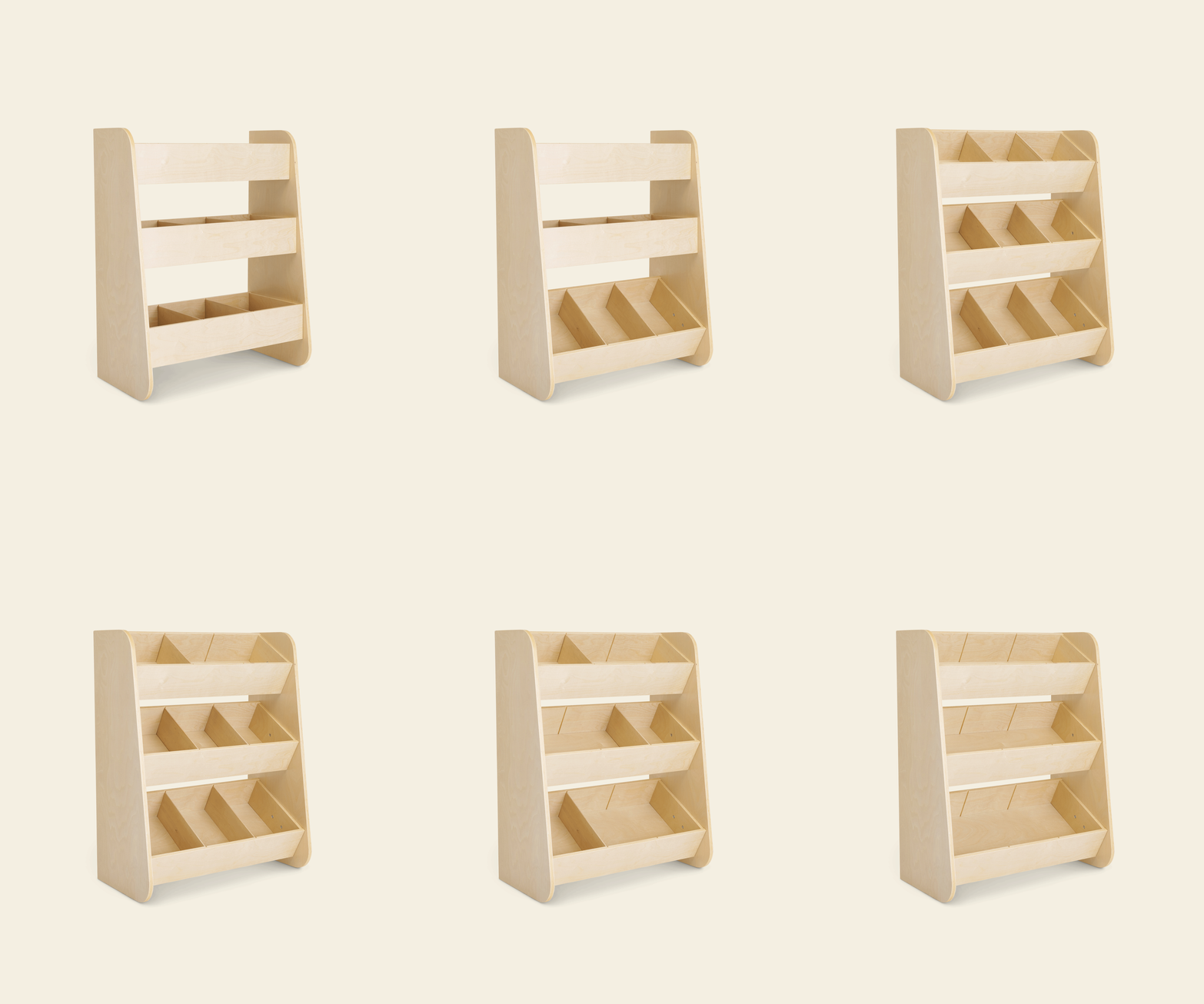
Creating a child-centered space involves using storage that meets children's needs. Open storage, like our Montessori Toy Shelf and Toy Organizer help children easily choose and return toys to the right spot. A Toy Box is another popular solution ideal for your child's bedroom as well as shared spaces like the living room.
Fostering a Sense of Responsibility in Your Child
Regularly involve your child in clean-up. Turn it into a routine. For example, before lunch, you pick up the toys in the living room. Or, after dinner, it's clean-up time.
You can make it an expected part of the day by announcing it. "Ok, it's clean-up time! Everyone helps clean up." Keeping it matter-of-fact helps normalize the task. Even if your toddler doesn't contribute much at first, they're watching and learning. Toddlers love copying you. Over time, they'll learn to keep their space clean. As you continue inviting them to help with clean up, they'll participate more and more.
Activities for 18 Month Olds Who Love Dumping and Throwing Toys
One of the best ways you can respond to your toddler who loves to dump and throw toys is to offer acceptable outlets. They need these experiences for development.
Keep in mind, these activities require adult supervision as they may include choking hazards.
Pouring Activities
Offer your child interesting pouring activities. Inspired by Montessori fine motor and practical life activities, pouring activities help fill your child's need to dump.
Set up a tray with a small pitcher and a cup or bowl. You can have your child pour dry grains like beans, lentils, or rice (be sure to supervise!). As your child builds their skills, also invite them to practice pouring water.
To keep pouring activities interesting, switch up the containers. For example, try a tall, thin pitcher, a short, fat pitcher, or a pitcher made of wood vs. a pitcher made of glass.
Indoor Basketball
To give your child an outlet for throwing, set up a game of indoor basketball. You don't need a real hoop; a laundry basket, a hamper, or a cardboard box will do the trick. Set the basket a few feet away from your child and invite them to toss soft balls, stuffed animals, or even rolled-up socks. How many baskets can they make?
Pro Tip: Only offer your child about three objects to throw. That way, they have to get up and retrieve the objects to continue the game, resulting in less clean-up at the end.
Sensory Bins
A sensory bin offers plenty of opportunities for dumping. Fill a plastic bin with a safe item for exploration, such as dry oats, corn meal, crackers smashed into "sand", cereals like Cheerios, Rice Krispies, or even cooked noodles. You can also try dried grains, pompoms, cotton balls, and other non-edible items if you can supervise closely. Then, add items like measuring cups, dump trucks, spoons, sieves, and funnels for your child to play with.
Similar to a sensory bin, sandboxes are another great option. Whether you find one at a nearby park or install one in your backyard, a sandbox is the perfect place for dumping.
Pro Tip: Contain the mess with an old sheet under the sensory bin. Or, take the activity outdoors.
Kitchen Sink Water Play
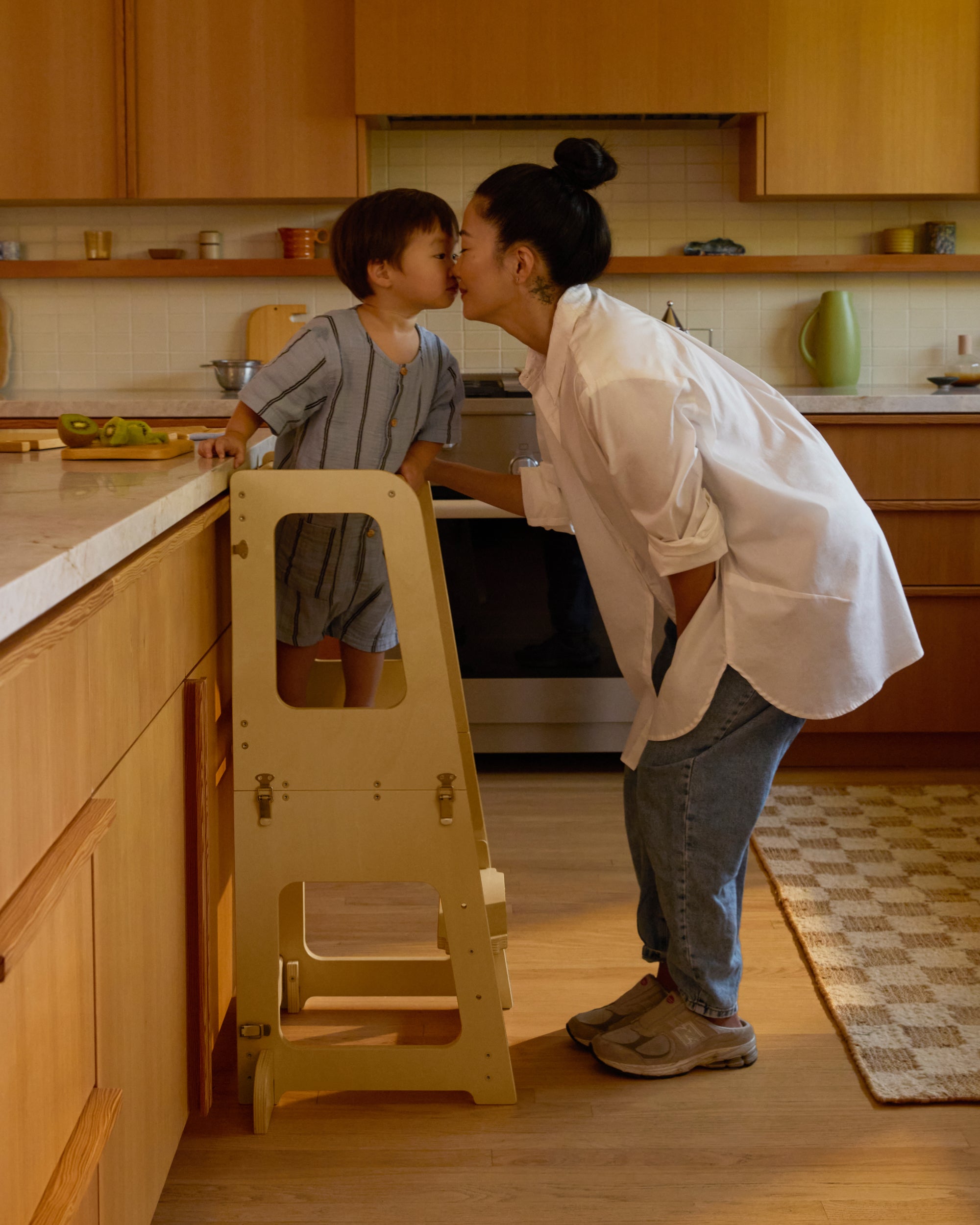
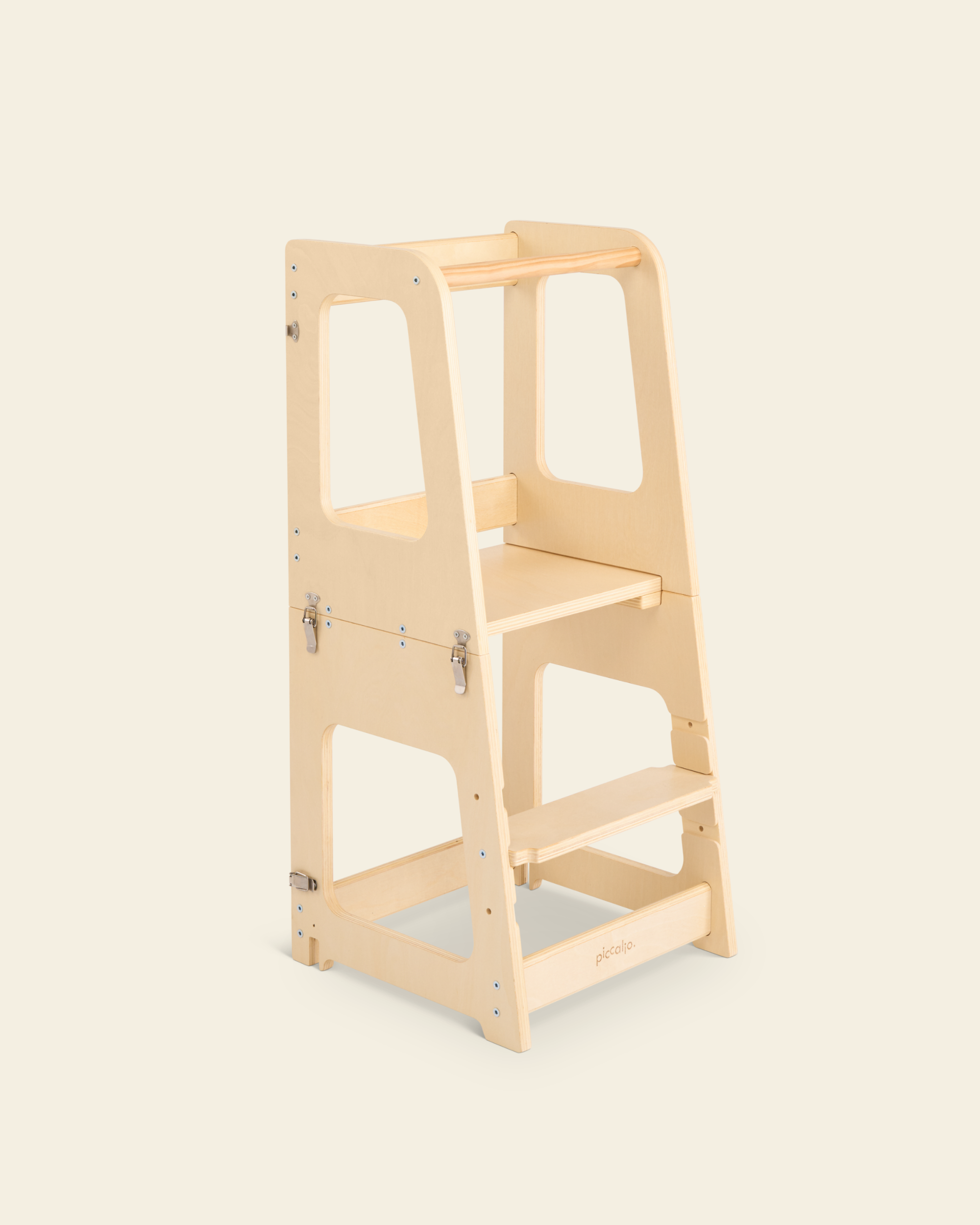
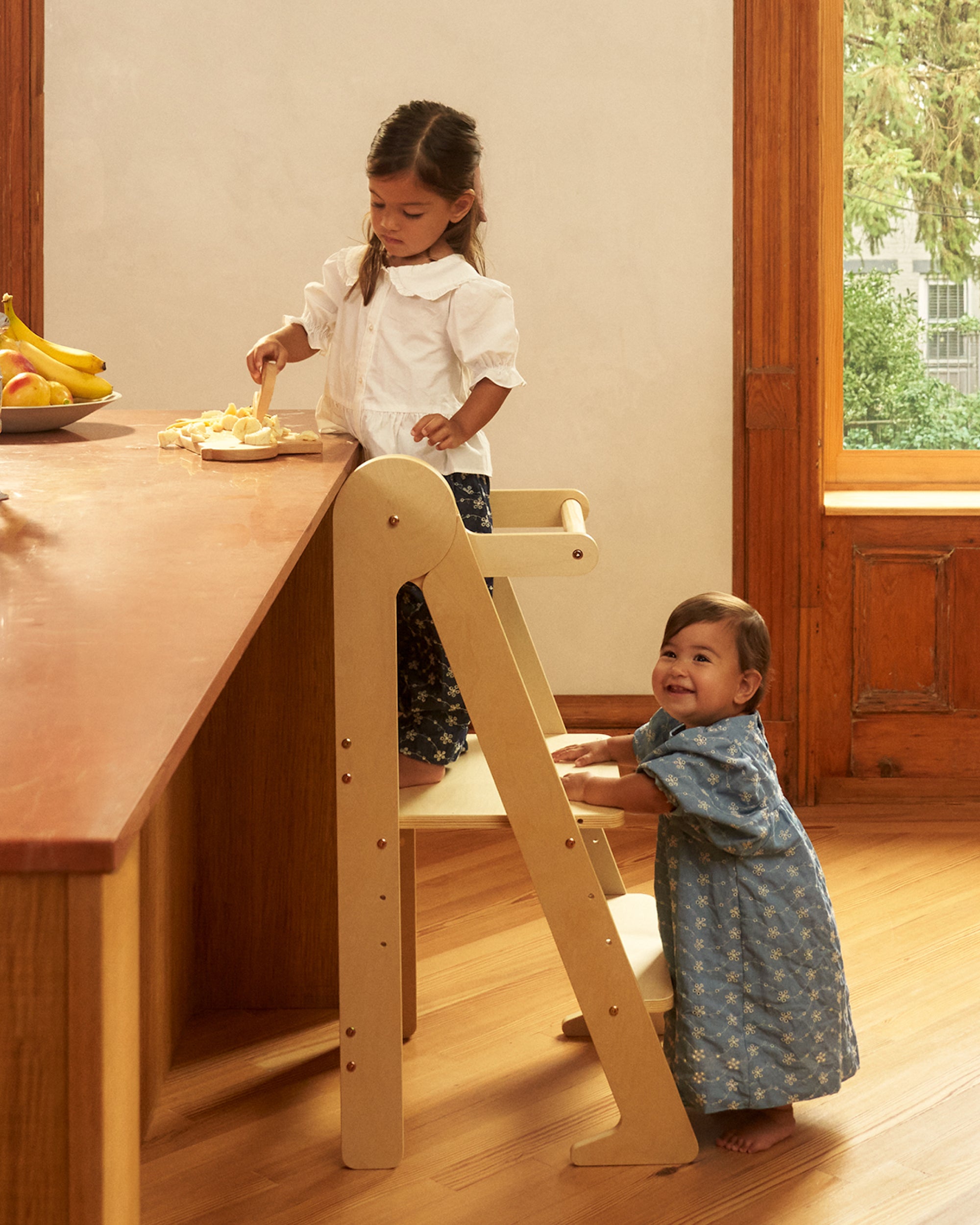
Sometimes easier than never-ending bathtime, why not try kitchen sink water play? Young children love playing with water, but it's not always practical. Get them up to sink height easily with a Toddler Tower.
Then, fill the sink and add some dish soap if you'd like. Add a whisk, funnels, small pitchers, or even bath toys, and watch them play!
Looking for more activities? Discover 15 Easy Kitchen Sink Sensory Activities for Toddlers.
Target Practice
For toddlers who love throwing, target practice is the perfect outlet. Set up something simple, like stuffed animals on the back of the couch. Then, have your toddler try to knock them off with a plush ball.
Or, use empty plastic water bottles on a bench or stool. Challenge your little one to knock the bottles over with a plush ball.
Gardening
A trowel, some dirt, and a bucket are all your little one needs to be happy. Show your child how to scoop dirt into the bucket and dump it out again.
Bowling
Similar to target practice, you can also try DIY bowling. Add a small amount of water to plastic bottles and set them up like bowling pins. Then, take turns using a ball to knock over the pins.
Pro Tip: Put tape over the lids of the bottles to keep your toddler from opening them. Or, glue them shut.
Play Catch with a Twist
Play catch using interesting balls like squishy balls, stuffed animals, small pillows, crumpled up paper, scarves, beach balls, lightweight bean bags, a balloon, etc. The variety of items keeps the game engaging and fun.
How to Stop a Child from Throwing or Dumping Toys
One of the best ways to stop your child from dumping or throwing toys is to offer an appropriate outlet for these behaviors. Provide options for your child to practice dumping and throwing skills with activities such as playing in a sandbox outdoors or playing catch.
When your child throws or dumps toys in inappropriate settings, you can also try setting logical consequences to limit the behavior. In time, they'll grow out of the stage and move on to new skills!





Leave a comment