

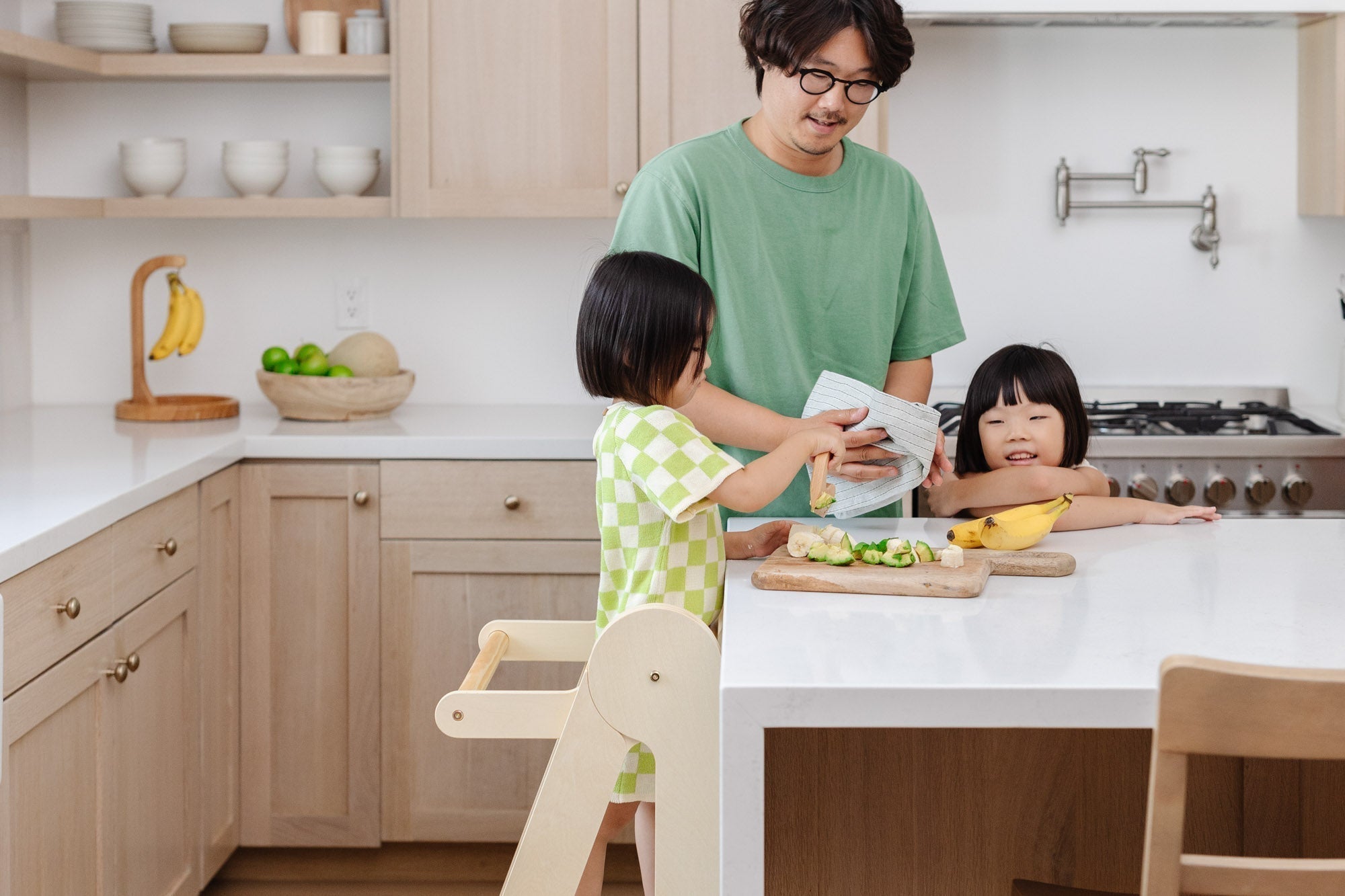
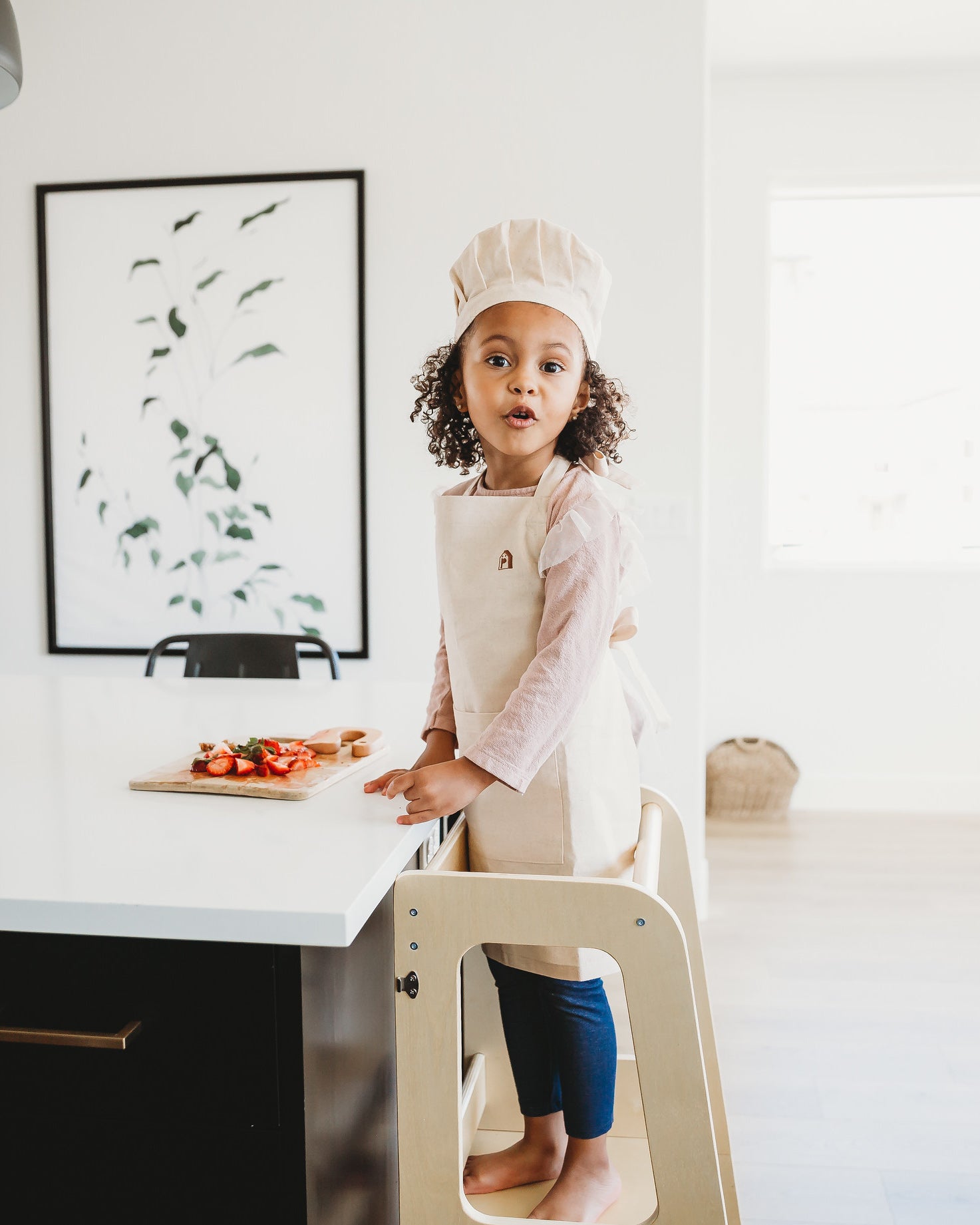
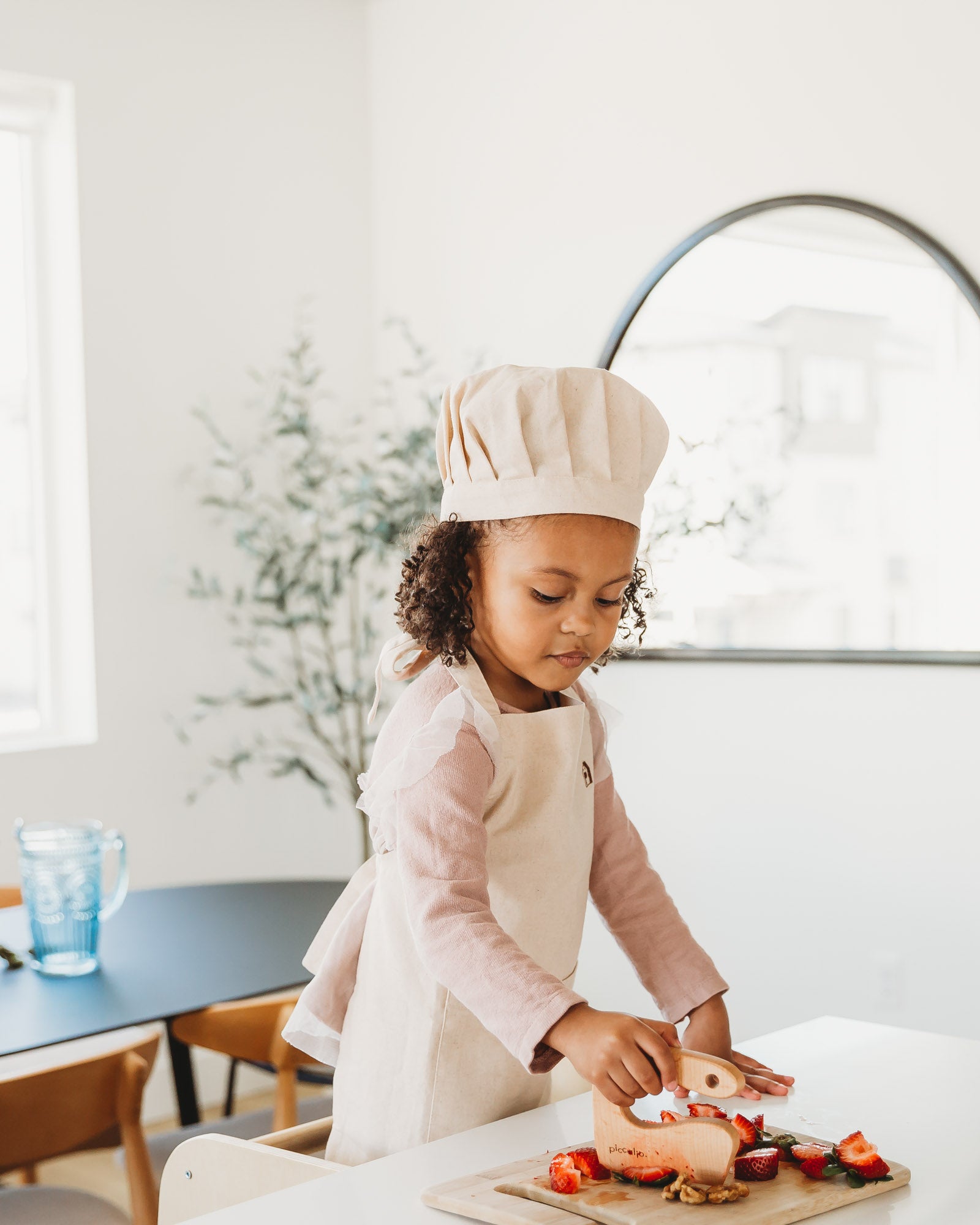
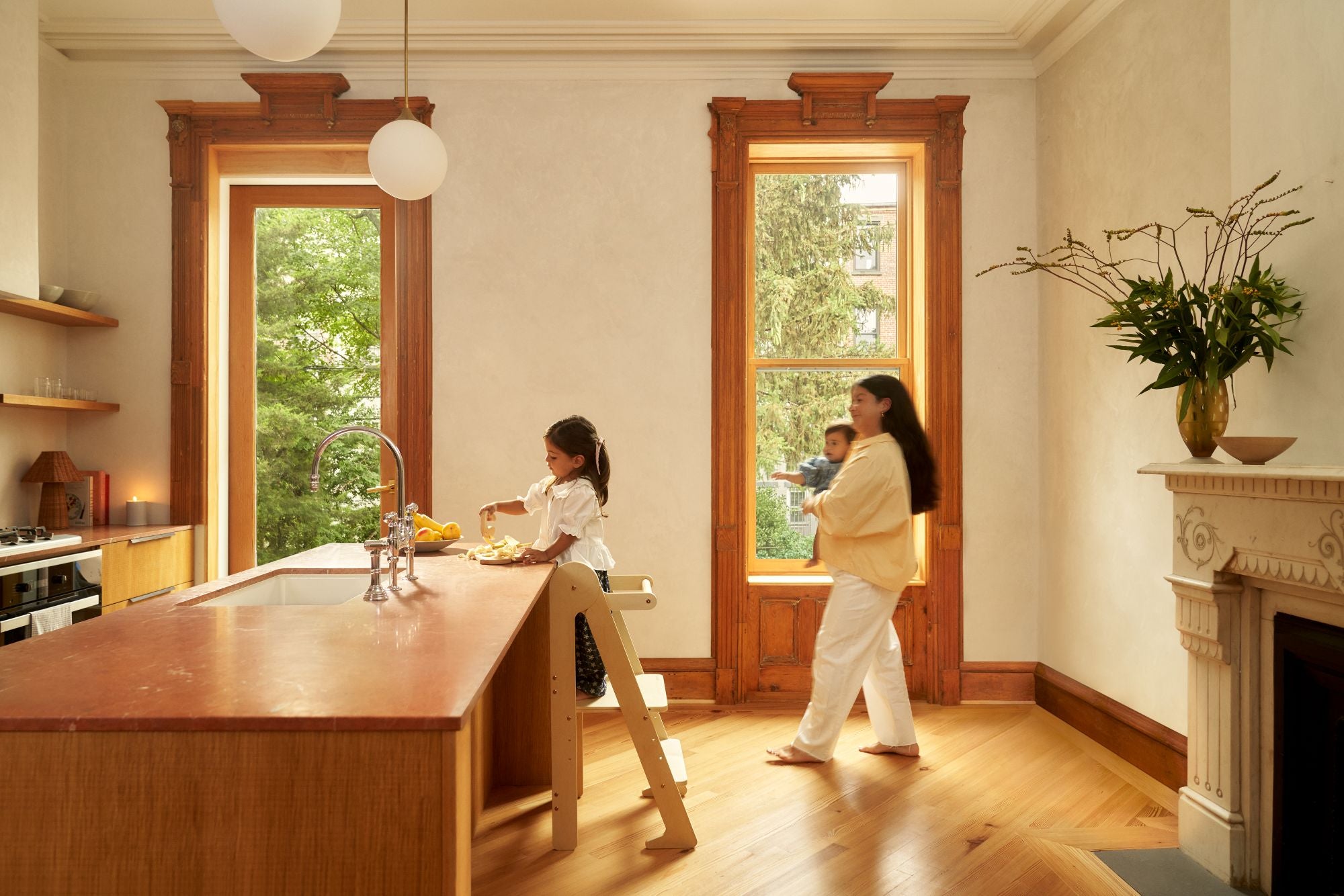
You’ve probably seen social media posts featuring toddlers perched at counter height, helping mix ingredients, washing hands at the sink, or even chopping fruit with confidence. These moments look effortless. But, for parents, they often raise a question: When can a toddler safely start using a learning tower?
A toddler tower isn’t a fancy stool. It’s a thoughtfully designed tool that supports independence by giving young children a stable, elevated place to stand. Instead of pulling on your legs or tiring out your back as you balance your little one on your hip, a toddler tower makes it easy to involve your child in kitchen routines. But knowing when to introduce one can make all the difference in safety and confidence.
In this guide, we’ll explore how toddlers can start using a toddler tower, what skills they need first, and how different tower styles can support independence at various stages of development.
What Is a Toddler Tower?
Before we talk about timing, it helps to understand what a toddler tower is.
A toddler tower is a raised platform with secure sides and access steps that allows a child to reach higher surfaces, like kitchen counters, safely. It’s designed to minimize tipping and support your child’s balance while letting them join everyday activities like:
- Helping with cooking or baking in the kitchen
- Washing hands at the sink
- Painting or crafting
- Observing and learning during daily routines
What sets a toddler tower apart from a step stool or chair is its stability and enclosure. Guardrails, sturdy bases, and thoughtfully sized steps give toddlers a secure space to stand with a lower risk than using furniture intended for adults.
At Piccalio, we design our Toddler Towers to help children engage confidently by blending safety with simplicity so they feel like a natural part of the home.
Typical Age to Introduce a Toddler Tower
There’s no single “correct” age for every child. Instead, readiness depends on a toddler’s physical and cognitive development.
Most toddlers are ready to start using a toddler tower between 18 and 24 months, though some may be ready a little earlier and others a bit later. What matters more than chronological age is whether they:
- Can stand steadily without support
- Pull up to a standing position
- Step up and down safely with guidance
- Follow simple directions (like “stand here” or “stir the pancake batter”)
These skills indicate that your little one has enough balance and coordination to use a toddler tower safely with supervision.
Skills to Look For Before Introducing a Tower
Safety always comes first. Before placing your child on a toddler tower, it helps to look for a few key developmental signs.
- Gross motor skills: Your child can stand independently and manage crawling or stepping onto low platforms with support.
- Awareness of surroundings: Your child notices edges, steps, and railings and moves carefully around them.
- Communication skills: Your child can follow simple instructions and let you know when they are “all done” or need help.
-
Interest: Your child shows curiosity about what you’re doing and wants to participate in activities around the house.
When you see these skills emerging, your child is more likely to have a smoother and safer transition to using a toddler tower.

Starting Safely With Supervision
Even if your toddler is physically ready, a toddler tower should always be used with supervision. It’s a tool that helps your child participate more independently—but it doesn’t replace your presence in the room.
In the beginning, staying close helps your child feel secure and confident as they learn how to use it.
Here are a few simple ways you can support safe early use:
- Stay nearby and attentive while your child is standing.
- Place the tower on a flat, steady surface.
- Keep it away from hot stovetops, sharp edges, or heavy objects.
- Help your child climb in and out until they feel comfortable doing it on their own.
When you’re close by and guiding gently, your child begins to associate the tower with participation and confidence—not risk.
Choosing a Toddler Tower That Grows With Your Child
Not all toddler towers are the same. The right style can boost your child’s confidence while also helping your kitchen run smoothly.
Foldable Toddler Tower
A foldable design is a great first choice for families who want flexibility. You can easily tuck the tower away when not in use or move it to other important areas, such as the bathroom, to reach the sink.
Its lighter structure and easy storage can make it feel less intimidating for toddlers who are just starting to build confidence.
The Foldable Toddler Tower offers:
- A stable platform for early exploration
- Simple setup and storage when not in use
- A minimal footprint in smaller spaces
- An adjustable standing platform that grows with your child
- Adults can also use the tower as a step stool
This style is ideal for families with smaller kitchens or who want to use their tower in multiple rooms of the home.
Convertible Toddler Tower
For families looking for multi-functional furniture, the Convertible Tower is the perfect choice.
The Convertible Toddler Tower offers:
- Multiple configurations for standing or sitting
- Adjustable step height as your child grows
- A sturdy feel that supports evolving use
The Convertible Tower makes it easy for your child to shift activities, from mini chef, to diner, to artist in a few quick changes. The small size of the table and chair makes it easy to keep your little one closeby, no matter what activity they’re enjoying.
How Toddler Towers Support Everyday Growth
Toddler towers are more than tools for height. They help toddlers participate in real-life moments that foster independence, language, and motor skills.
When toddlers are at counter height, they can:
- Help wash fruits and vegetables
- Stir ingredients while you cook
- Put cutlery away
- Observe rhythms of family routines
These small moments add up. They help toddlers feel capable, connected, and confident.
Addressing Common Questions
What if my toddler is hesitant at first?
Some toddlers take time to feel comfortable. Allow them to explore the tower at their own pace. Going up and down with support, turning it into a game, or using it near something familiar can help them warm up to it.
Are toddler towers safe for small kitchens?
Yes. When placed thoughtfully — away from hot surfaces and sharp corners — a toddler tower can be a safe addition to small spaces. Its compact design makes it easy to use without taking over your kitchen.
What if my child isn’t ready yet?
Wait. Introducing a tower before your child is physically or emotionally ready can make them hesitant. Wait until they show steady control and interest.
Integrating a Toddler Tower Into Daily Routines
Once your child shows the skills and comfort, a toddler tower can become part of everyday life. A consistent place for them to stand and participate helps establish routines.
For example:
- Morning: Washing hands together
- Snack time: Helping prepare fruit or pour water
-
Creative time: Painting or dough play at counter height
These routines help toddlers see the tower as a place of participation, not just height.
Everyday Safety Reminders
A toddler tower is supportive, but supervision remains essential. Always:
- Stay within arm’s reach
- Ensure the tower is stable before use
- Encourage gentle movement
- Teach safe stepping in and out
- These simple habits make any toddler tower safer and more supportive of your child’s growth.
Need more safety tips? Read a Montessori teacher's guide to using a toddler tower safely.
Encouraging Confident Participation
The goal isn’t perfection. The goal is involvement. When toddlers are gently guided and feel secure, they begin to trust themselves and their environment.
A toddler tower can be a subtle invitation:
Come stand here. Come help. Come be part of this moment.
That invitation matters in how toddlers learn to participate and feel confident in everyday life.
Explore Toddler Towers Designed for Everyday Life
At Piccalio, toddler towers are thoughtfully designed to support toddlers at different stages of development — from early balance and confidence to more independent participation.
Explore the Foldable Toddler Tower, a flexible choice for early learners.
Check out the Convertible Toddler Tower, ideal for growing independence and evolving use.
Browse all the Piccalio kitchen-friendly options to find something that fits your space and routines.







Leave a comment