











Frequently Asked Questions
Furniture designed for toddlers ages 1–3
The toddler years are defined by movement, imitation, and an emerging desire to “do it myself.” Between ages 1 and 3, children are building balance, language, coordination, and self-confidence at an incredible pace.
Montessori furniture for toddlers is intentionally scaled and engineered to support this stage. Rather than adapting adult furniture for small bodies, we design toddler furniture that meets children where they are developmentally.
Across this collection, you’ll find pieces that support:
- Safe climbing and gross motor exploration
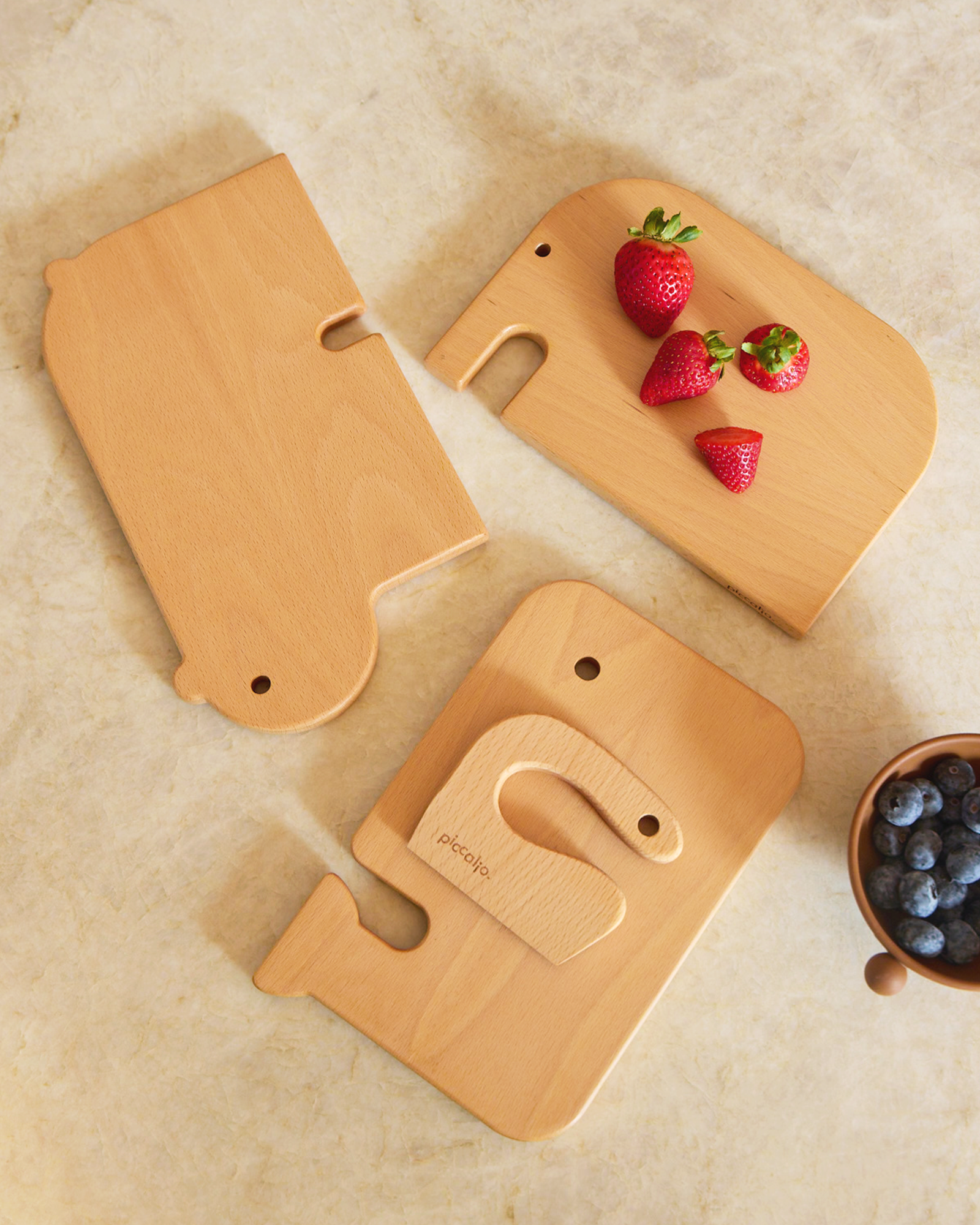
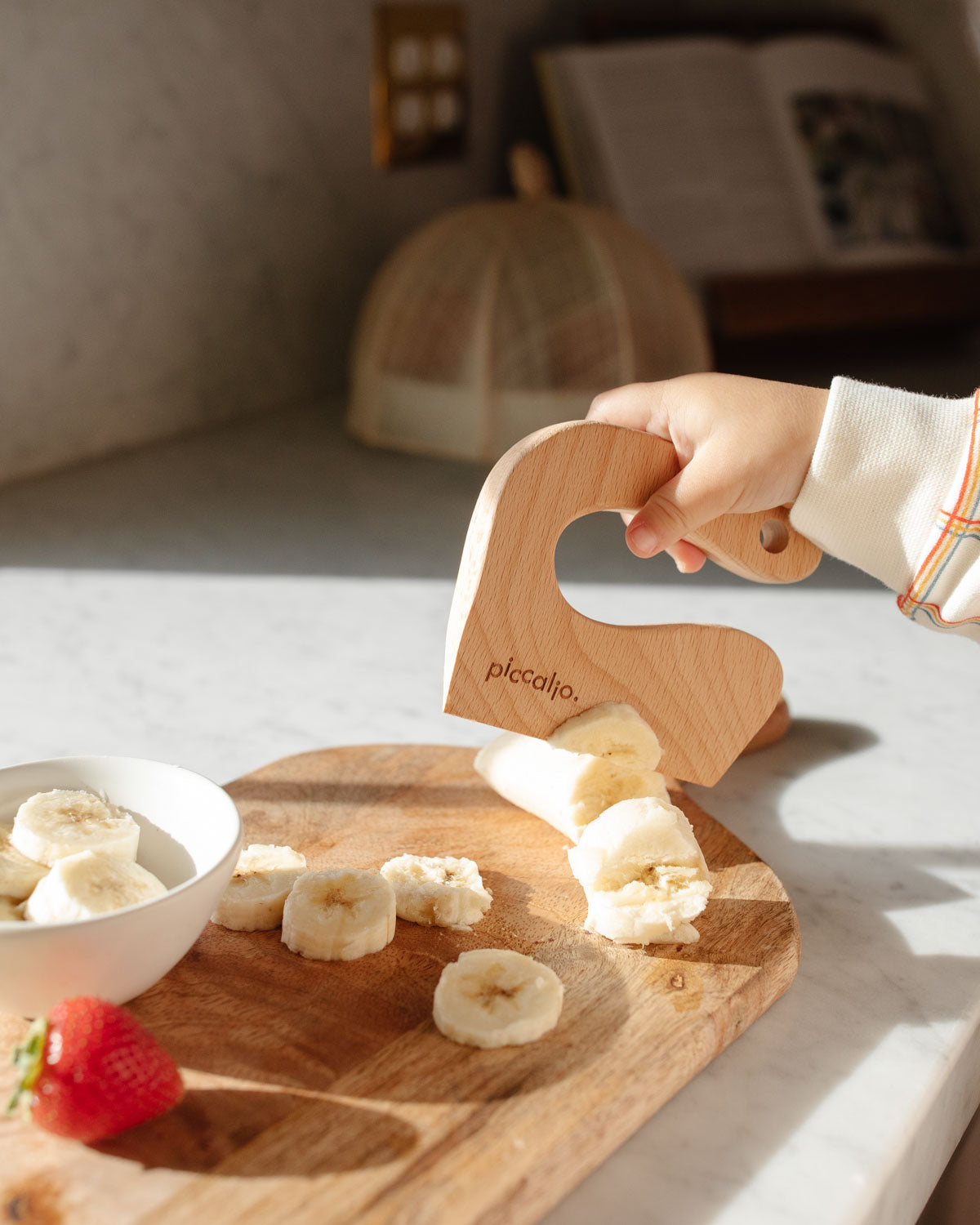
- Practical life participation in the kitchen
- Independent sleep transitions
- Focused seated activities
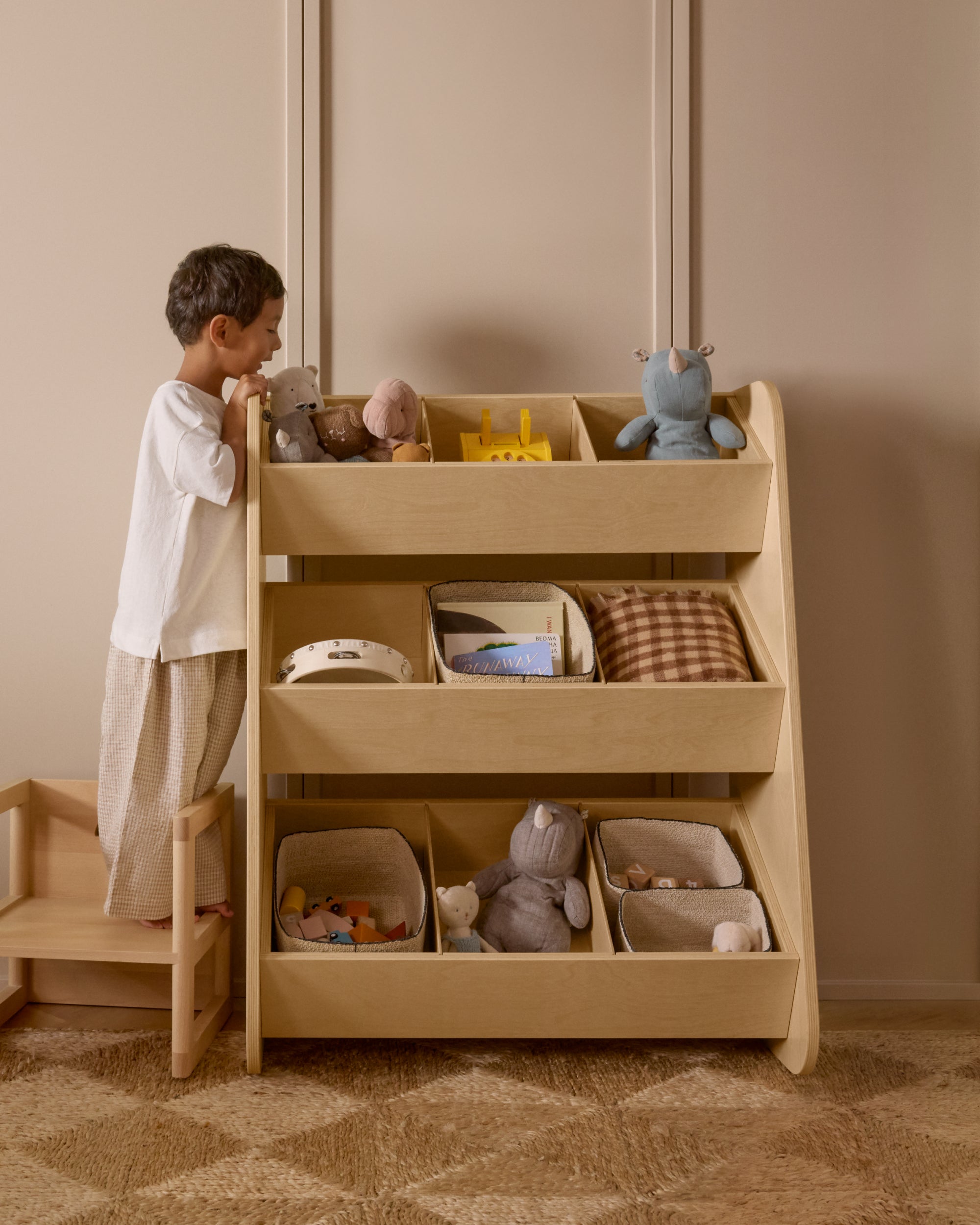
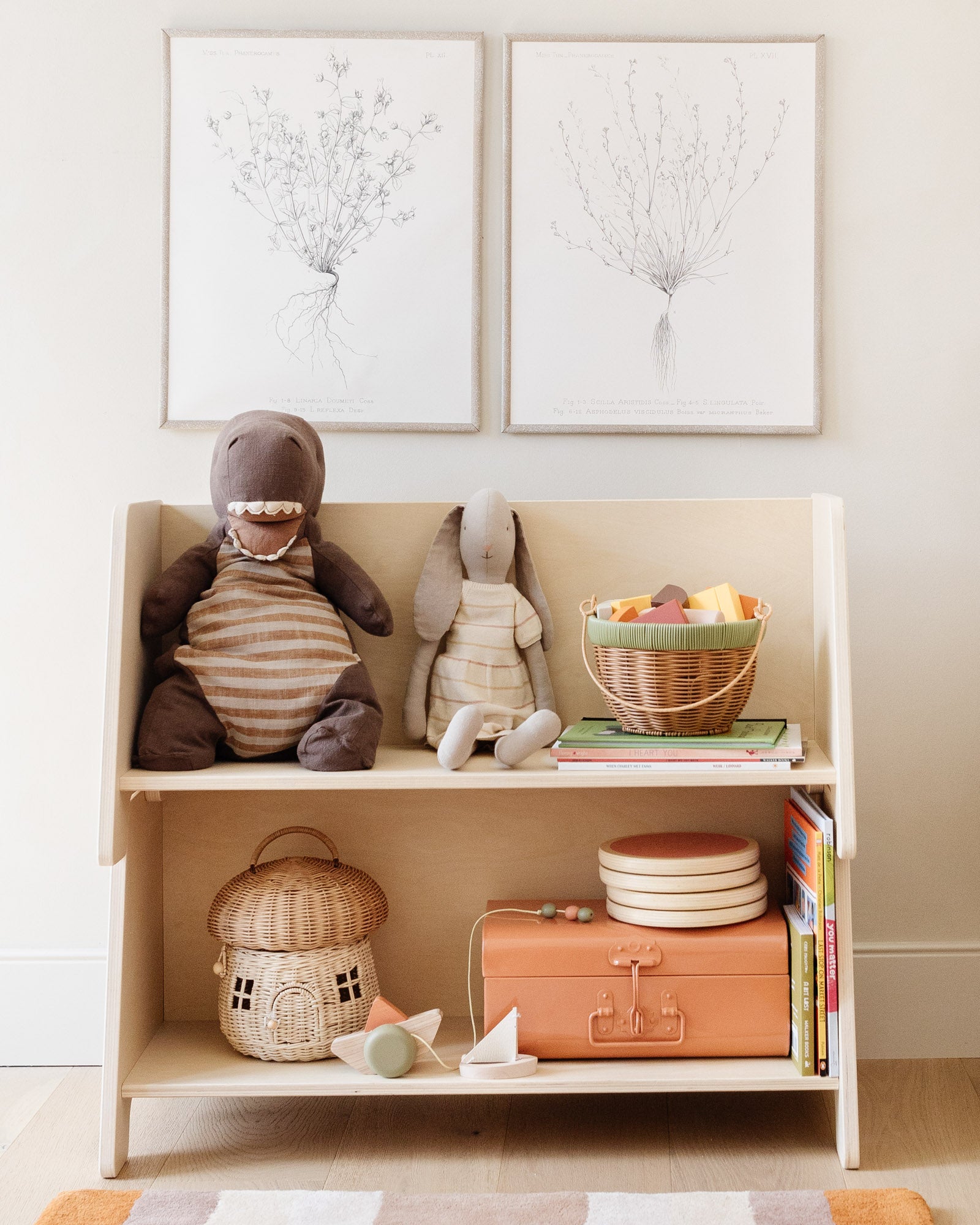
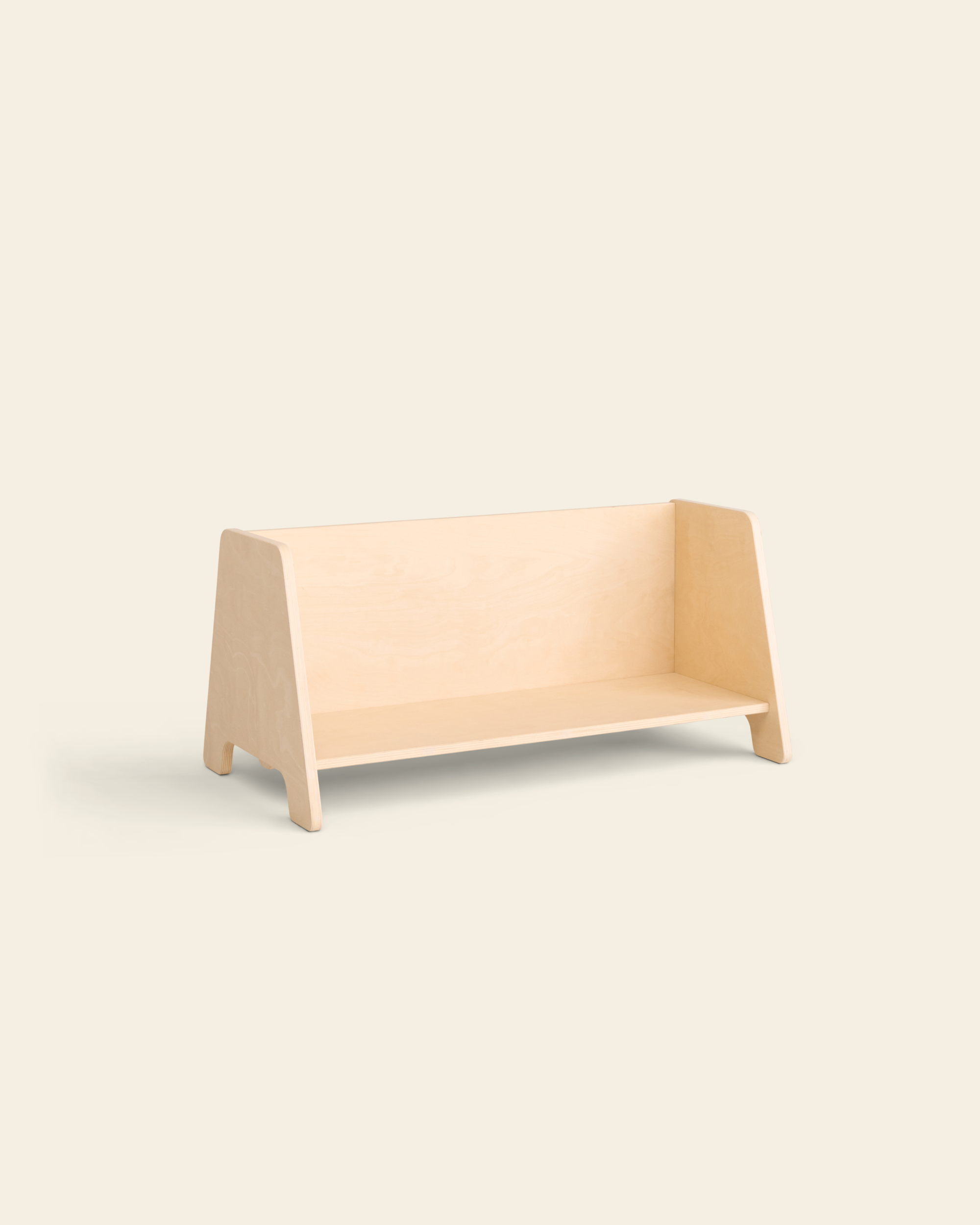
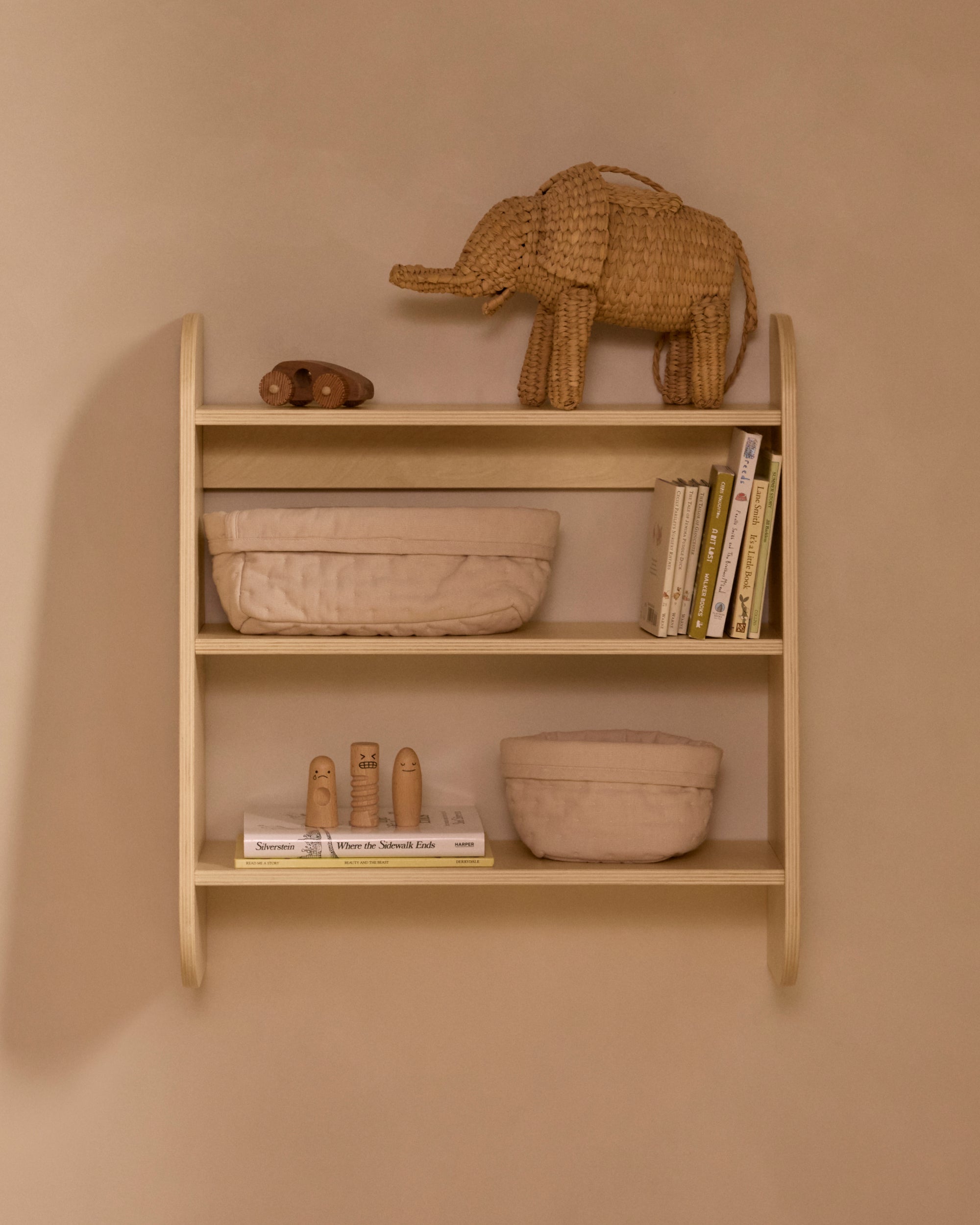
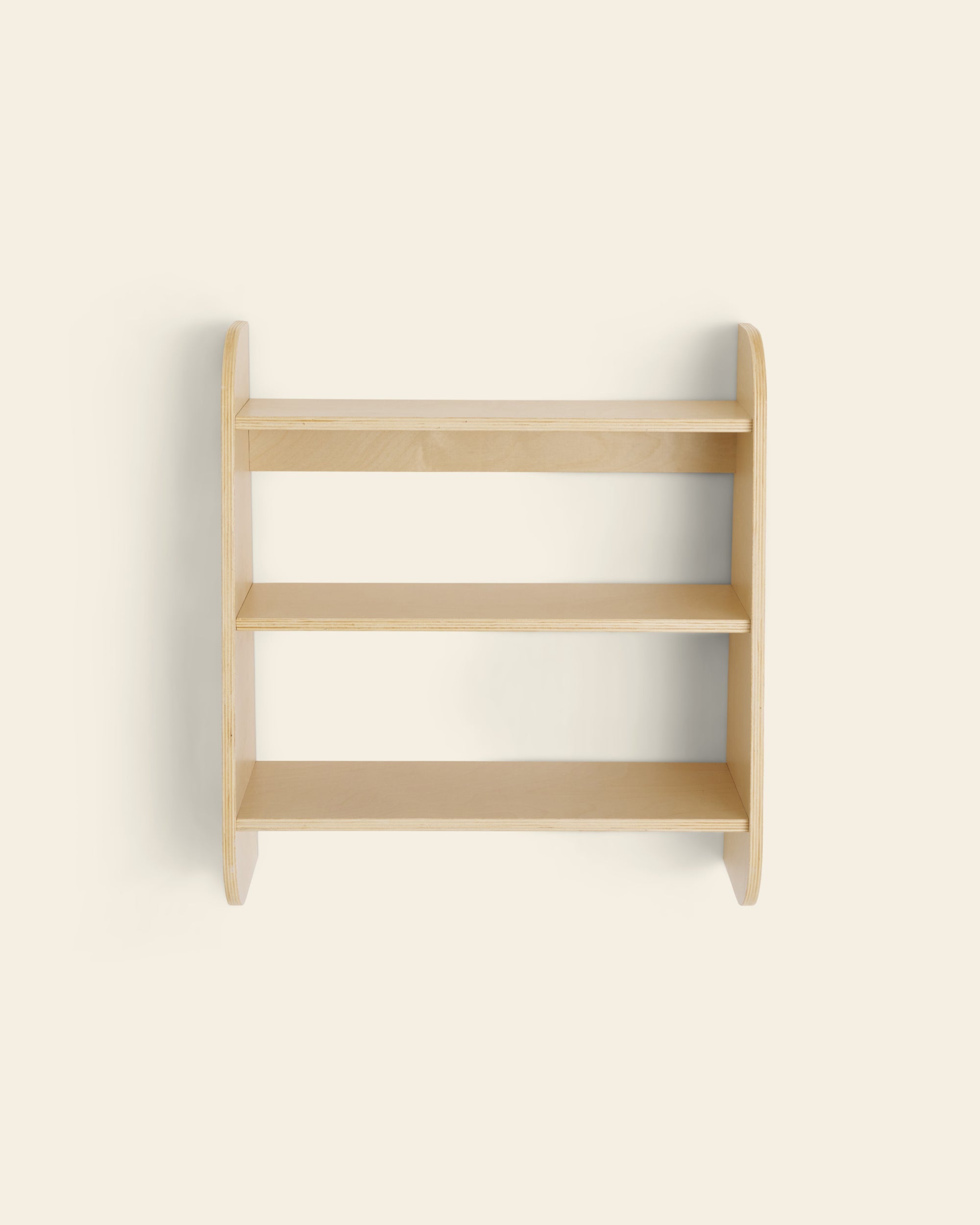
- Early organization and responsibility
Every item is designed to support real daily routines—not just play.
Encouraging practical life from day one
Toddlers learn by participating. When children ages 1–3 can safely access countertops, tables, shelves, and materials, they begin to develop coordination and confidence naturally.
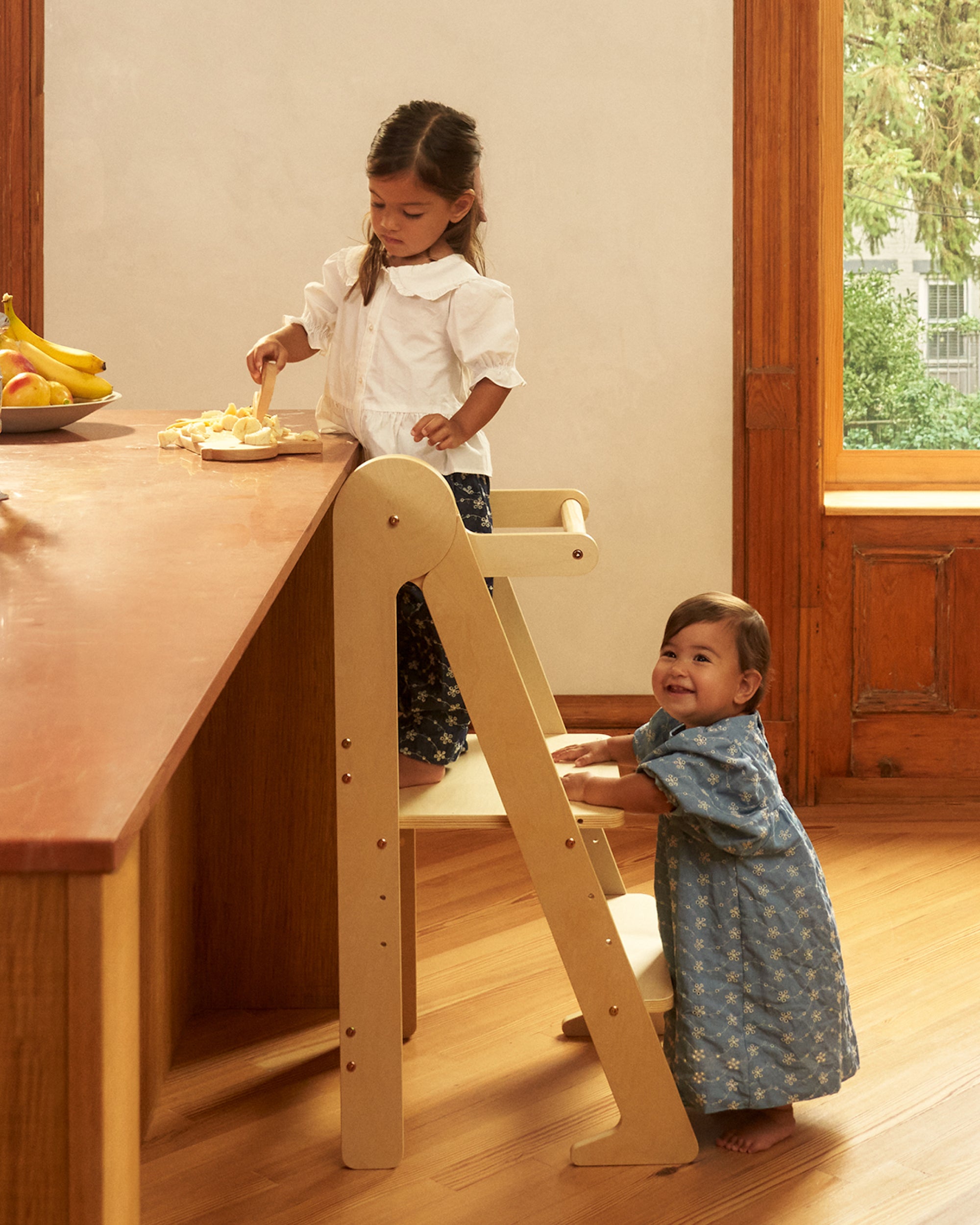
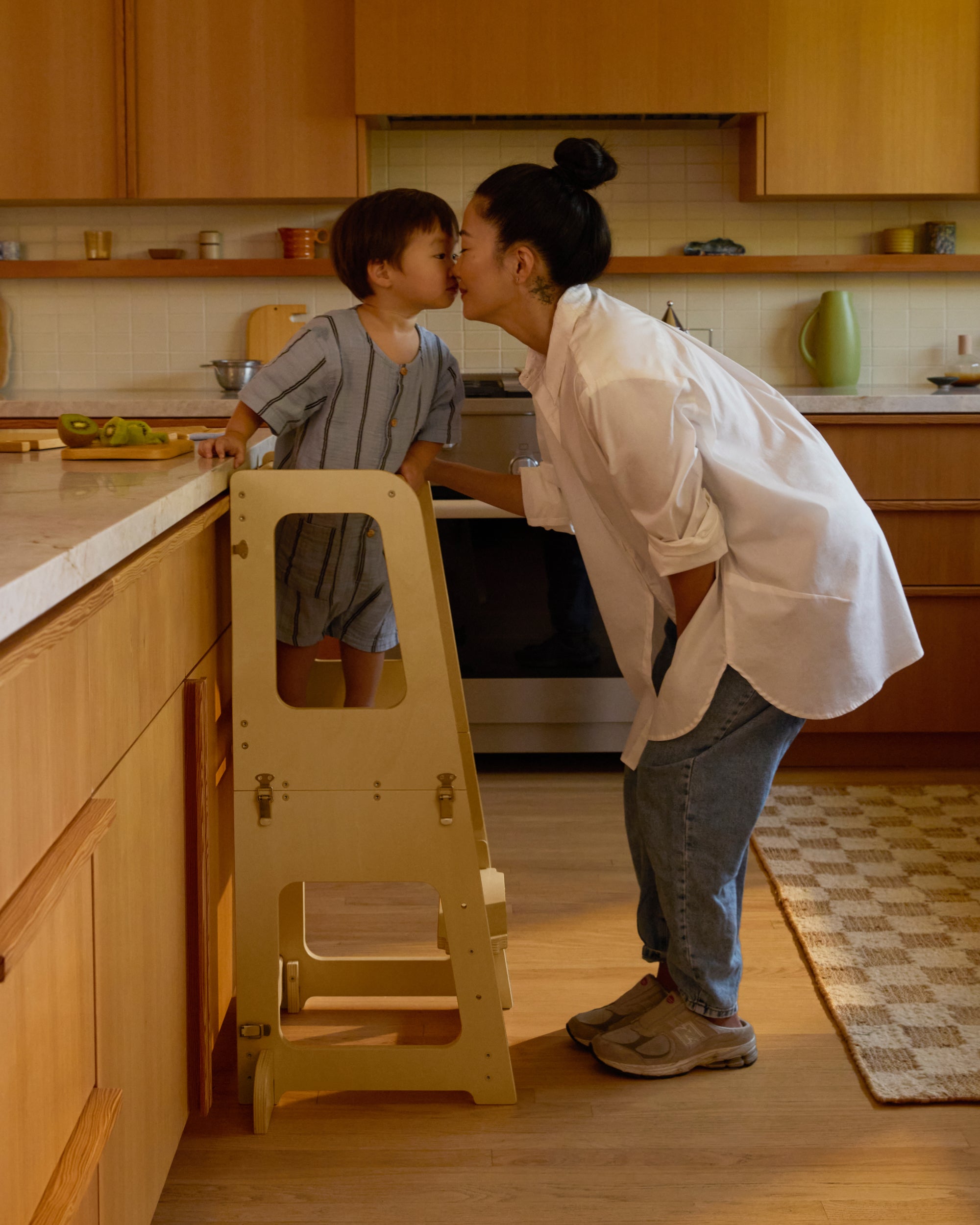
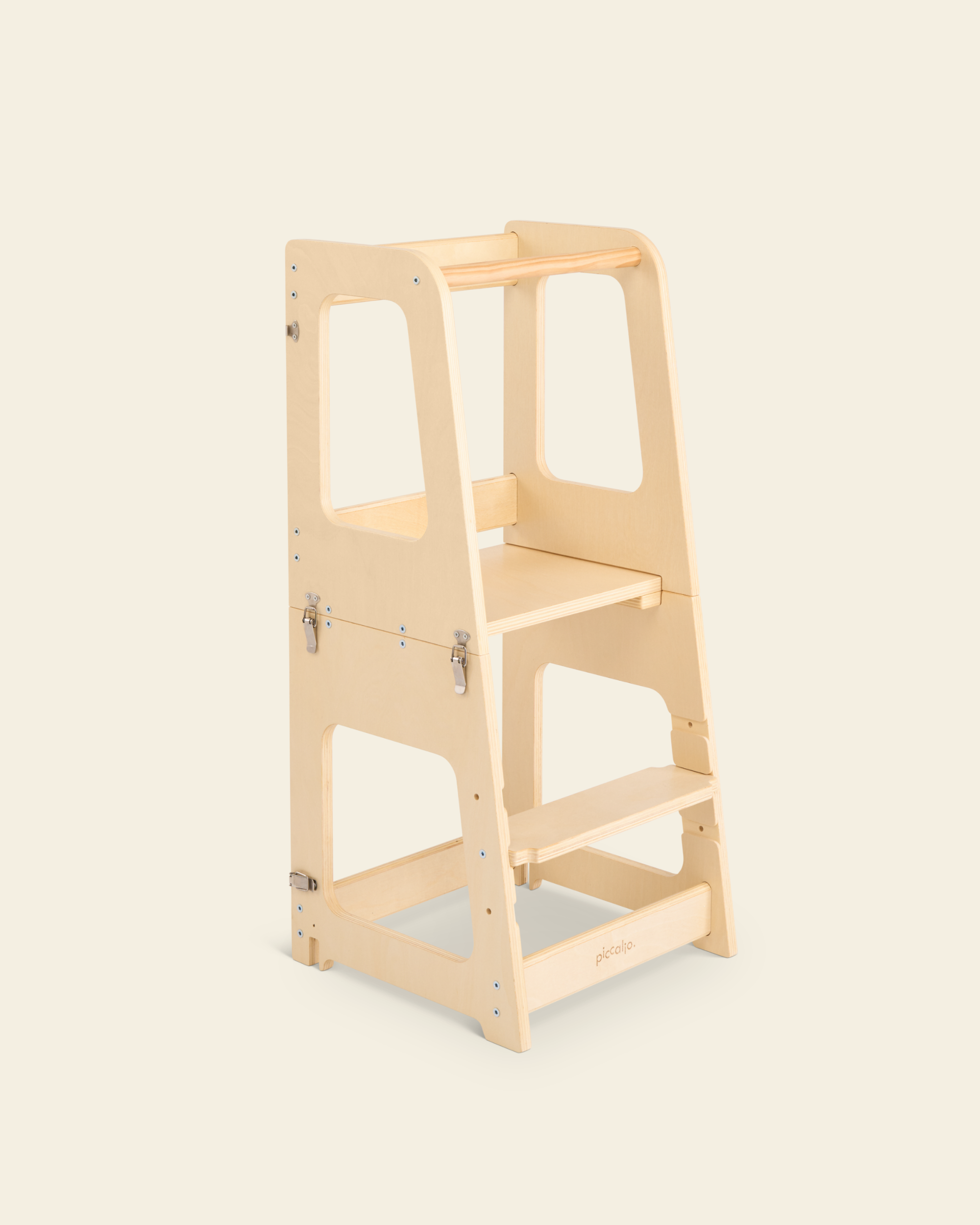
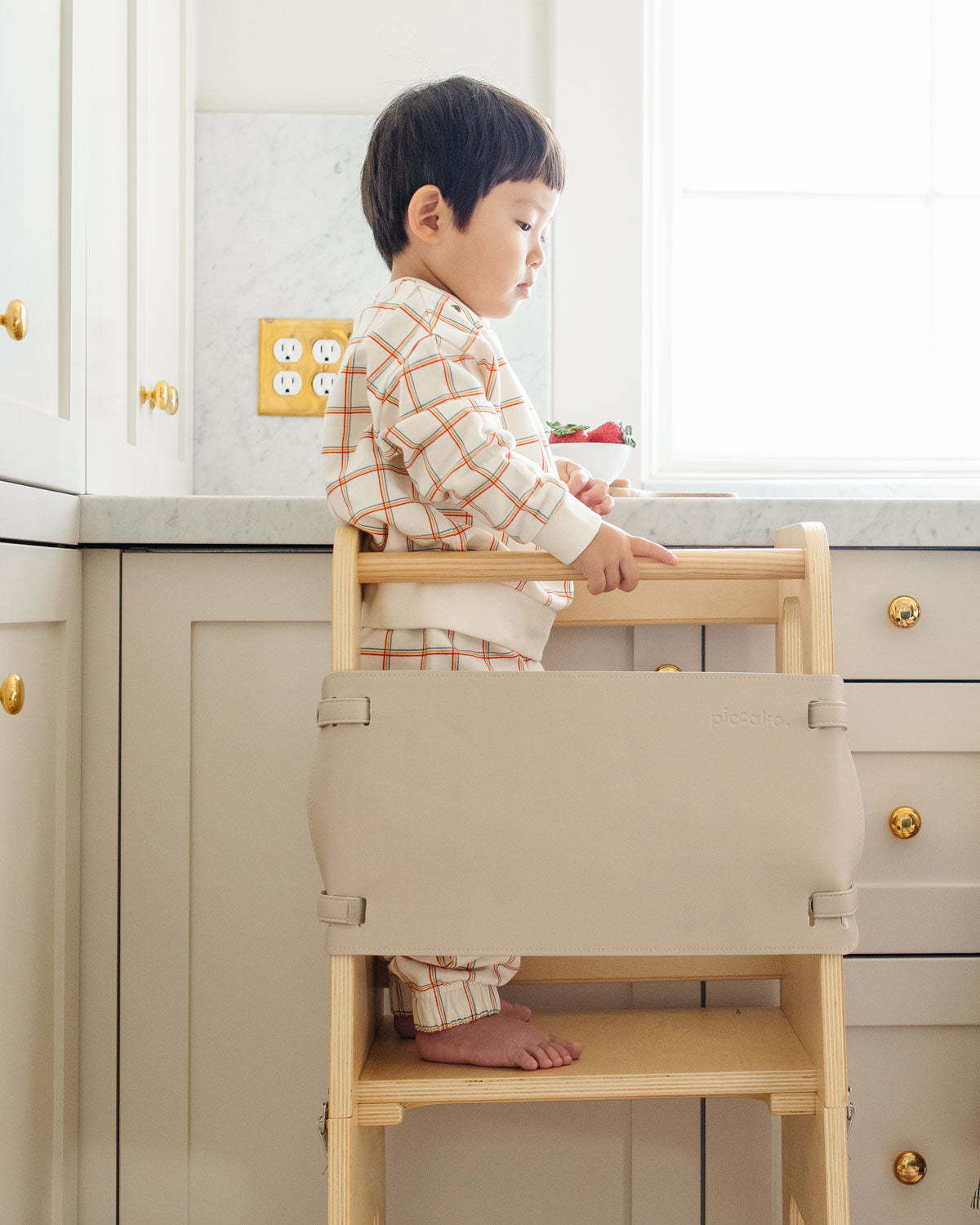
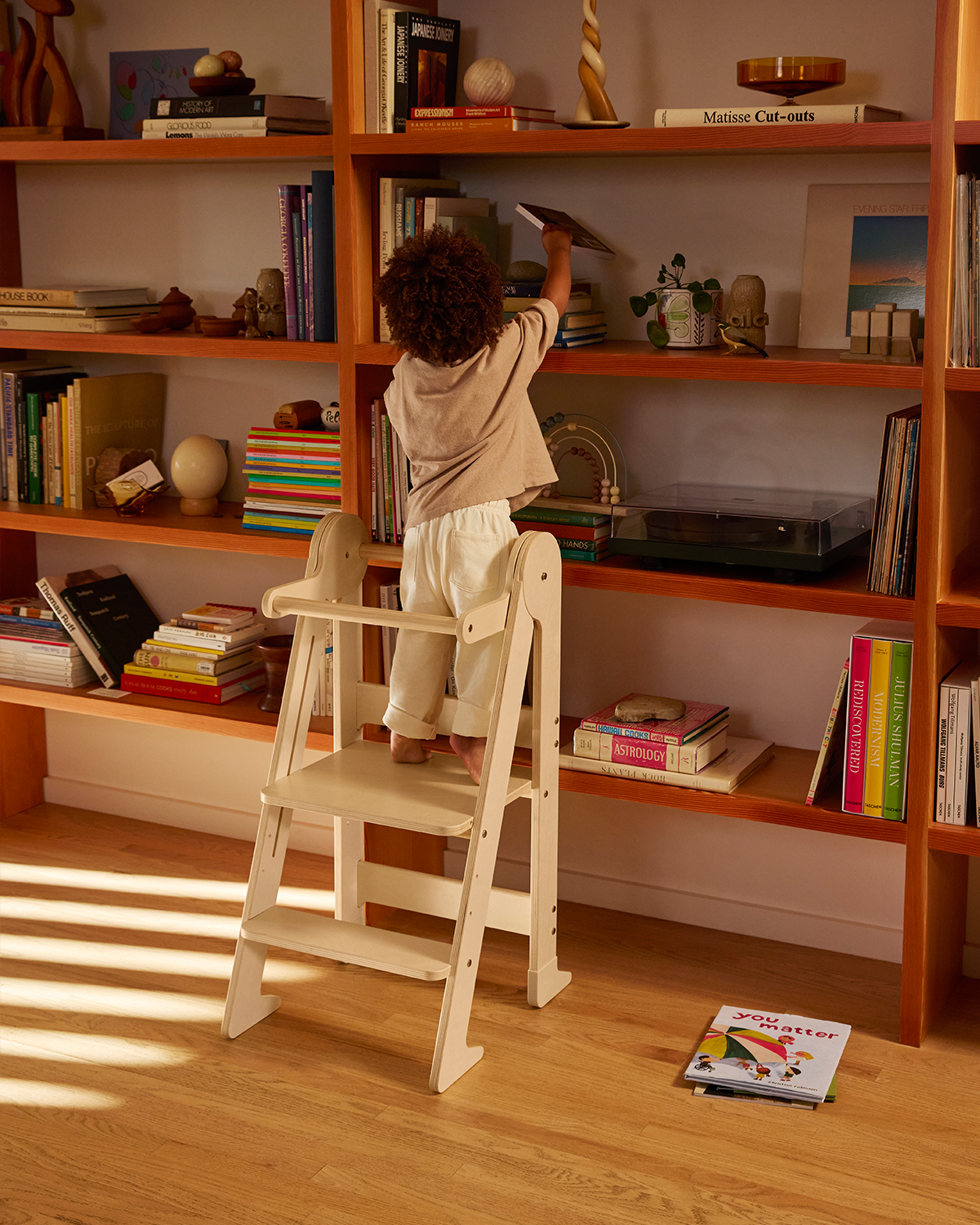
Our Toddler Towers help toddlers stand securely at counter height, where they can wash produce, stir, or observe meal prep. These everyday moments build fine motor skills, language development, and independence.
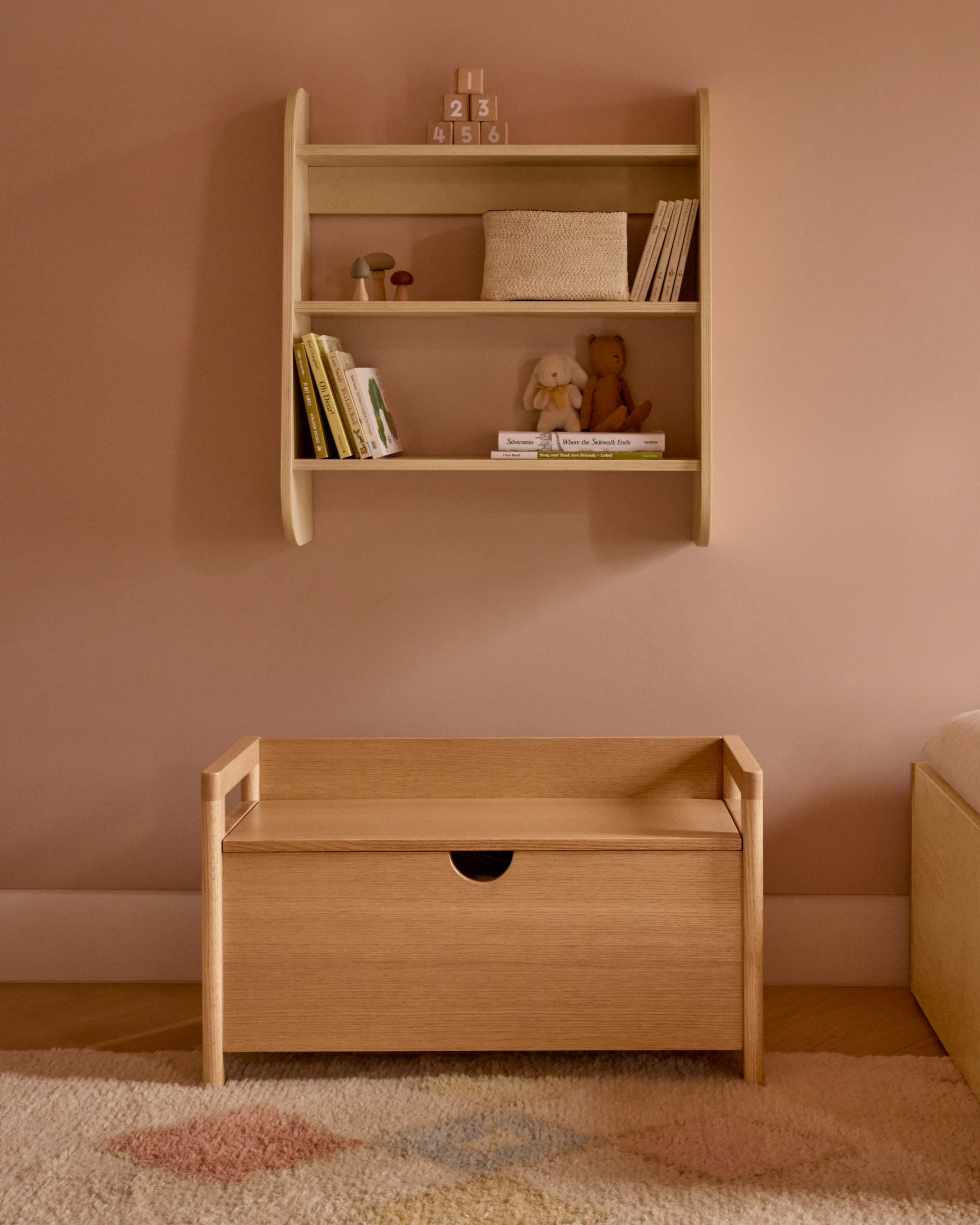
Pairing a tower with accessible tools and low shelving creates a consistent Montessori environment across rooms—where toddlers are active participants rather than passive observers.
Independent sleep for growing toddlers
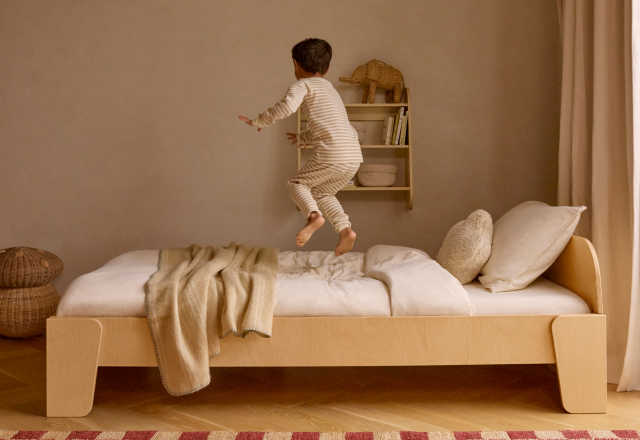
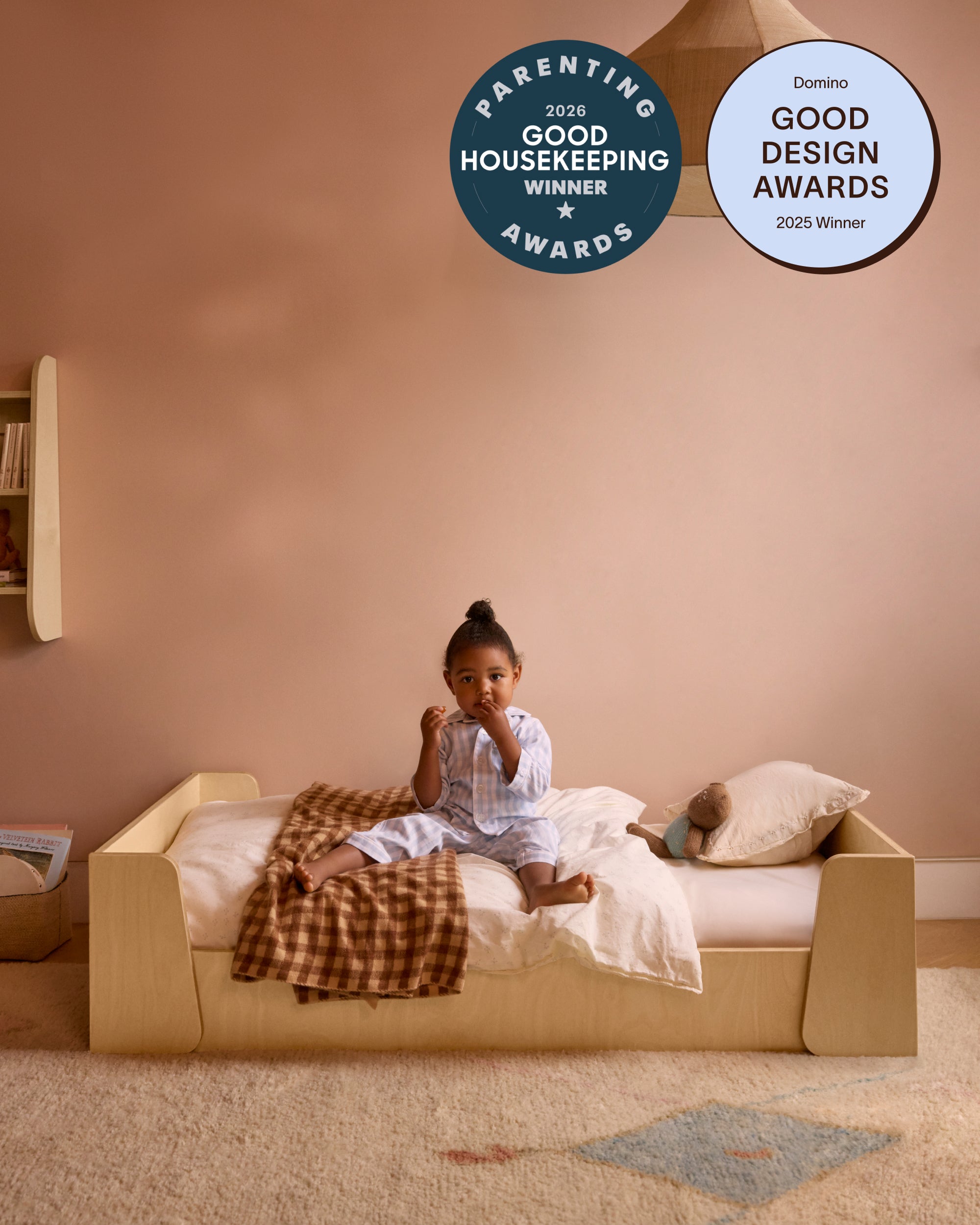
Sleep transitions are a major milestone from age 1 to 3. A low-profile floor bed supports autonomy while maintaining safety.
Our Montessori Beds allow toddlers to enter and exit independently, reinforcing ownership over their sleep routine. When paired with accessible book storage and calm room design, toddlers experience a predictable rhythm from playtime to bedtime.
This approach supports confidence, smoother transitions, and long-term sleep independence.
Movement and coordination through active exploration
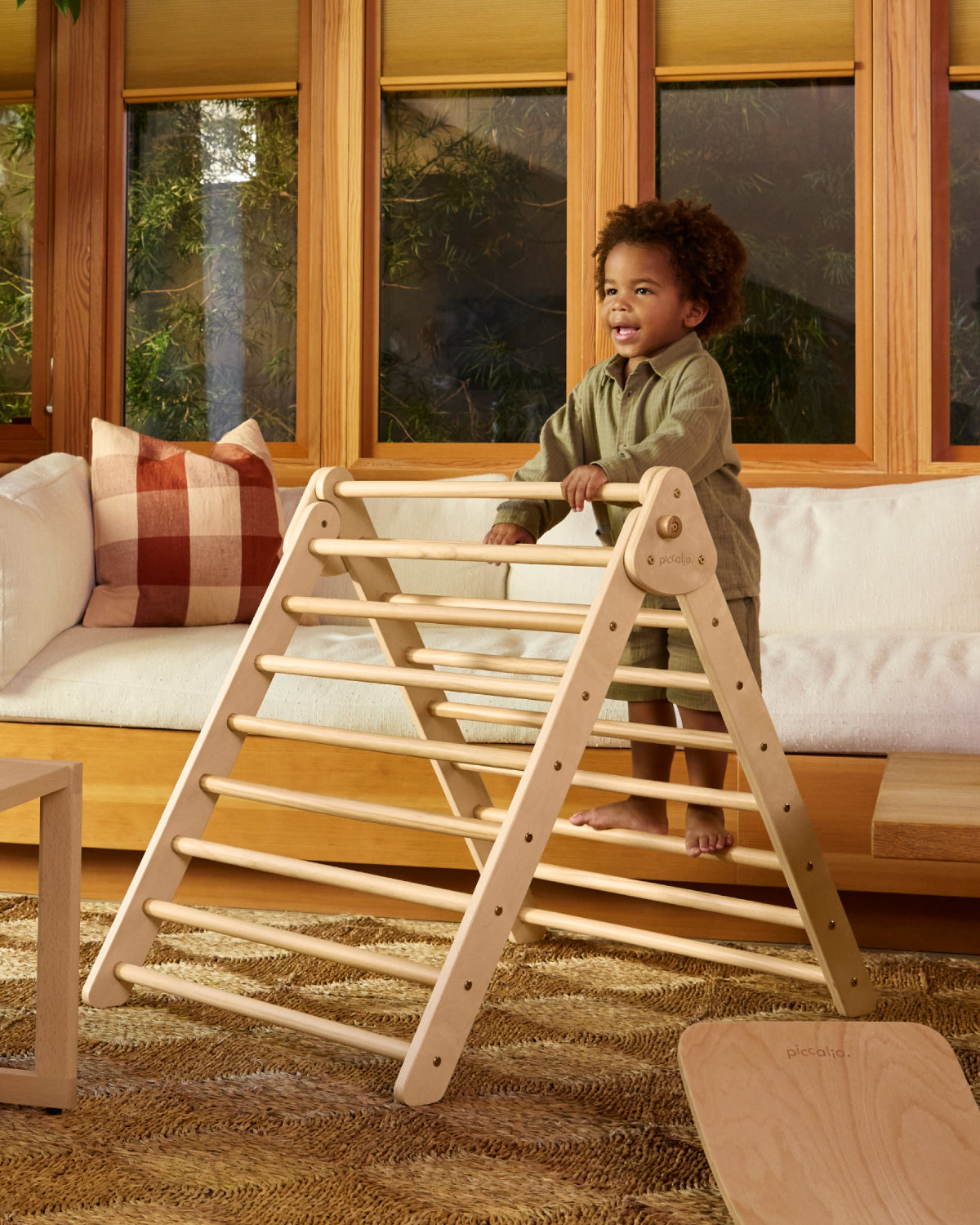
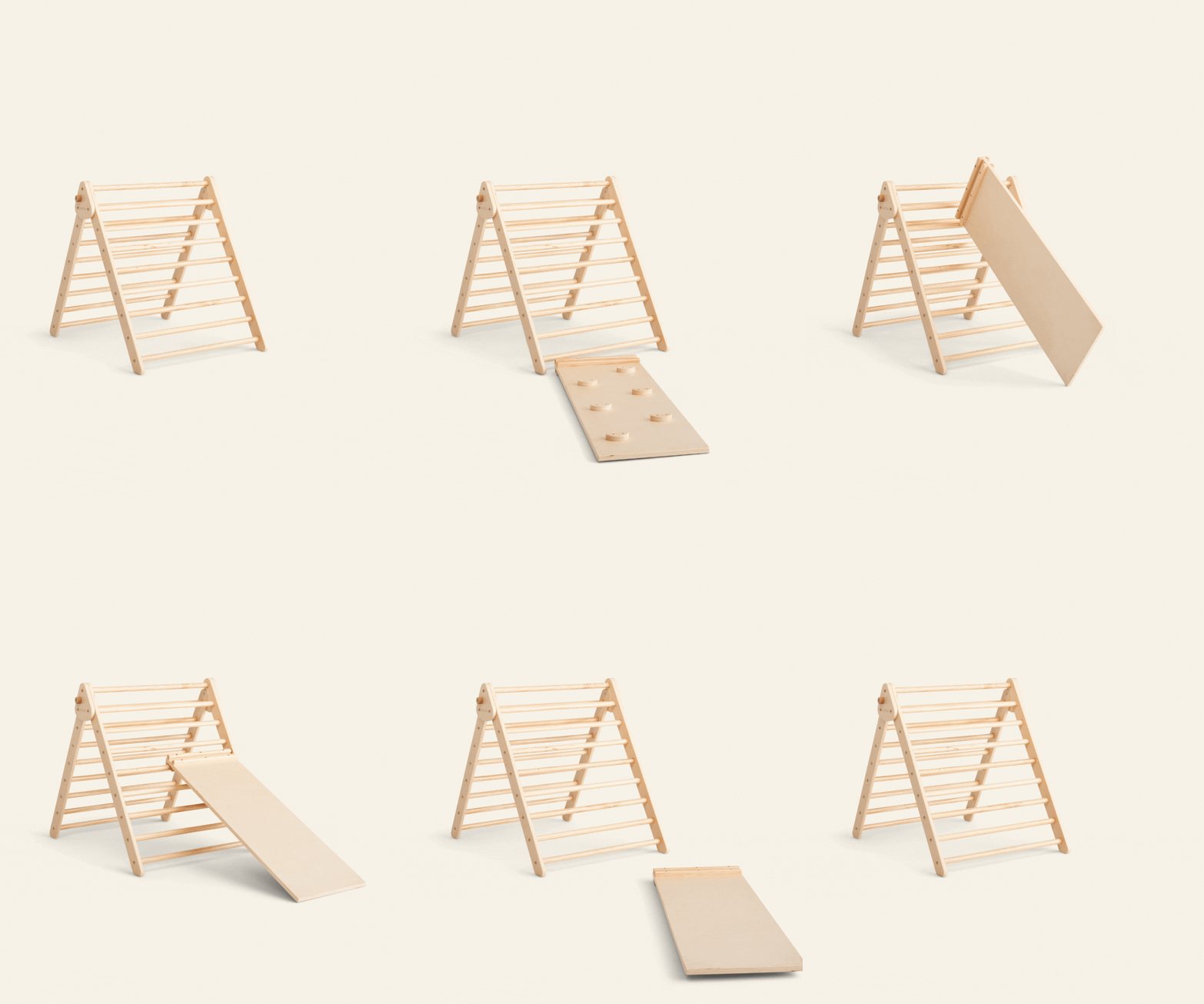
Gross motor development accelerates during the toddler years. Climbing structures, balance pieces, and low platforms encourage strength, spatial awareness, and body control.
These pieces aren’t just for energy release—they support neurological development and coordination that carries into everyday skills like navigating stairs or carrying objects.
By designing wooden toys for toddlers with structural stability and smooth, reinforced construction, we support safe, confident movement within the home.
A space for focused activity
Toddlers ages 1–3 are beginning to concentrate for longer periods. Child-sized seating and activity surfaces support this developmental shift.
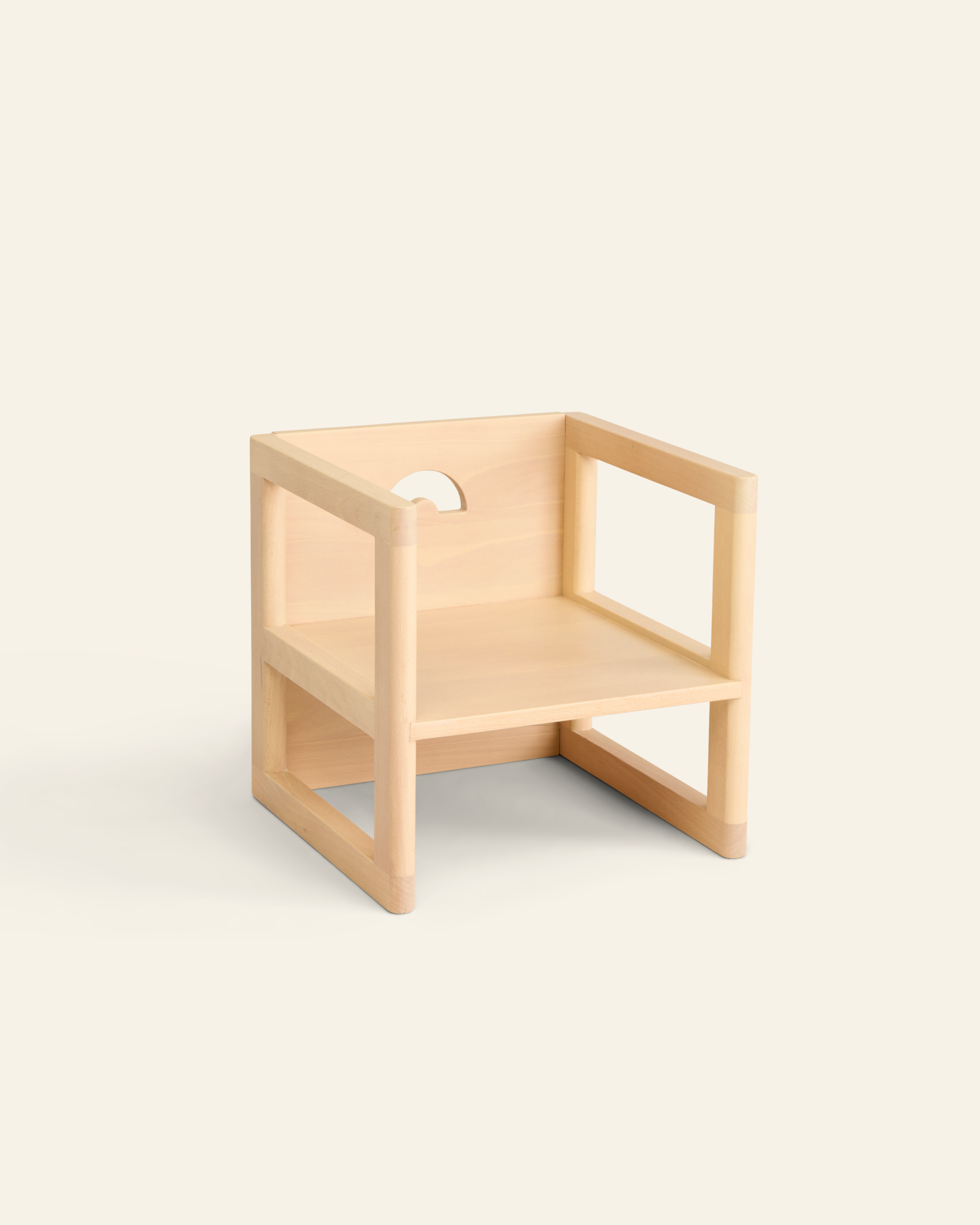
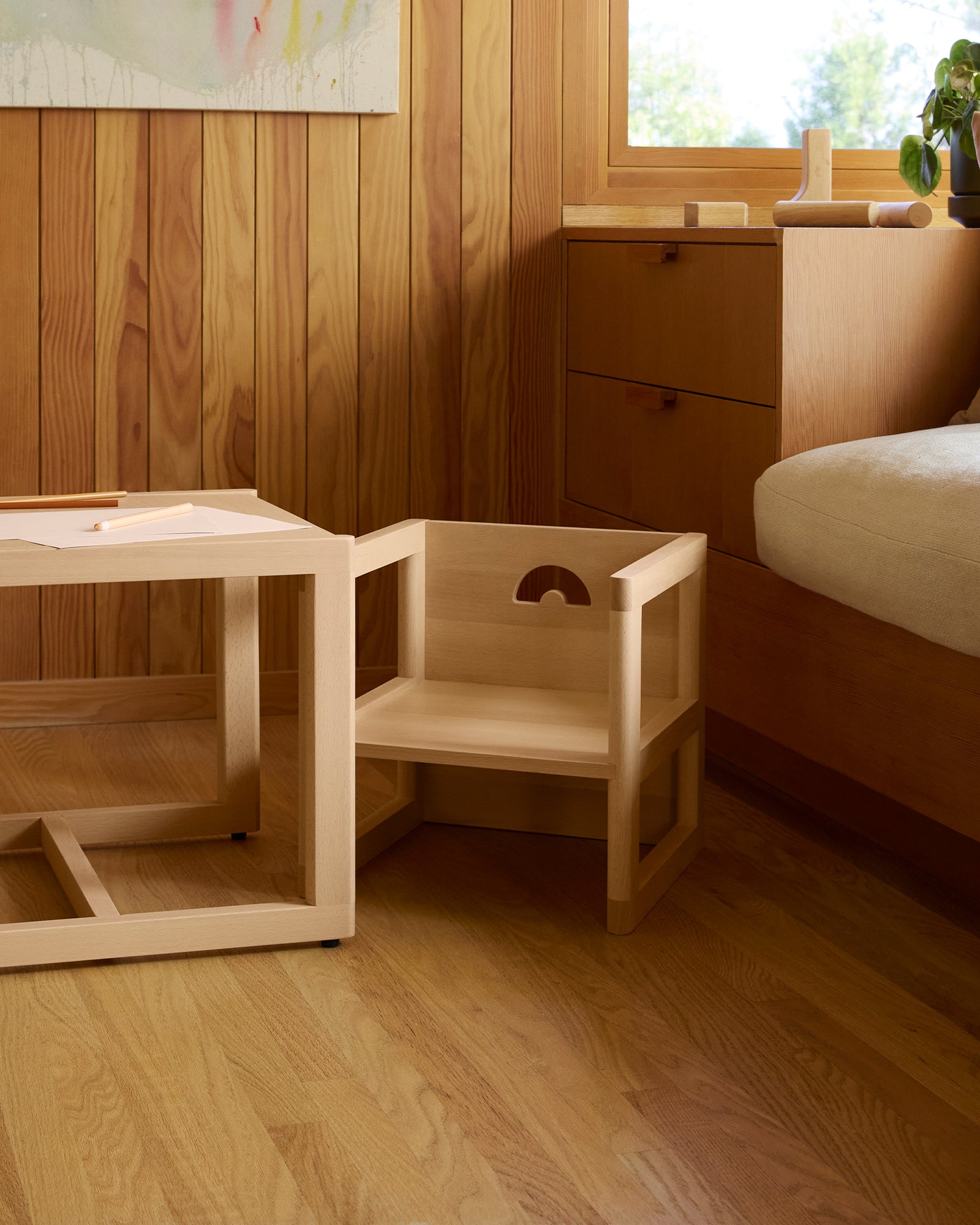
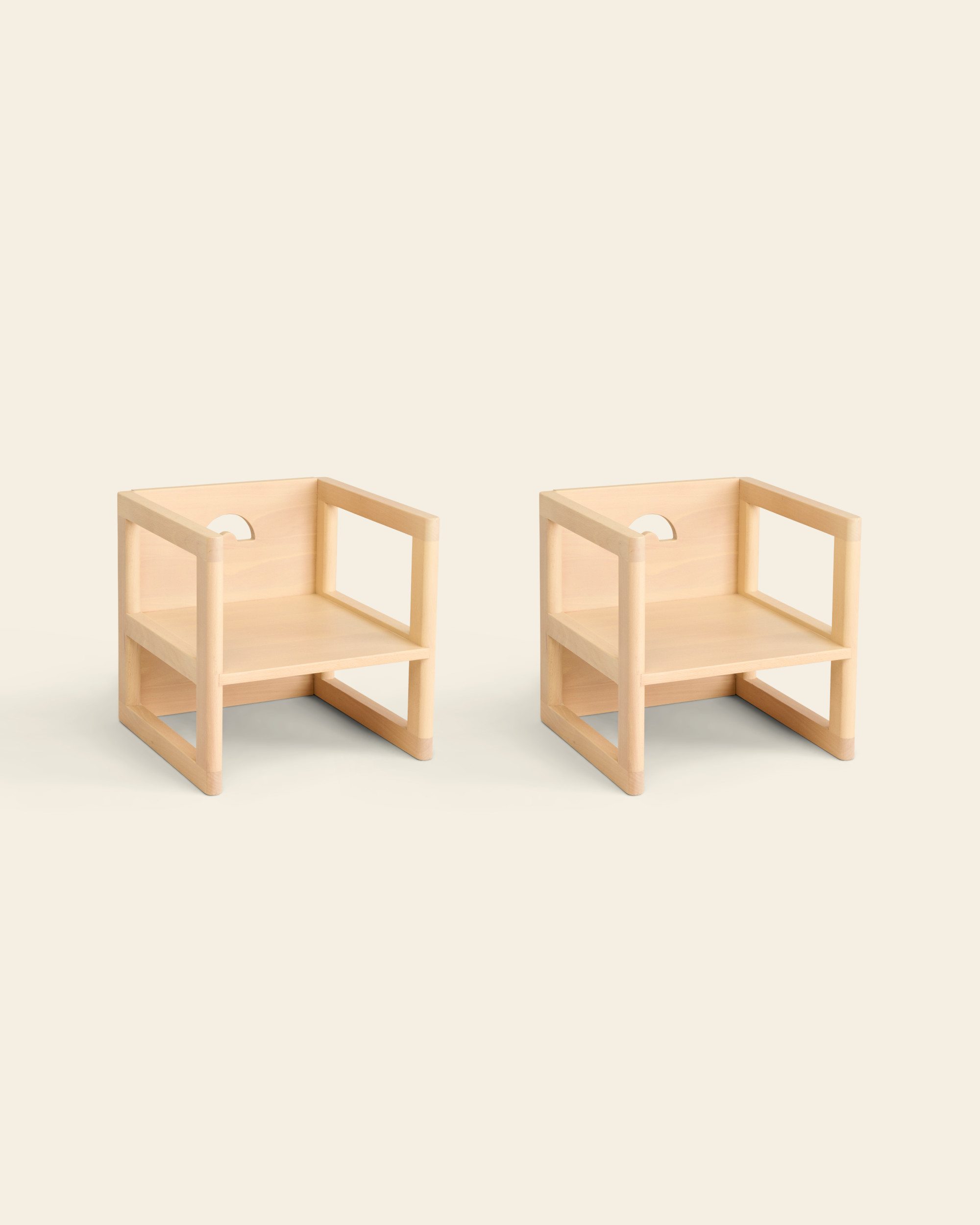
Our Kids Table & Chairs provide a stable, properly scaled surface for drawing, sorting, building, or snack time. When paired with accessible shelving and storage, toddlers can independently select an activity and return it when finished—reinforcing responsibility and order.
This consistency across rooms strengthens independence throughout the day.
Safe, non-toxic furniture for active toddlers
Toddlers interact with furniture physically and frequently—climbing, leaning, gripping, and exploring with their hands.
That’s why our Montessori toddler furniture:
- Uses FSC®-certified wood
- Is finished with GREENGUARD Gold–certified, low-emission materials
- Meets relevant ASTM and U.S. CPSC safety standards
- Complies with California Prop 65
Smooth edges, reinforced joinery, and thoughtful engineering support safe daily use during this highly active stage.
Designed to grow beyond age 3
Montessori furniture for toddlers is not temporary. Because it is built around developmental principles rather than trends, many pieces transition seamlessly into early childhood.
- A Toddler Tower continues supporting kitchen participation
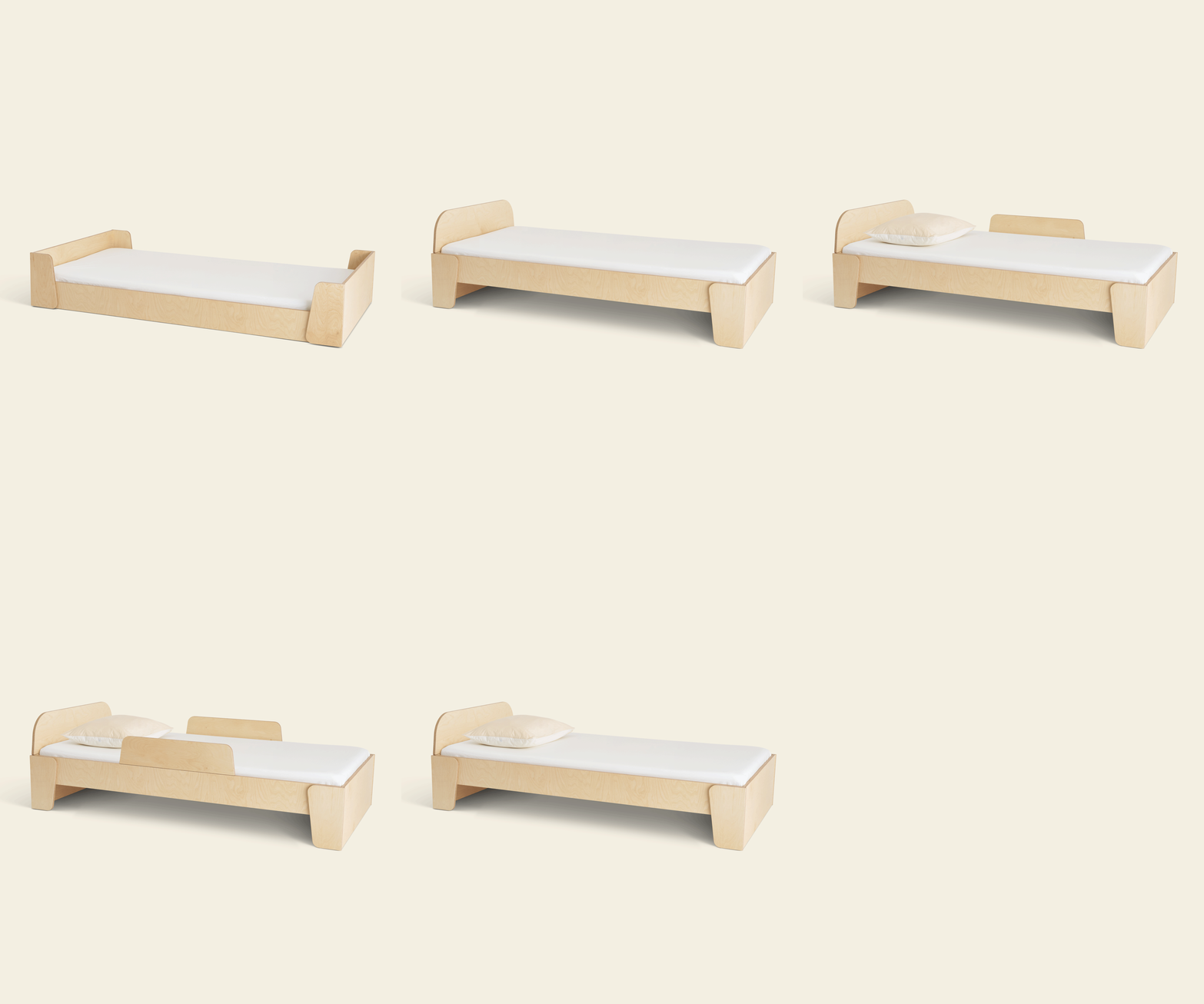
- A floor bed remains functional beyond toddlerhood (and bedBED® even flips to a raised bed)
- A low table evolves from sensory play to early learning
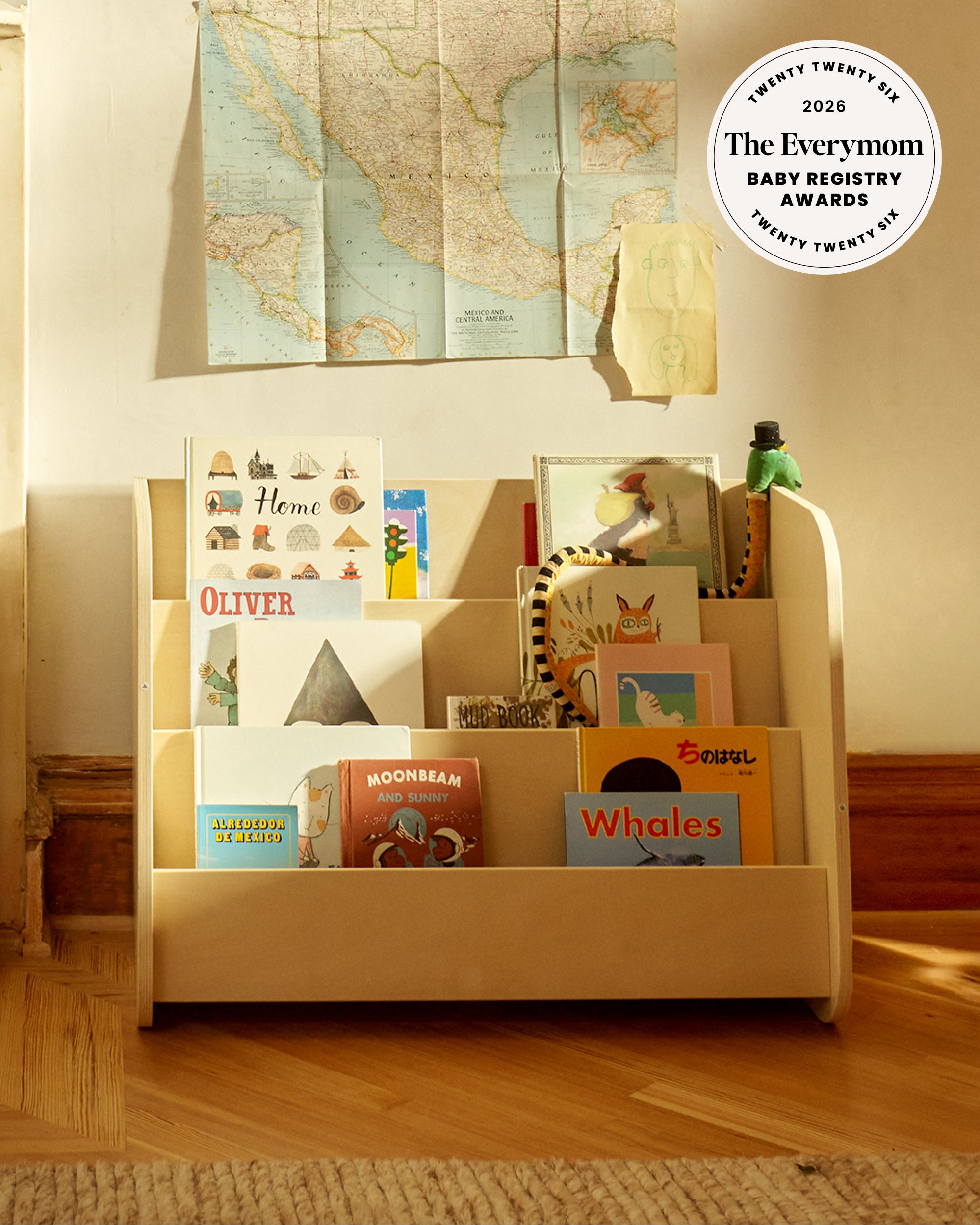
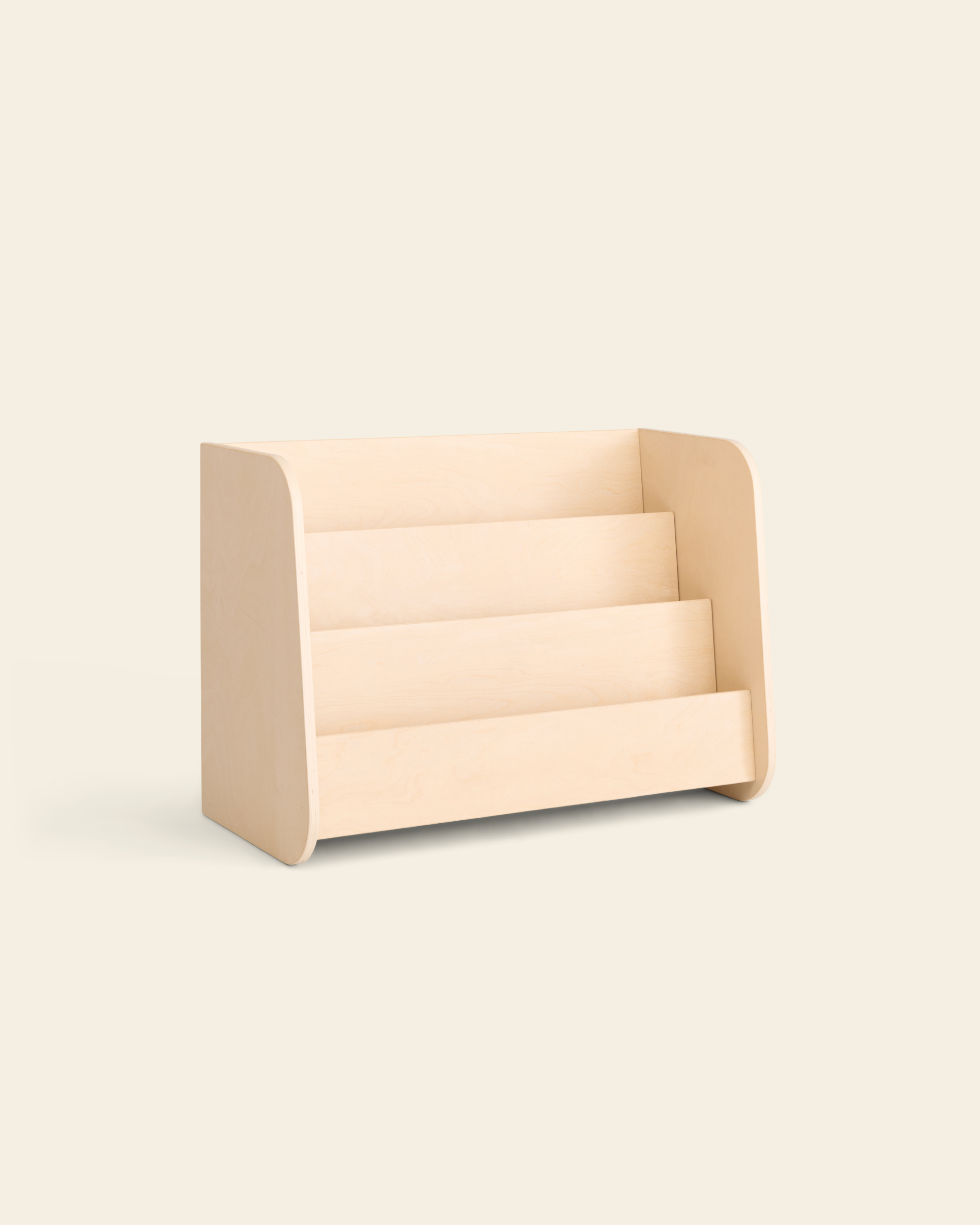
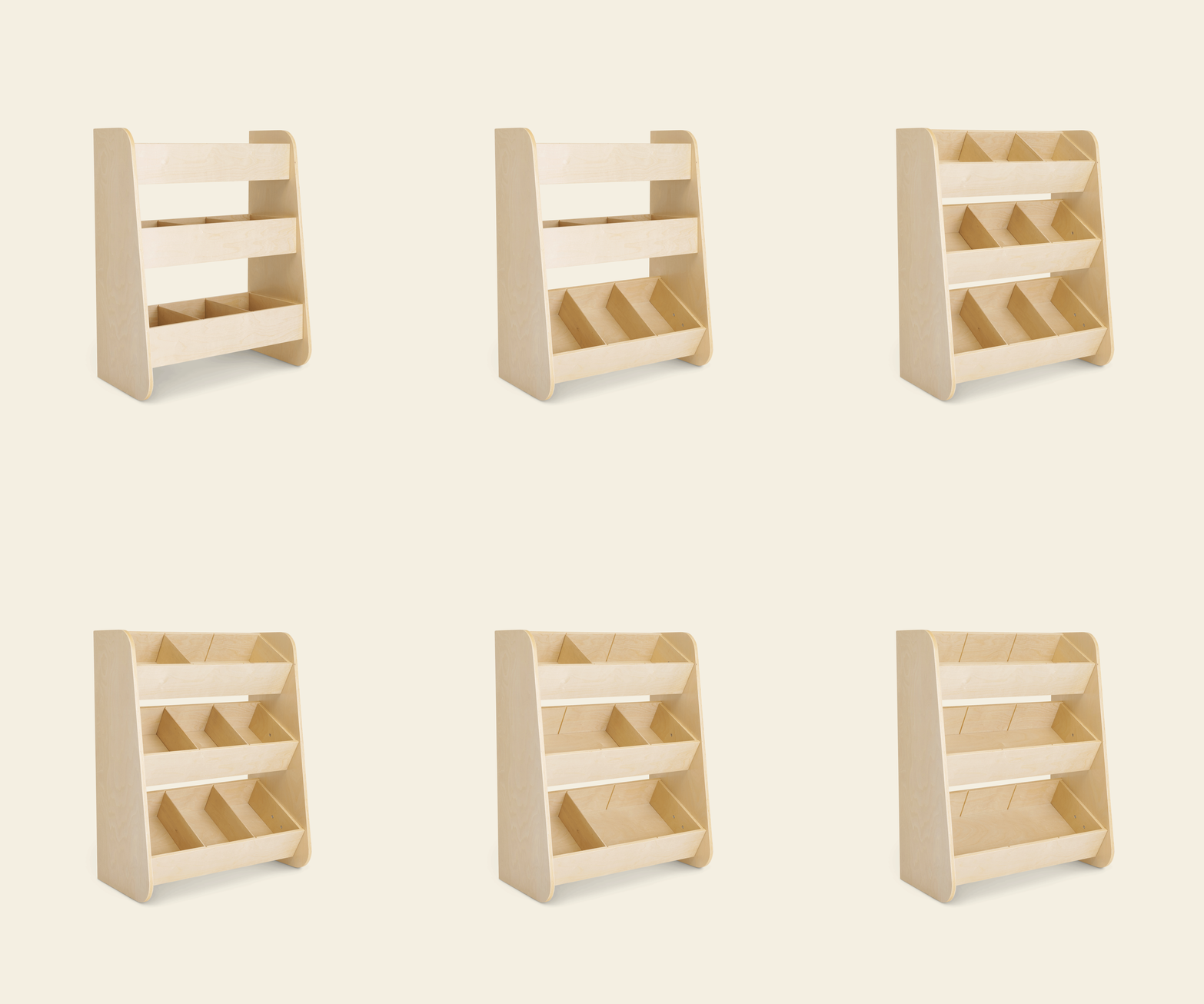
- Shelves shift from toy display to book organization
This long-term value allows families to invest in fewer, better pieces that support years of growth.