

A Montessori Teacher and Mom Explains Montessori Furniture
You’ve probably seen the term “Montessori furniture” while researching toddler beds, tables, or playroom setups. It often looks simple, minimal, and child-sized. But what does it actually mean—and do you really need it for your child?
As a Montessori teacher, I can tell you that Montessori furniture isn’t about trends or style. It’s furniture that follows a philosophy focused on supporting independence, concentration, and confidence in young children.
Here’s what that looks like in practice.
What Makes Furniture “Montessori”?
The word “Montessori” comes from the education method developed by Dr. Maria Montessori, an Italian physician turned educator in the early 1900s. At the time, the idea of creating child-sized furniture was unique and revolutionary. According to her writings, furniture should support the child’s learning process.
In short, Montessori furniture is based on a simple idea: your child should be able to interact with their environment independently.
That usually means furniture that is:
- Scaled to your child’s size
- Easy to access without adult assistance
- Simple in design
- Functional rather than decorative
Instead of confining cribs, high shelves, or adult-height tables, Montessori-inspired spaces focus on accessibility. The goal is to reduce barriers so your child can participate more fully in daily routines, without having to ask you for help.
The Difference Between Montessori Furniture and Traditional Furniture
True Montessori furniture supports accessibility and features child-friendly dimensions. When furniture fits your child’s body, something shifts. Your little one enjoys more confidence-building “I did it!” moments and fewer meltdowns.
Some examples of differences between Montessori furniture and traditional furniture in homes include:
| Montessori Furniture |
Traditional Furniture |
|
A weaning table so the child can sit down to eat without being lifted |
A highchair that requires adult assistance |
|
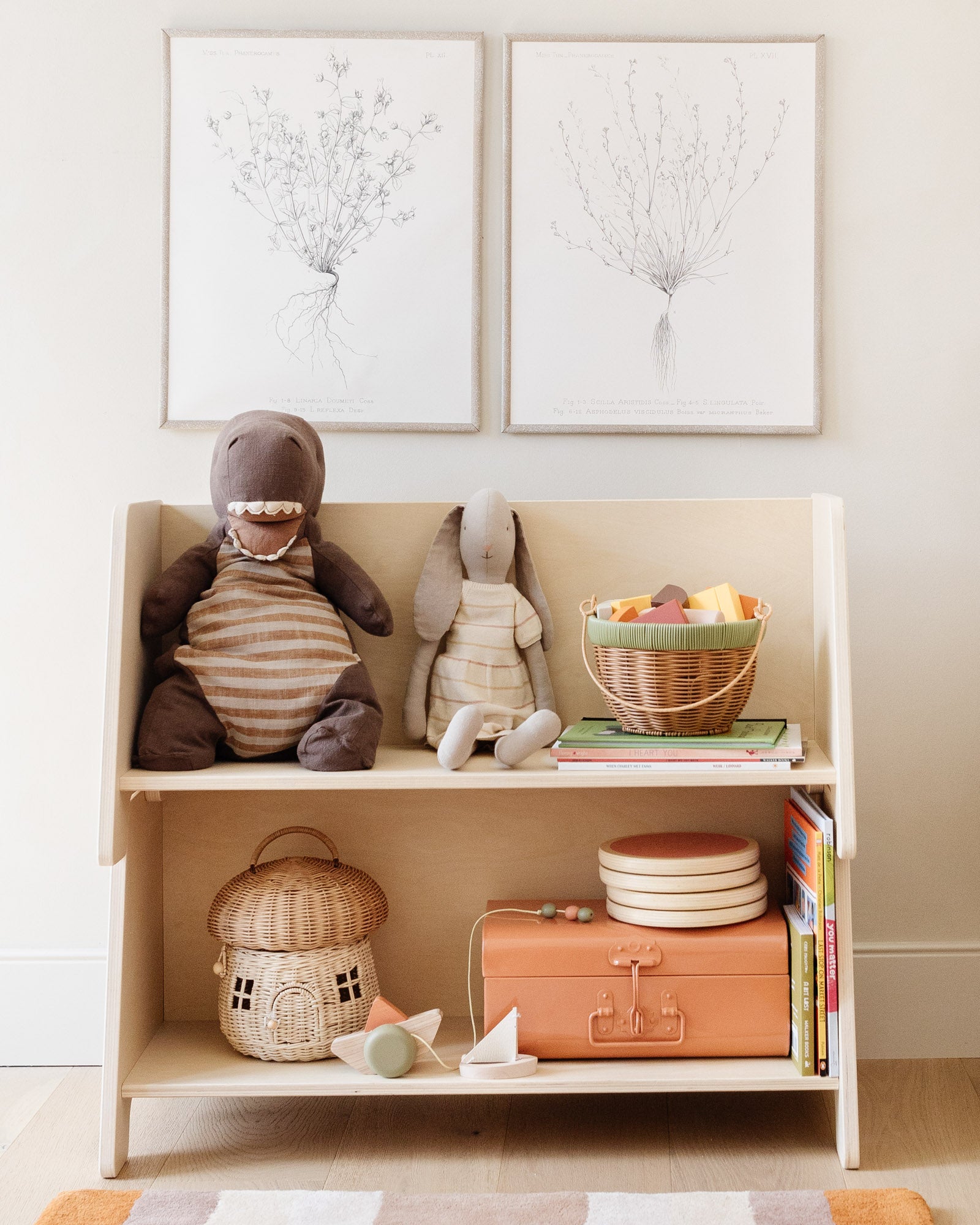
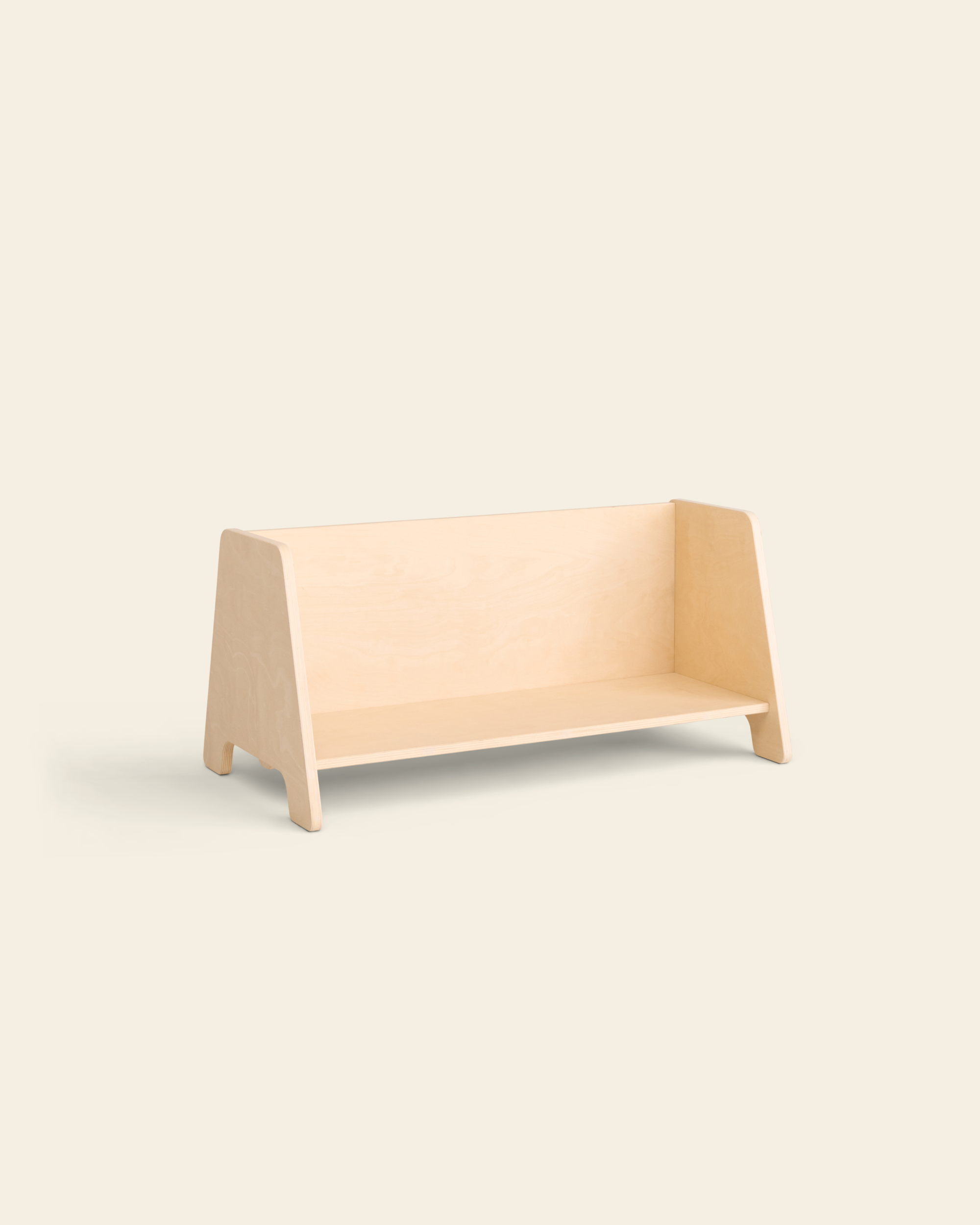
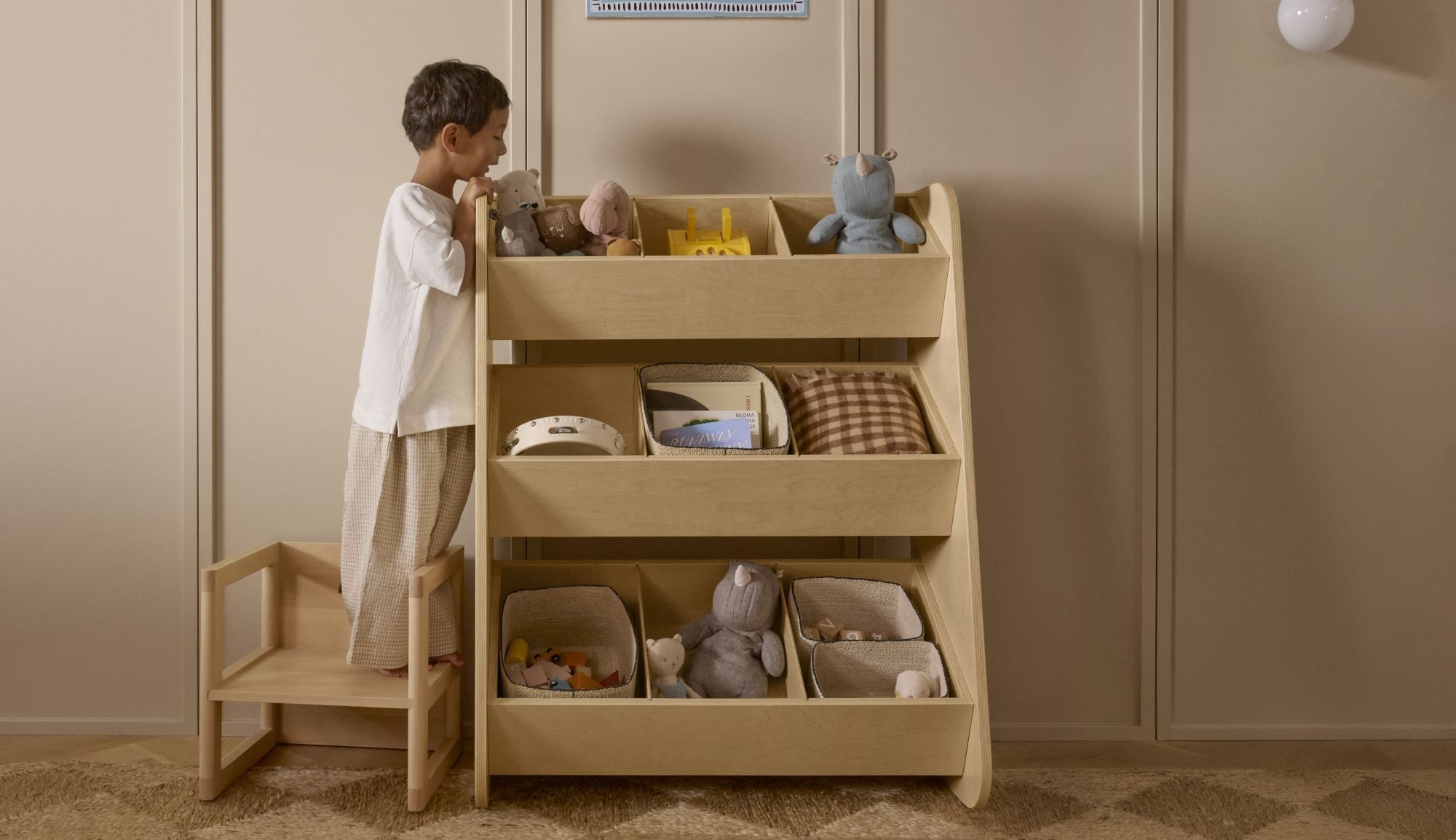
Low shelves where children can access toys, arts and crafts, and cleaning supplies |
Storage is on high shelves, so children need to ask for help |
|
A floor bed that means children can get into and out of bed independently |
A crib that requires adult help to get in or out |
|
Elegant designs made of natural materials to support concentration |
Bright colors and busy patterns that are distracting |
When your toddler can enjoy autonomy, it builds their confidence and sense of agency.
Research shows that age-appropriate independence supports confidence and reduces mental-health conditions like anxiety. When your child can act on their environment without constant assistance, they begin to trust their own abilities.
Montessori Beds: Why Floor-Level Design Matters
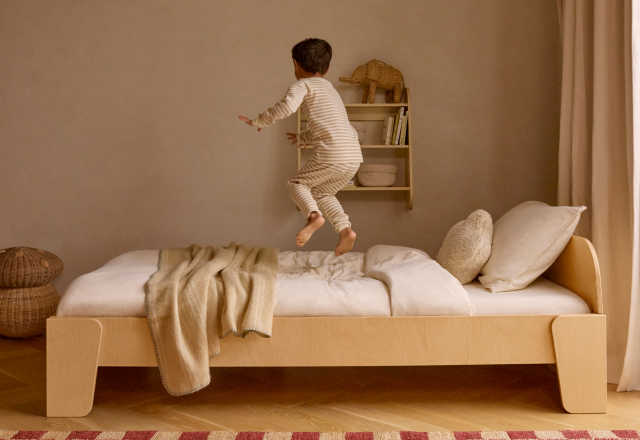
One of the most recognizable examples of Montessori furniture is the floor bed.
Unlike traditional cribs, a Montessori-style bed sits low to the ground. This allows your child to:
- Get in and out independently
- Develop spatial awareness
- Build confidence in their own movement and routines
A low bed setup respects your child’s growing mobility. It removes the barrier of being lifted in and out, which can support smoother transitions around sleep routines.
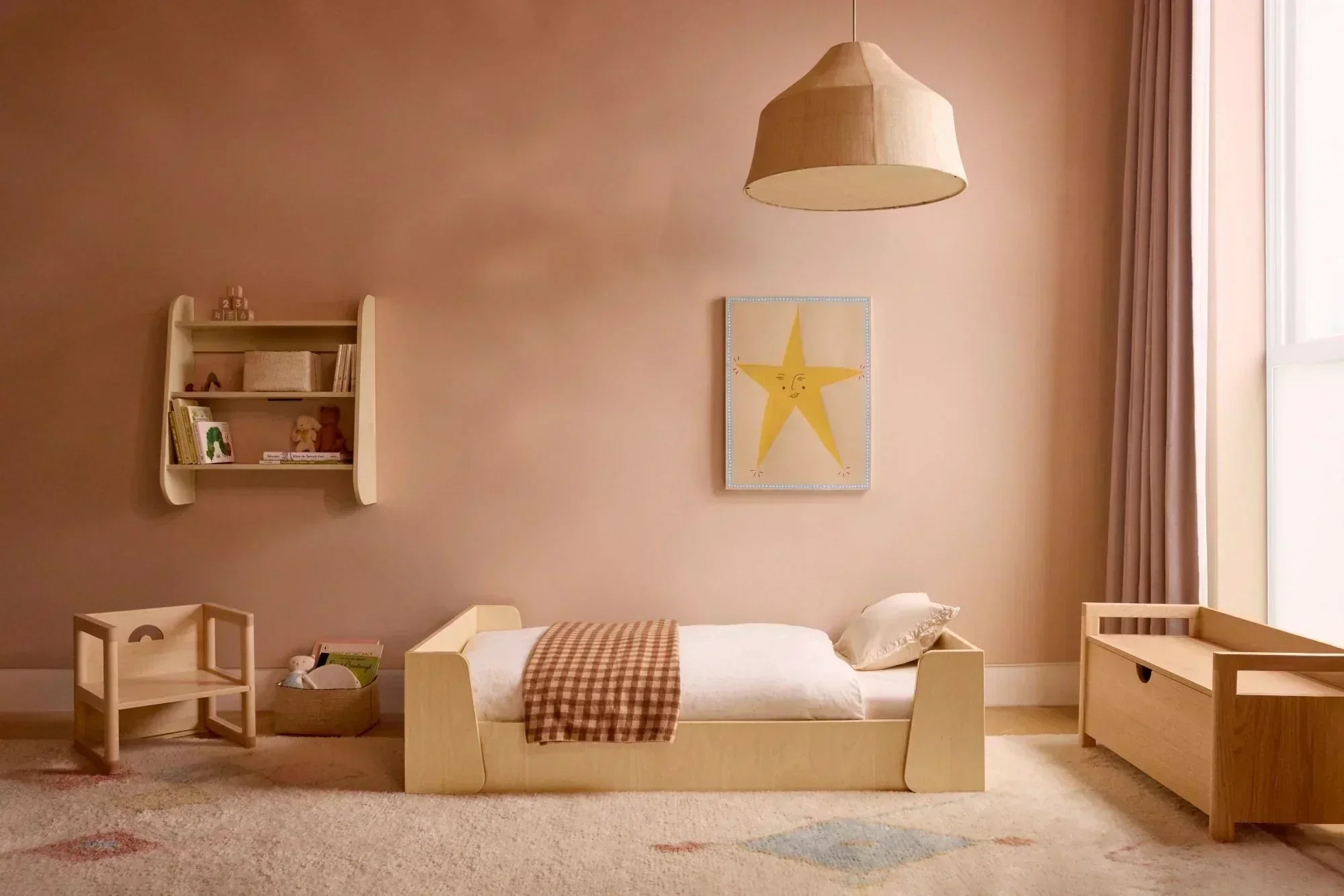
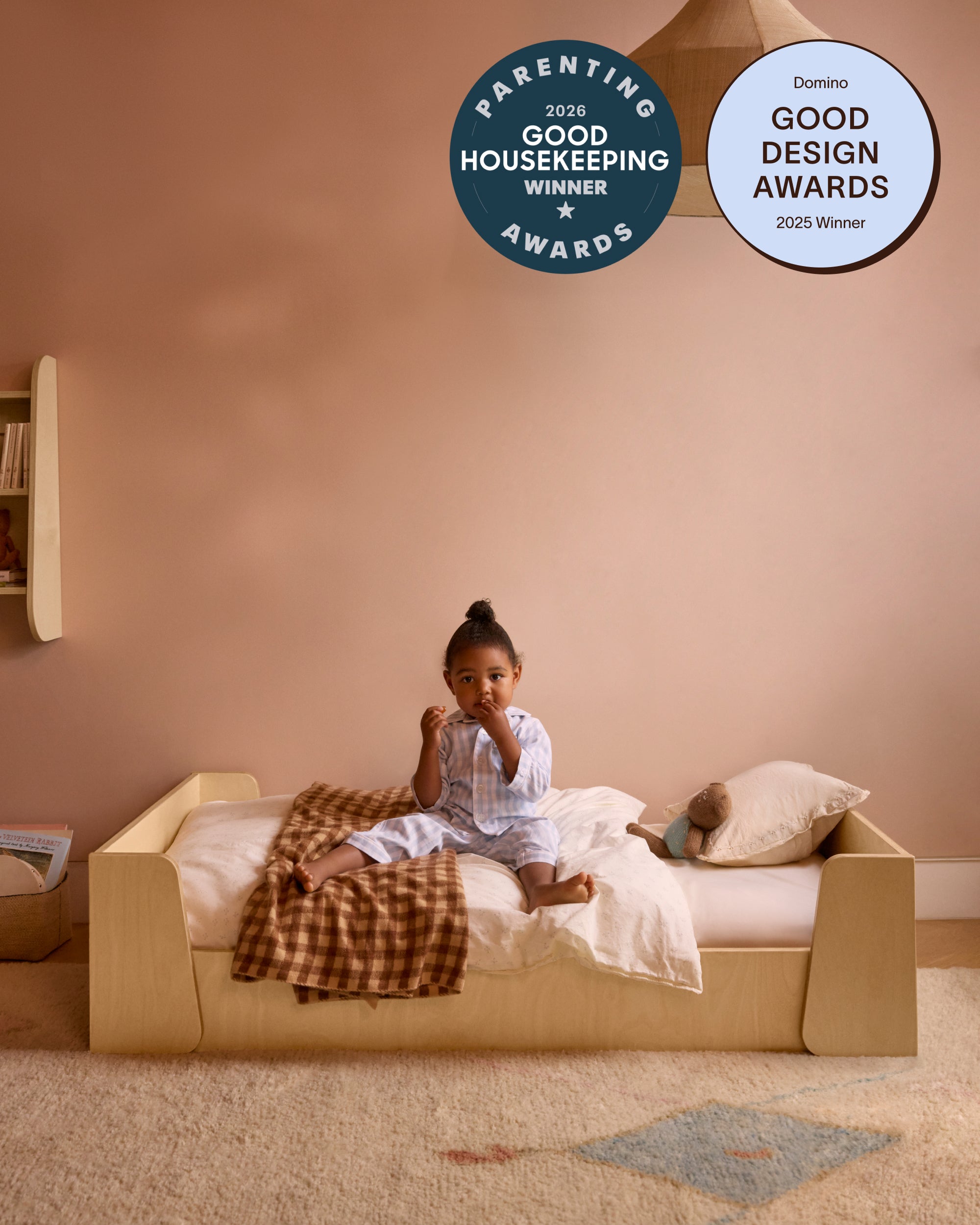
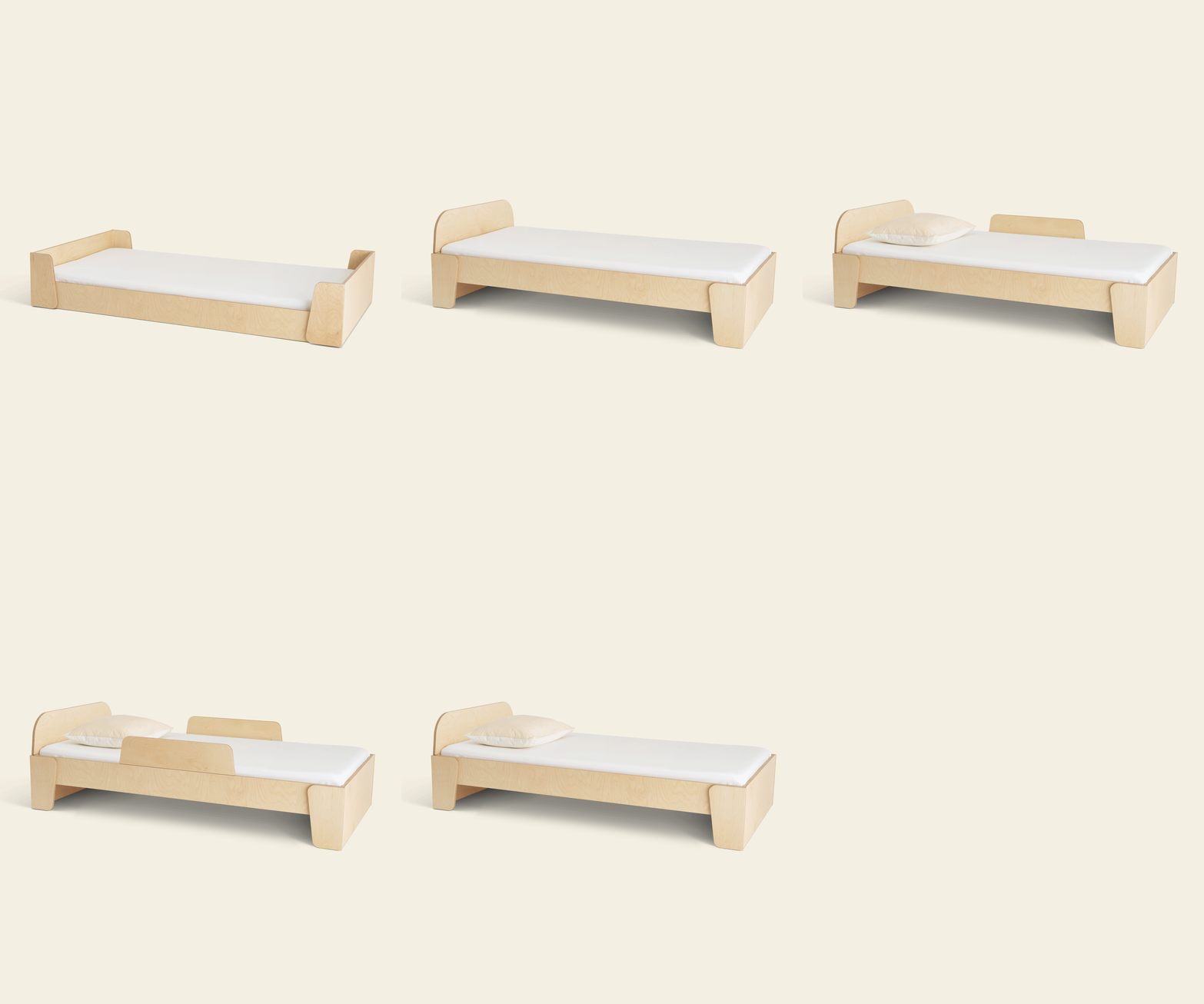
Our Montessori bed, bedBED™, reflects this philosophy. These beds are designed to feel safe, simple, and accessible while blending naturally into your home.
At about 1 year of age, my children all started using a floor bed. They relished their independence, going from picking a bedtime book to the bed and then falling asleep happily (most nights, anyway).

It’s Not Just About Beds
Montessori furniture extends beyond sleep.
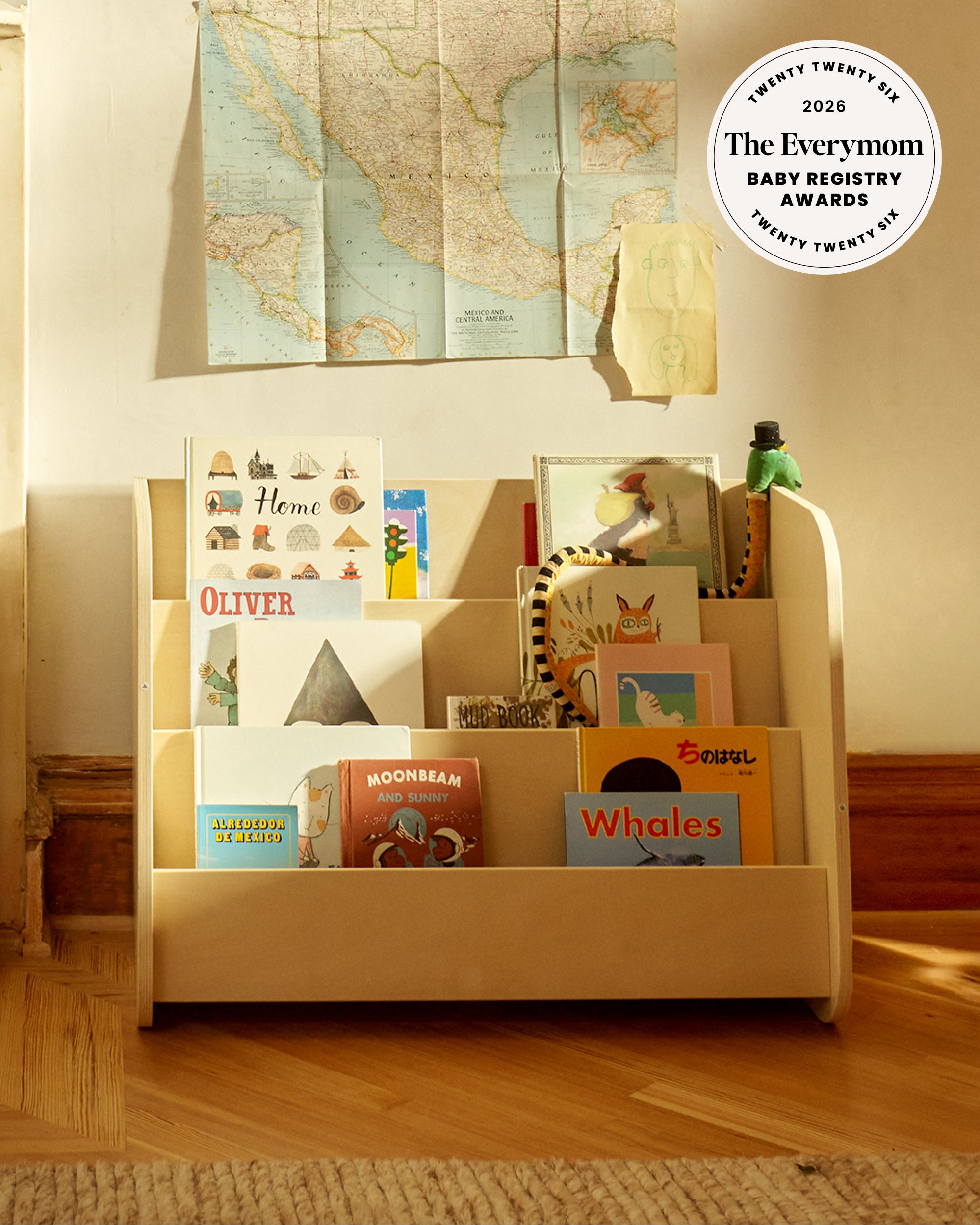
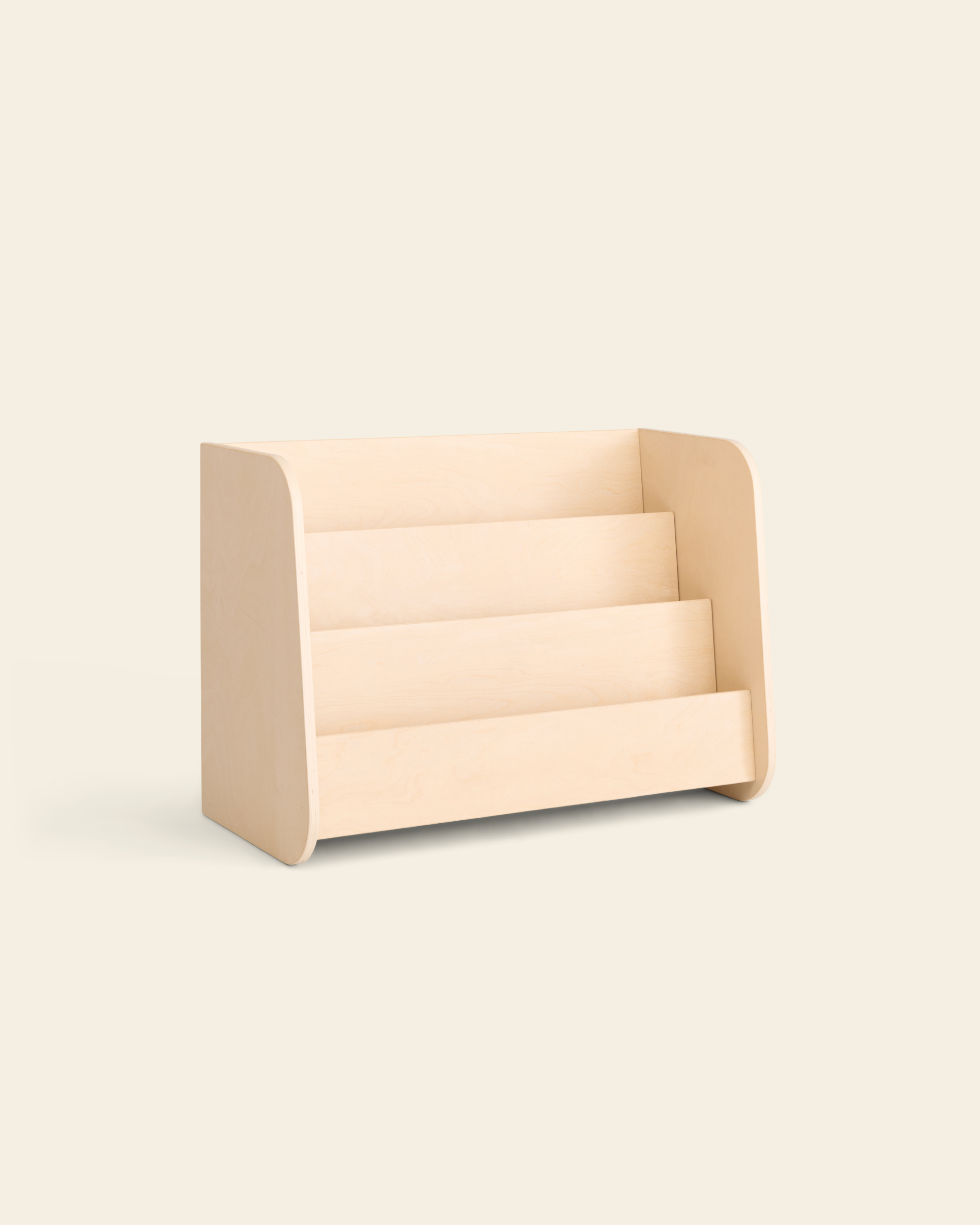
Child-sized tables, open shelving, and accessible storage all support independence in daily life. A toddler who can reach their books, return materials to a shelf, or sit comfortably at their own table is practicing responsibility without being explicitly taught.
The key principles remain the same:
- Accessibility
- Simplicity
- Stability
- Purpose
Montessori-inspired design is less about aesthetics and more about functionality that supports development.
Do You Actually Need Montessori Furniture?
This is where many parents hesitate.
The truth is, you don’t need a perfectly curated Montessori room for your child to thrive. What matters most is how your child interacts with their space.
You might ask yourself:
- Can my child access their bed safely?
- Can they reach toys or books independently?
- Do you make it possible for them to participate in household tasks and chores?
- Do they have a place that feels like their own?
- Does my child enjoy an organized space that promotes concentration?
If the answer is yes, you’re already supporting independence, learning, and a sense of purpose.
Montessori furniture supports the process, creating intentional space for independence and learning. While you don’t have to go all out and use only Montessori furniture for your child, a few choice pieces can make a big difference in your child’s space.
When Montessori Furniture Makes a Difference
Montessori-inspired pieces can be especially helpful when:
- Your child is gaining mobility. For example, a Pikler Triangle helps your child as they learn to pull up, cruise, and walk. Or, try a weaning table for independent meals once your child can walk.
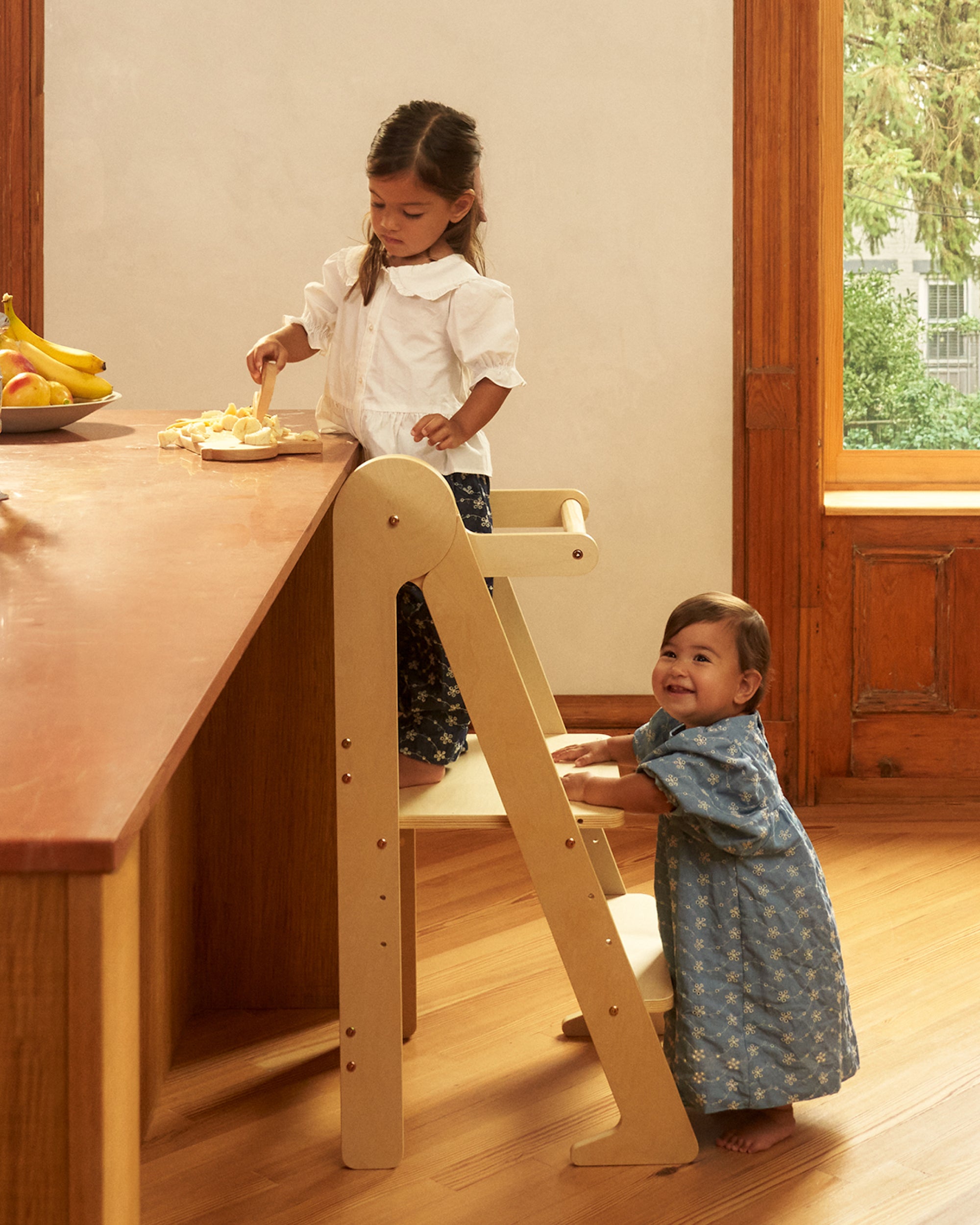
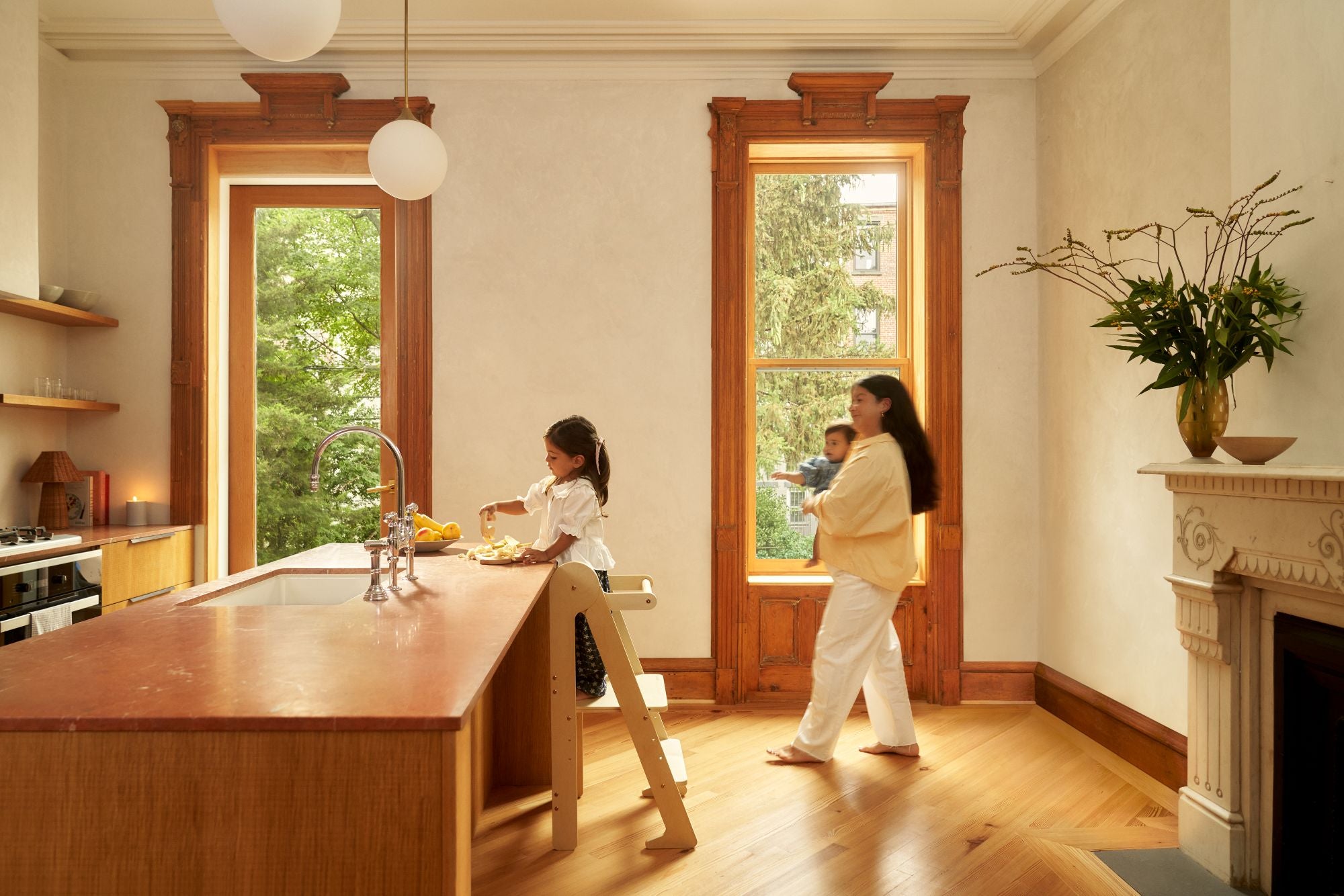
- You want to reduce lifting and physical dependence. A Toddler Tower helps your child access kitchen countertops or the bathroom sink.
- You value long-term, adaptable design. Many Montessori furniture pieces feature beautiful designs that grow with your child.
- You’re creating a more accessible play or sleep space. Pieces such as low shelves and floor beds can foster independence.
When furniture removes unnecessary obstacles, your child is free to explore safely.
Montessori at Home Without Pressure
It’s important to remember that Montessori philosophy is not about perfection. It’s about understanding your child’s needs, and that one of the biggest ones for young children is independence. Small changes to your parenting style and home set-up can have an important impact on your child’s development.
Learn more about Montessori parenting as well as some Montessori techniques to try at home.
You don’t need every item labeled “Montessori.” You don’t need to replace everything at once.
Even making simple adjustments—like lowering a bookshelf or choosing a floor bed—can shift how your child engages with their environment and support independence.
A Thoughtful Environment Supports Confidence
At its core, Montessori furniture supports one powerful idea: your child is capable.
When your child can move freely, make small choices, and participate in daily life, they build confidence through experience—not instruction.
Over time, those small acts of independence shape how your child sees themselves and the voice they hear in their head. With independence, your child grows to approach life with confidence, an “I can do this” attitude, and a strong sense of self-worth.
Explore Furniture Designed for Growing Independence
If you’re considering Montessori-inspired pieces, try our Montessori Bed and experience how an accessible sleep setup supports your child’s routines and confidence.
You can also browse our full collection to discover thoughtfully designed furniture that encourages independence while fitting naturally into your home.








Leave a comment